
Birds
Explore the birds I have encountered and documented over the years. Species are arranged into taxonomic groups, with photographs, dates and locations.
The songbirds and perching birds are the single largest bird order: nearly 60% of all living bird species (Brinkworth et al., 2023), a diversity comparable to that of all living mammals (Barker et al., 2004). Scientifically, a passerine is defined by a package of features legs, feet, palate, and above all the syrinx, the avian voice box (Frith & Frith, 2004). Songbirds (oscines) use three or four pairs of muscles in the syrinx, which is why they hold the most elaborate songs of any bird group and their song has driven much of their evolution through sexual selection (Düring et al., 2013).
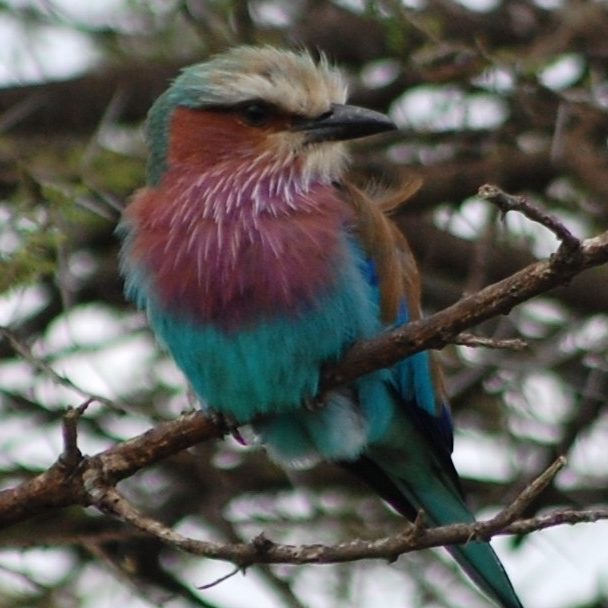
Lilac breasted roller
Coracias caudatus
Serengeti, Dec 2024
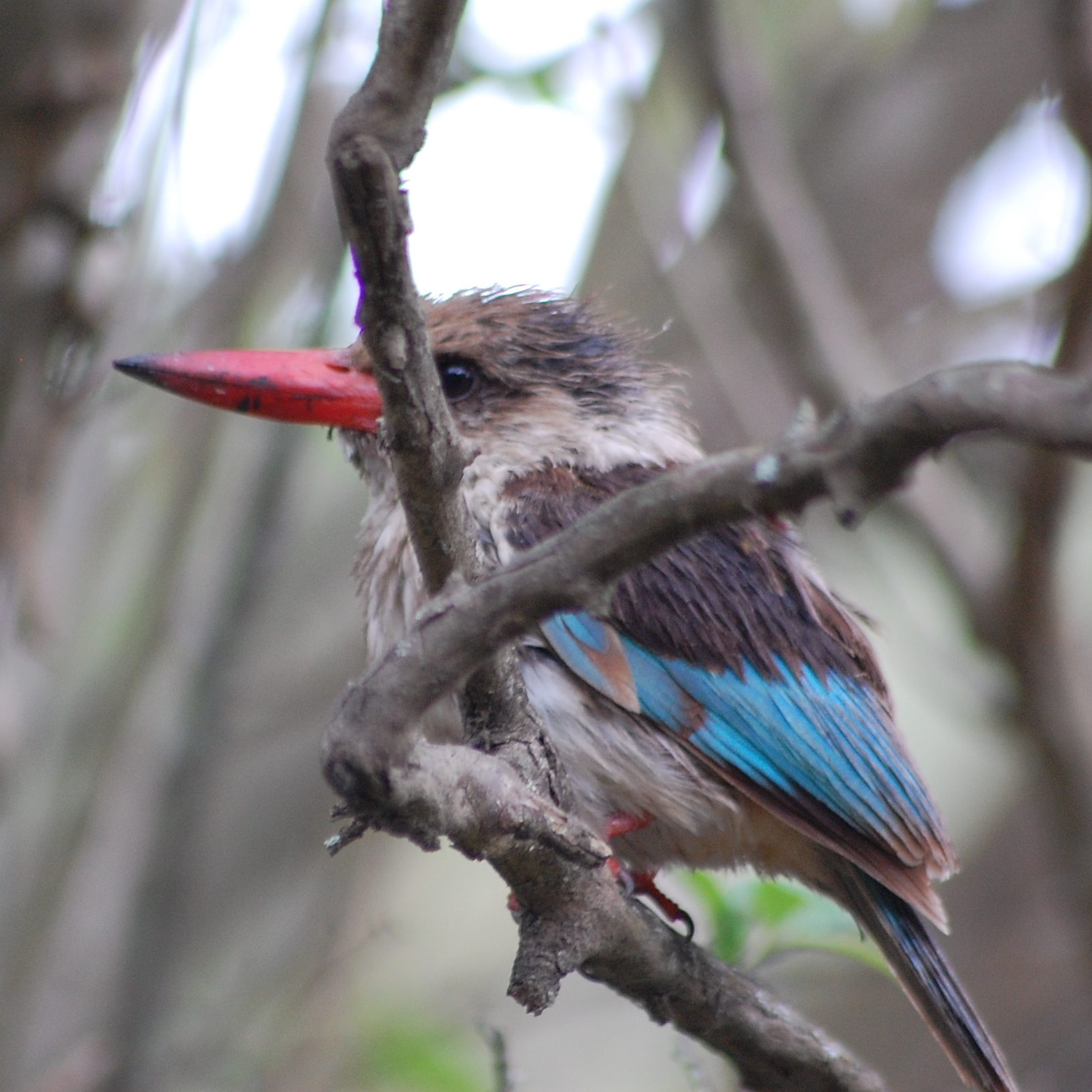
Grey-headed Kingfisher
Halcyon leucocephala
Arusha, Dec 2024
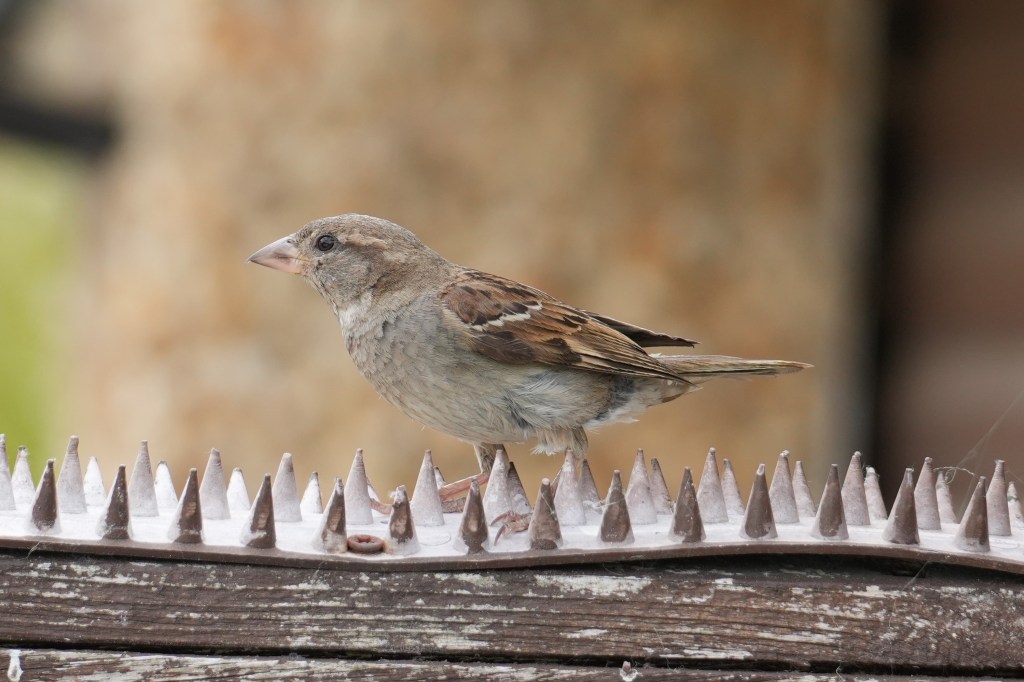
House Sparrow
Passer domesticus
Gillian Ave, Aug 2026
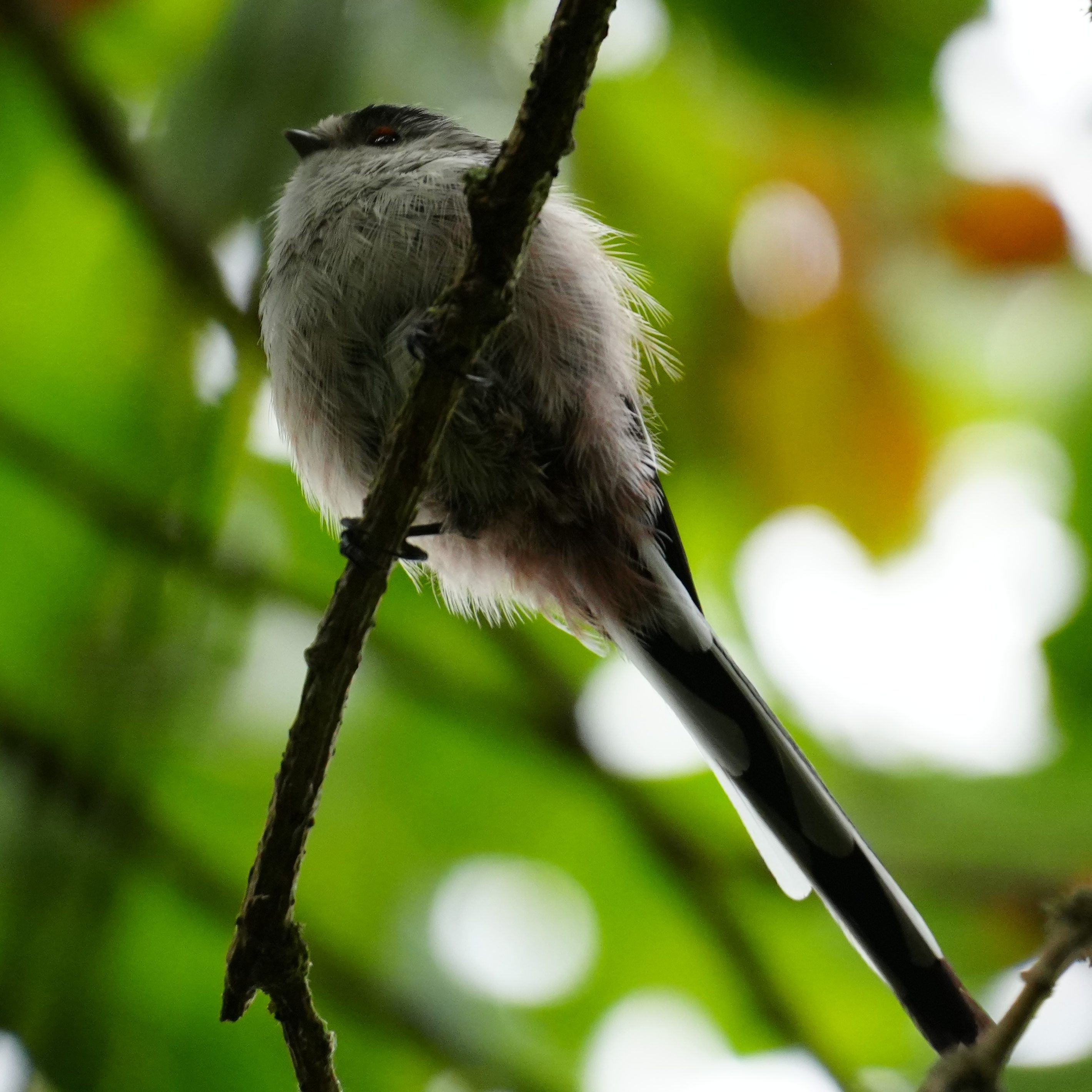
Long-tailed Tit
Aegithalos caudatus
Tice’s Meadow, Aug 2026
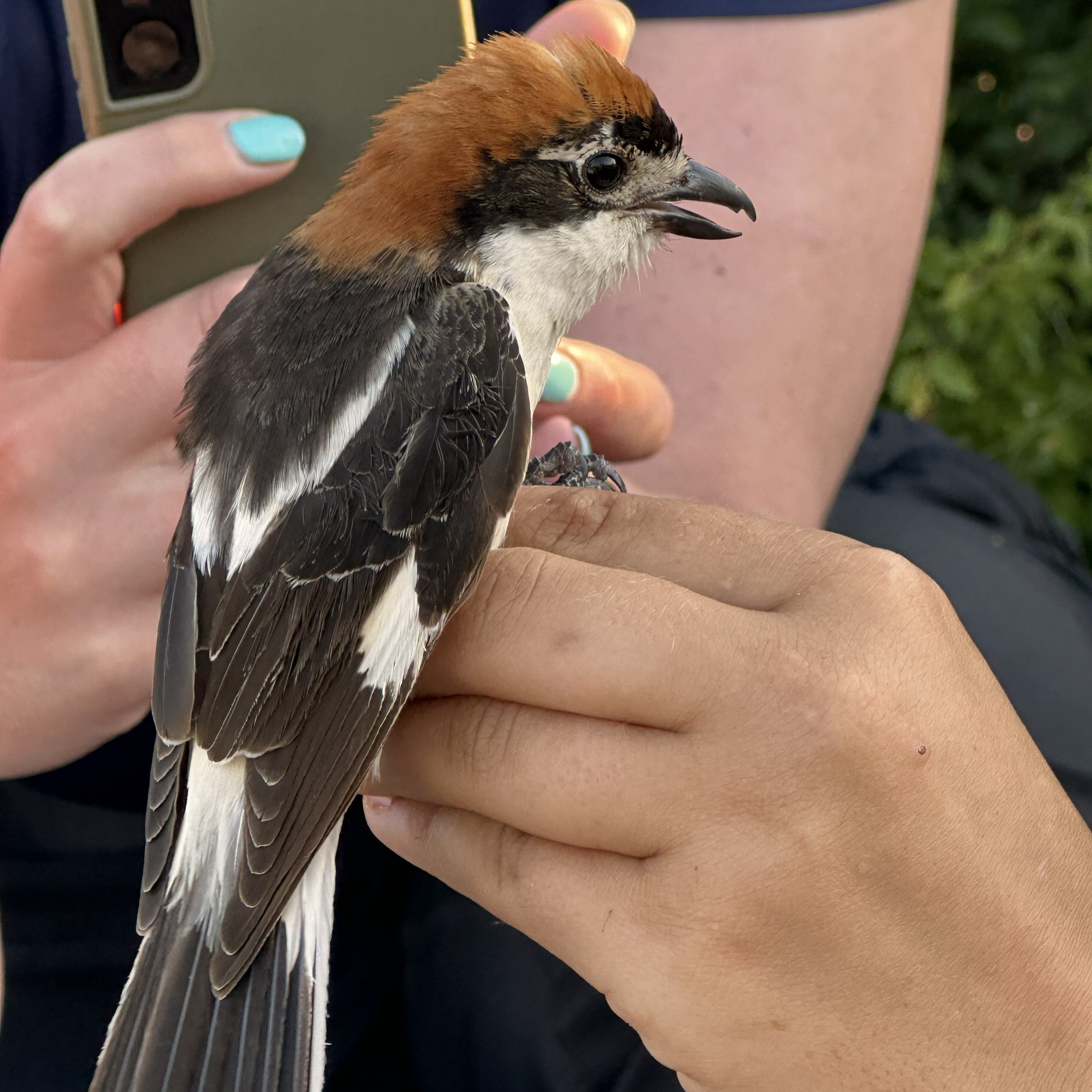
Woodchat Shrike
Lanius senator
Croatia, Jun 2026
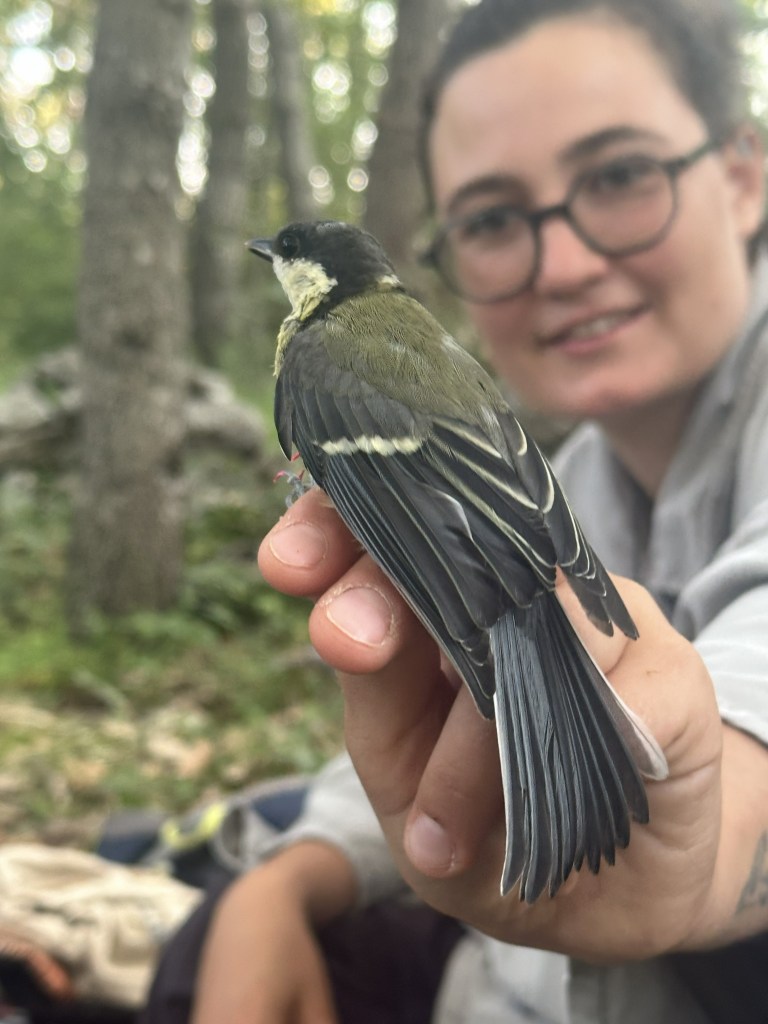
?
Croatia, Jun 2026
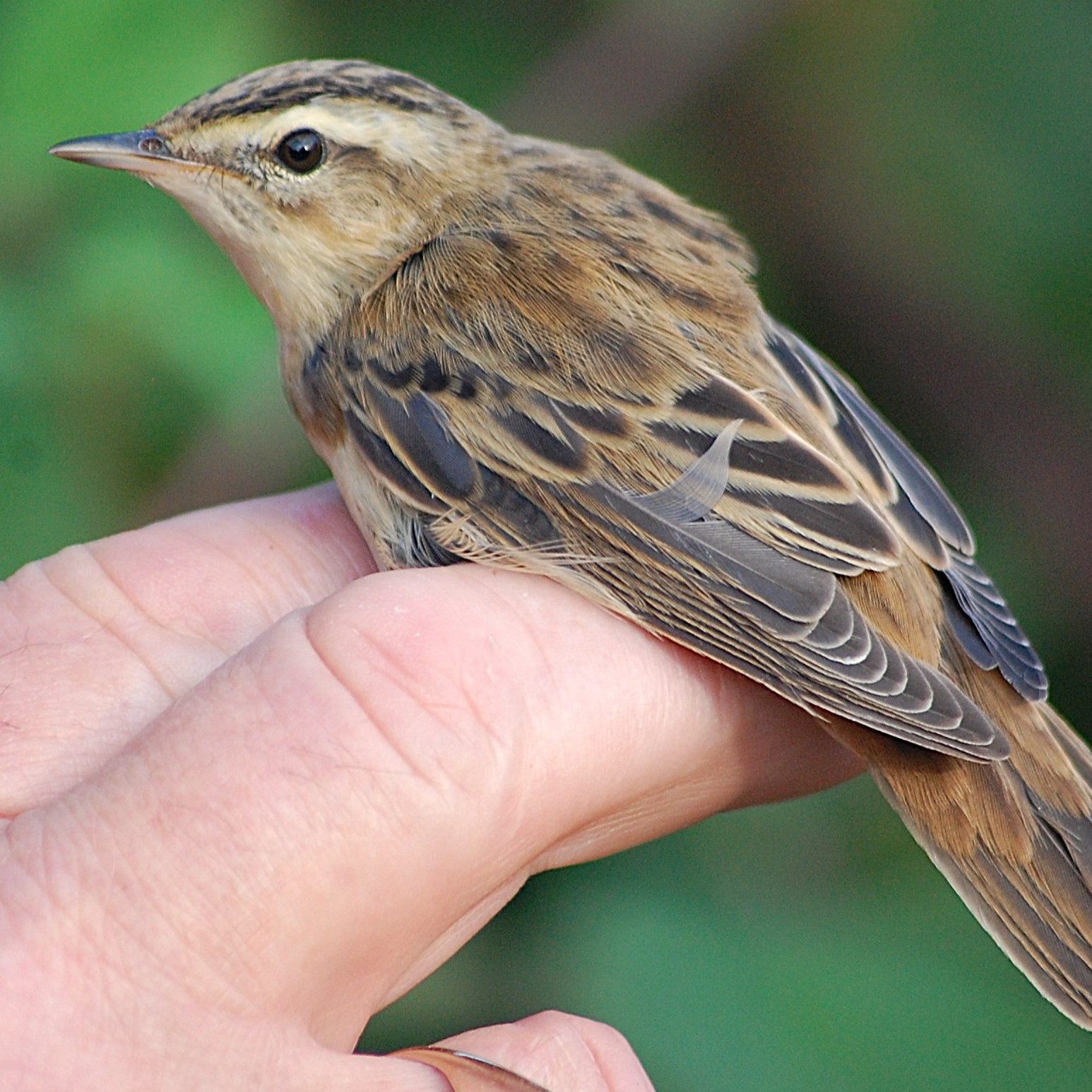
Sedge warbler
Acrocephalus schoenobaenus
Tice’s Meadow, Jul 2026
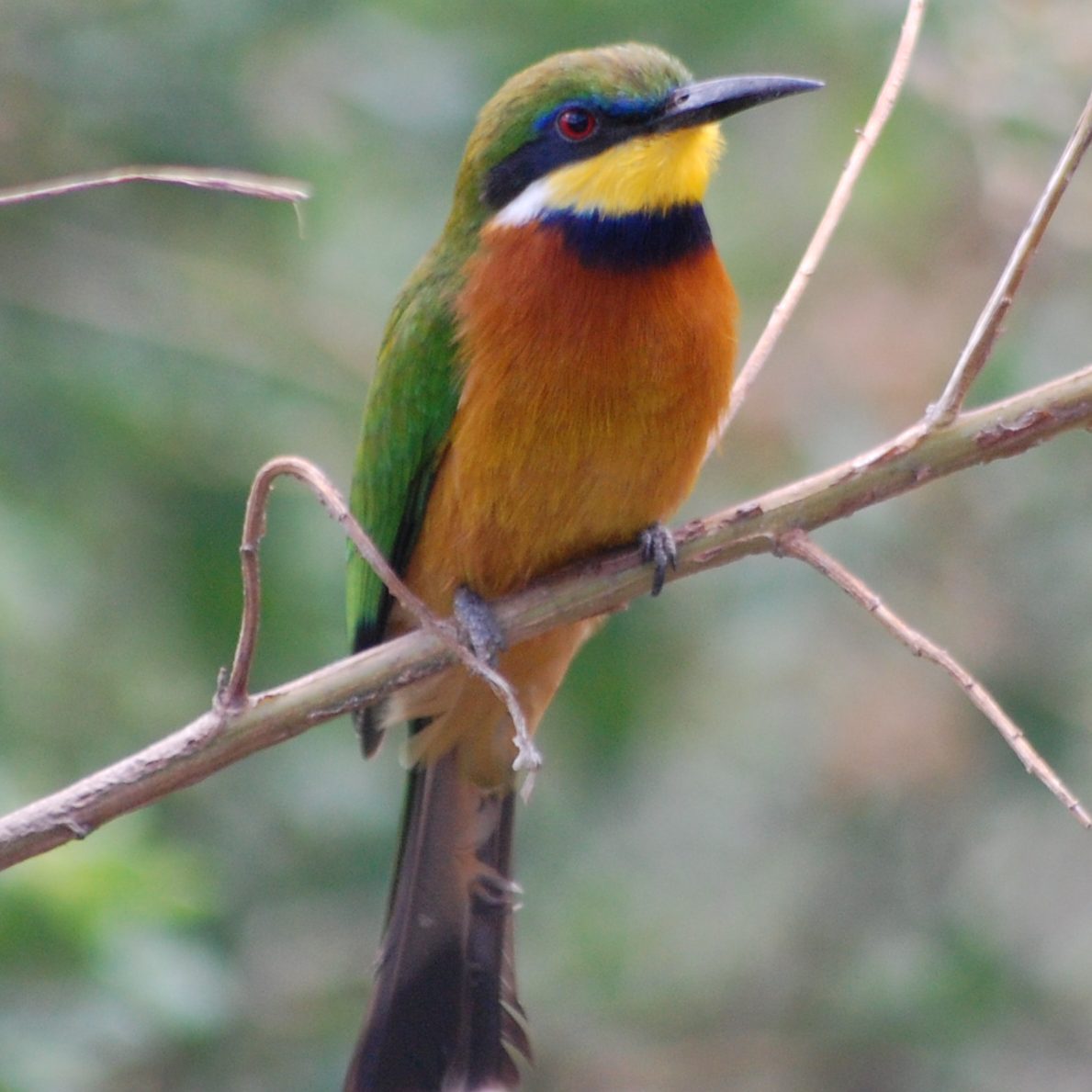
Cinnamon-chested Bee-Eater
Meropos oreobates
Ngorogoro Crater, Dec 2024
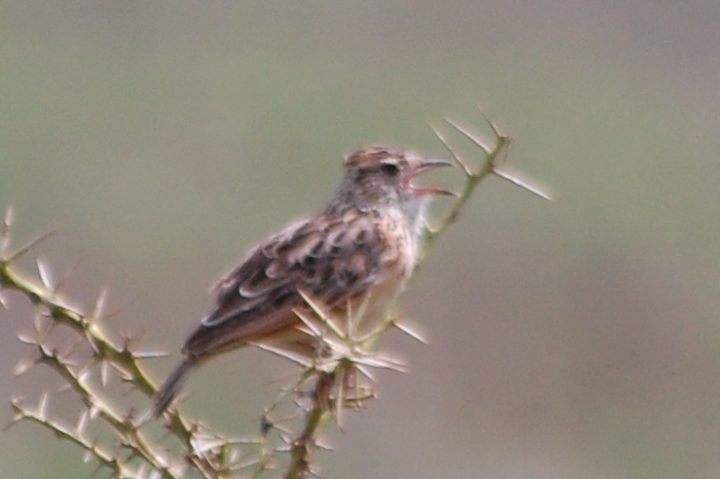
Rufous-naped Lark
Corypha africana
Serengeti, Dec 2024
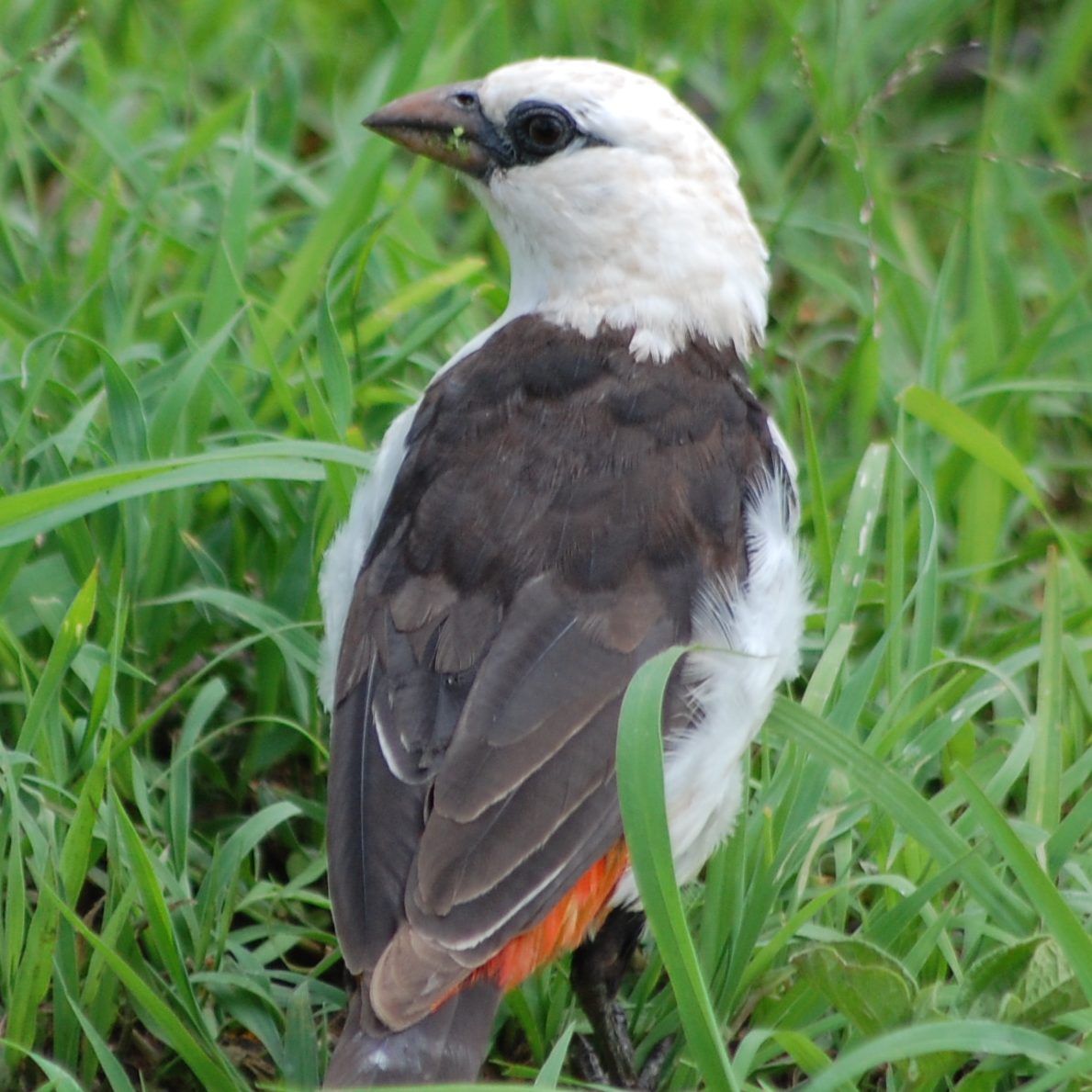
White-headed buffalo-weaver
Dinemellia dinemelli
Central Serengeti, Dec 2024
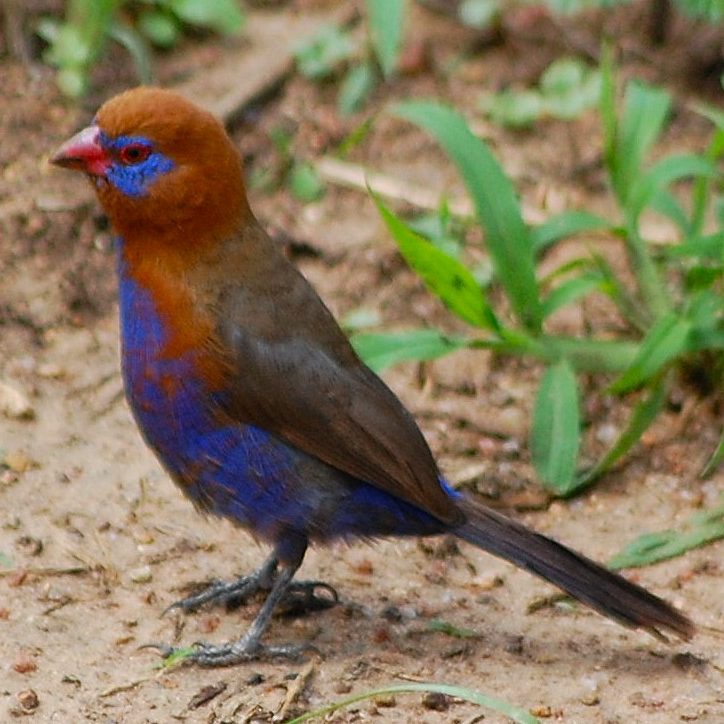
Purple Grenadier
Granatia ianthinogaster
Central Serengeti, Dec 2024
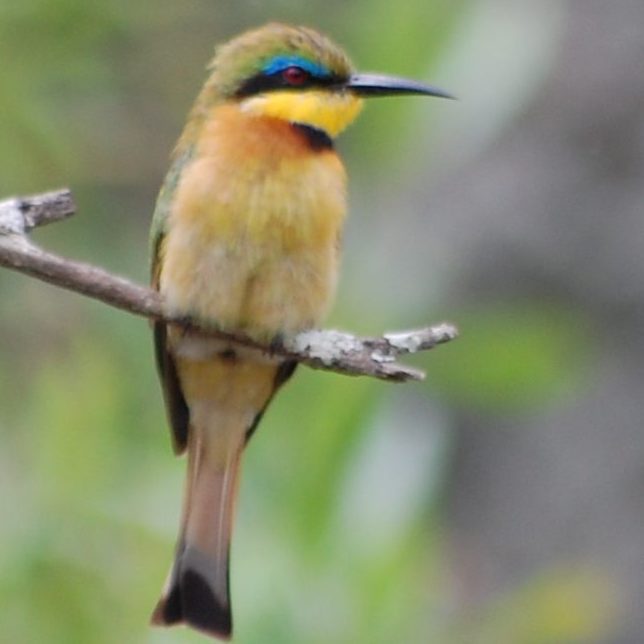
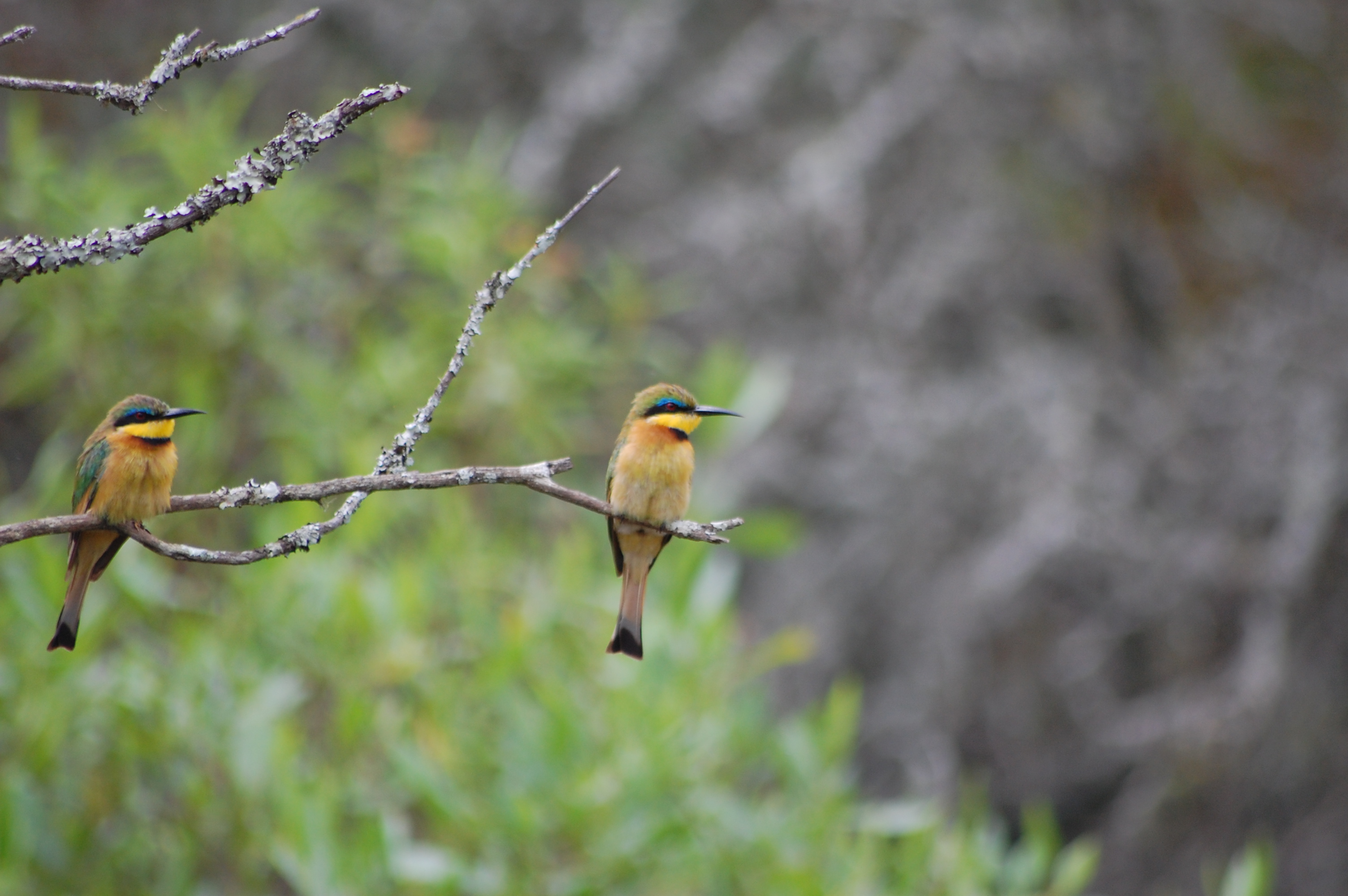
Little bee-eater
Merops pusillus
Serengeti, Dec 2024
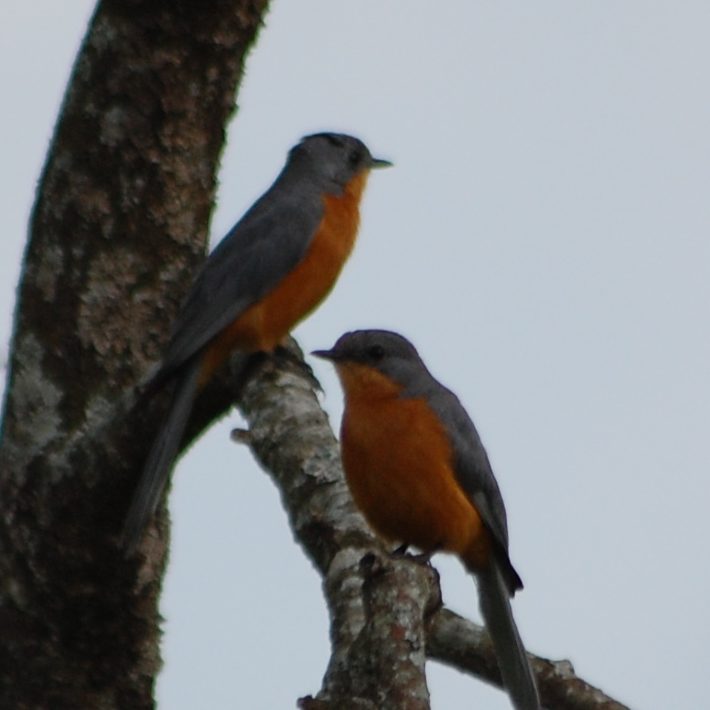
Silverbird
Empidornis semipartitus
Serengeti, Dec 2024
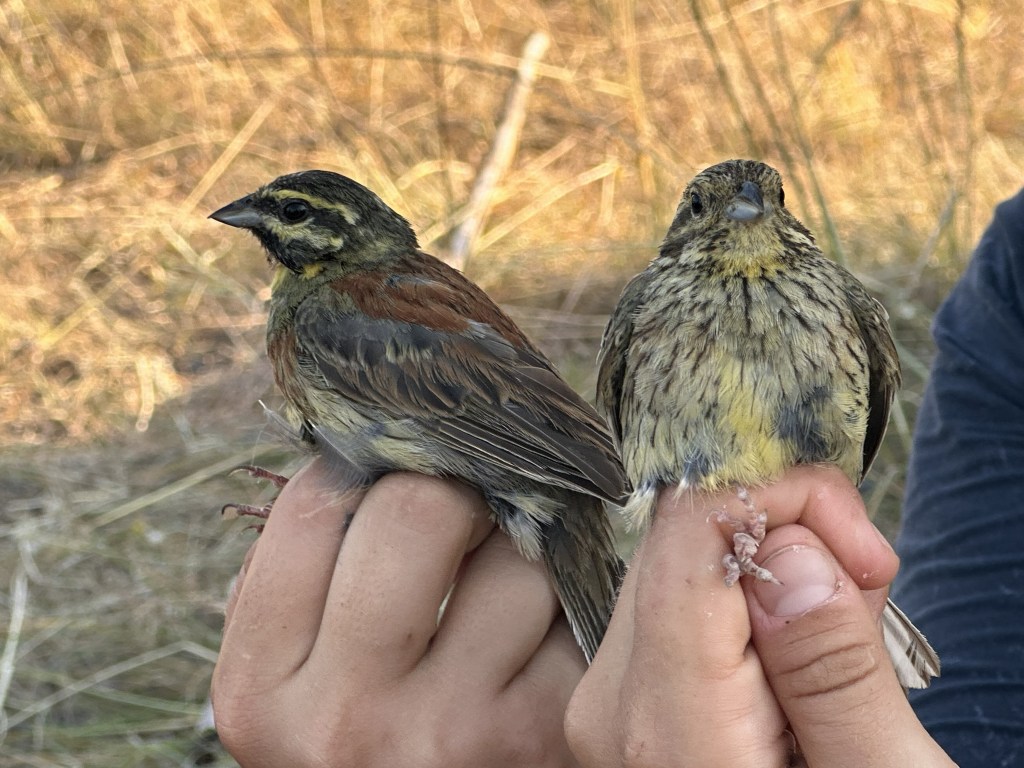
Ciril Bunting
Emberiza cirlus
Croatia, Jun 2026
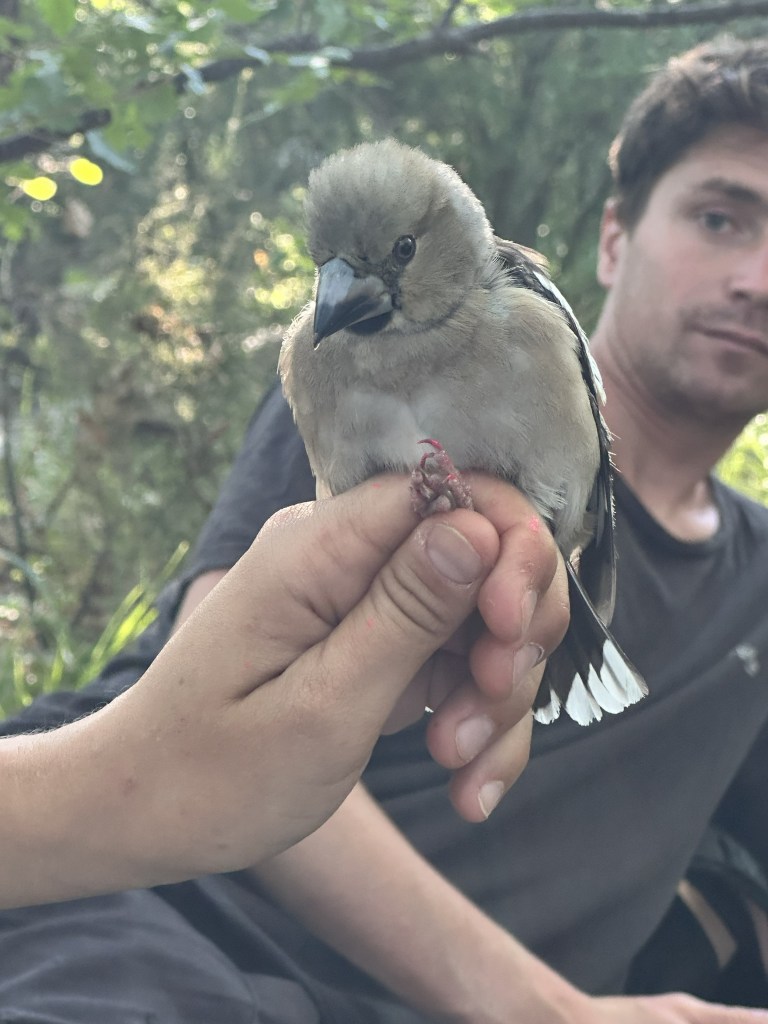
European Hawfinch
Coccothraustes coccothraustes
Croatia, Jun 2026
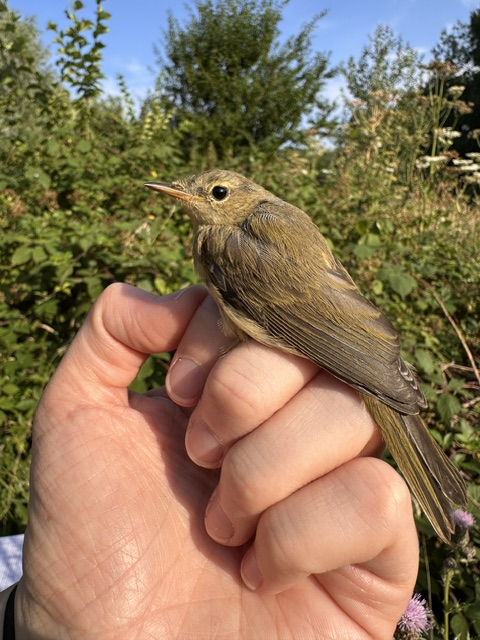
Common Reed Warbler
Acrocephalus scirpacius
Tice’s Meadow, July 2026
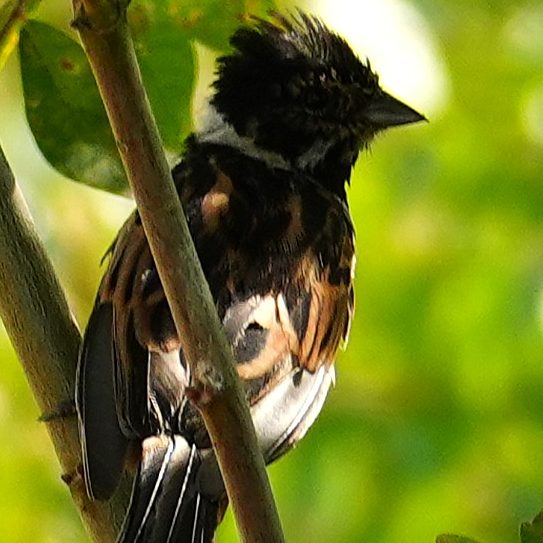
Reed bunting (J)
Emberiza schoeniclus
Elstead Common, Aug 2026
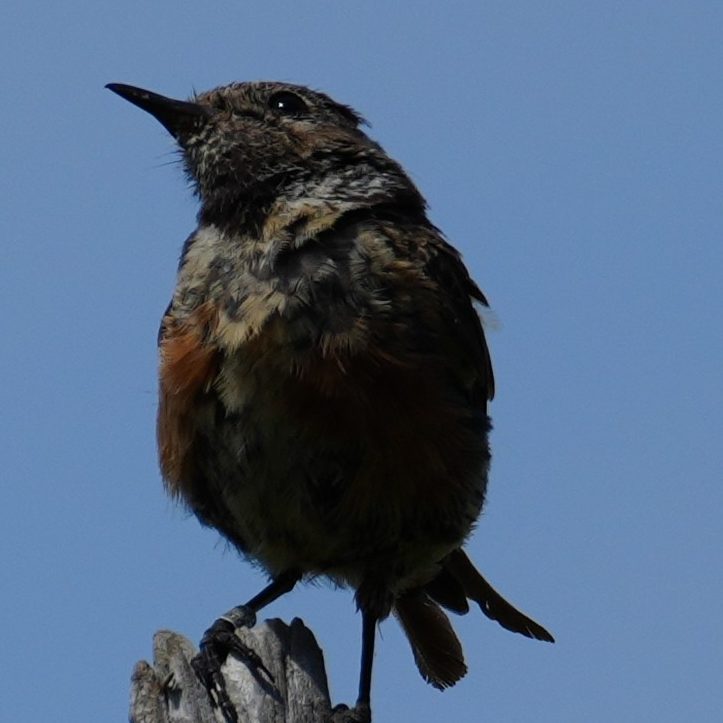
Stonechat (J)
Saxicola rubicola
Elstead Common, Aug 2026
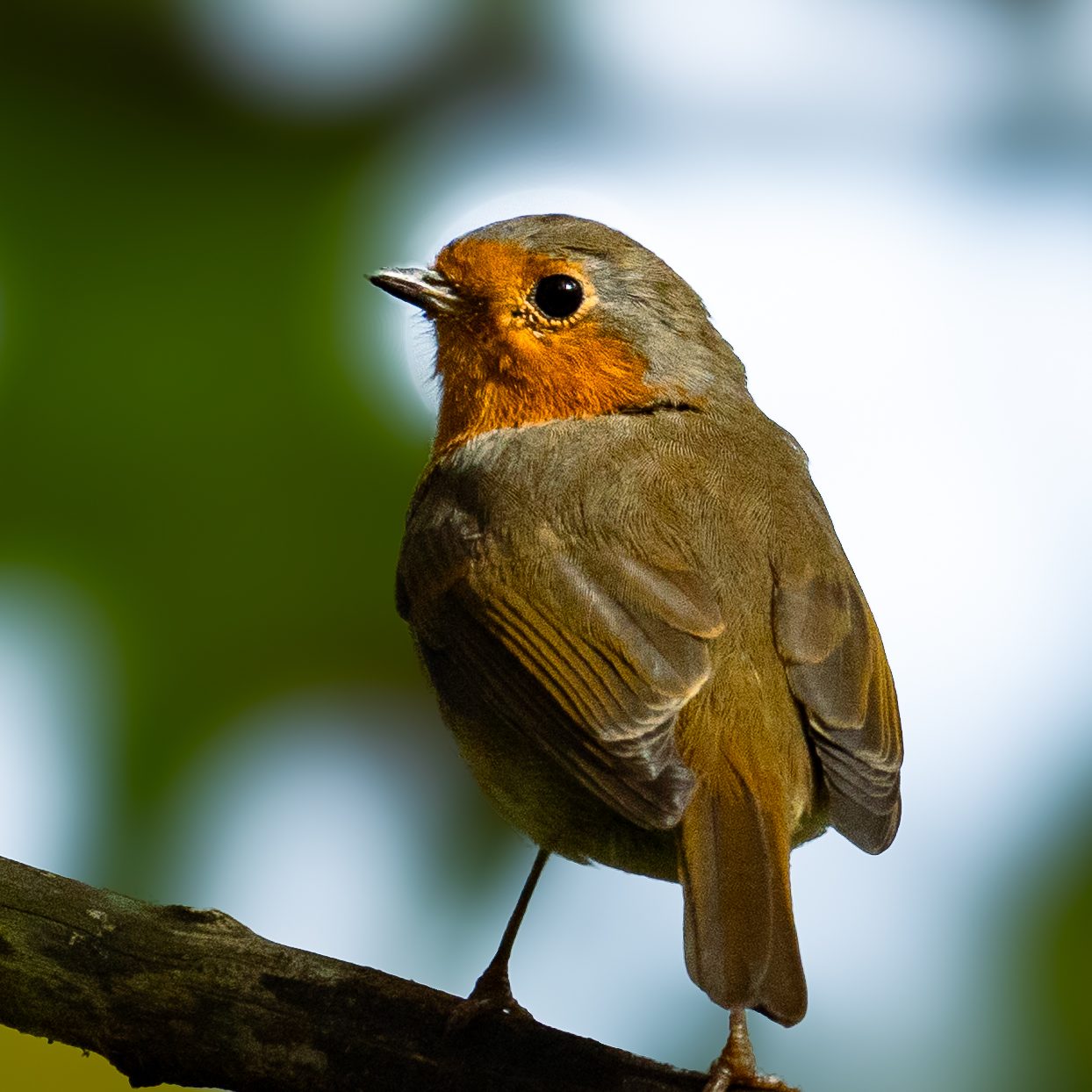
European Robin Erithacus rubecula
Tilford, 12 Jul 2026
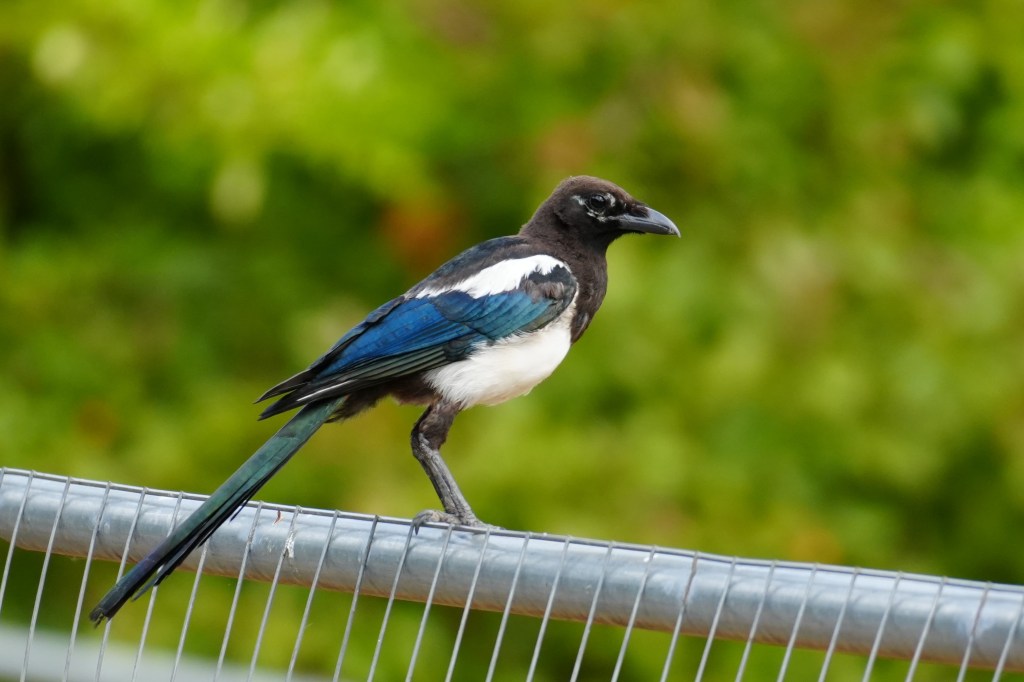
Eurasian Magpie
Pica pica
Church Crookham, Jul 2026
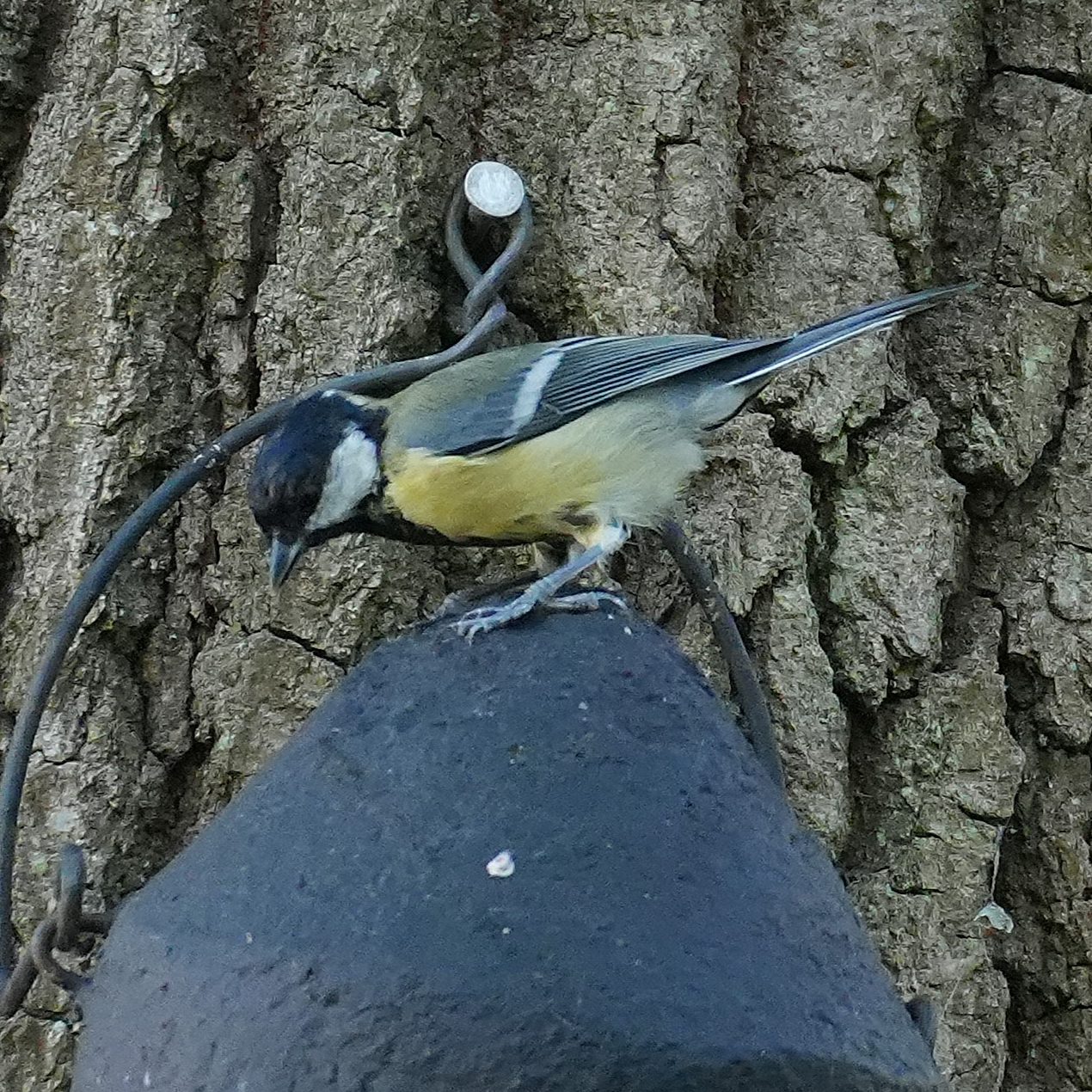
Great Tit
Parus major
Tice’s Meadow, Aug 2026
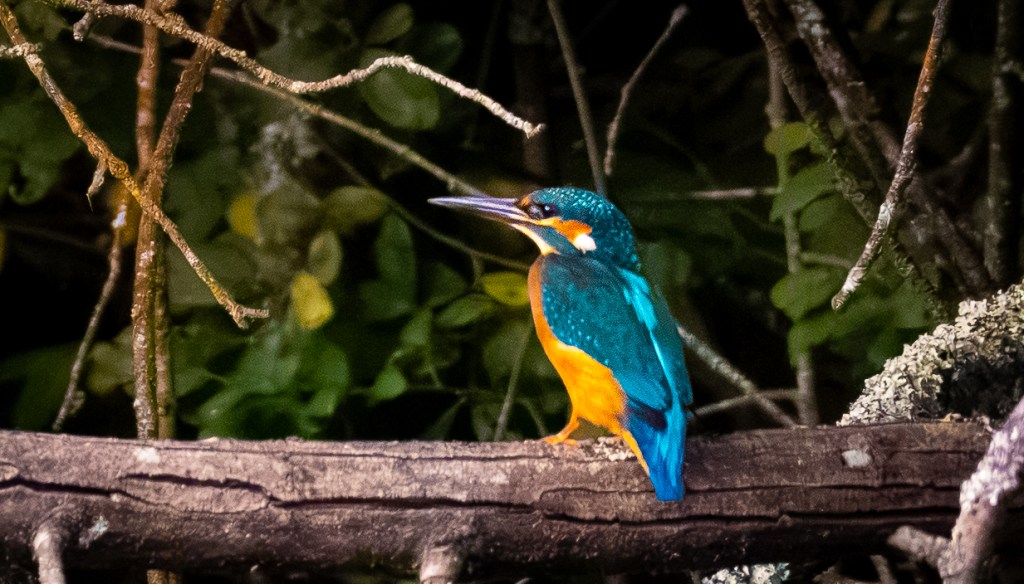
Common Kingfisher
Alcedo atthis
Basingstoke Canal, Aldershot, Sept 2026
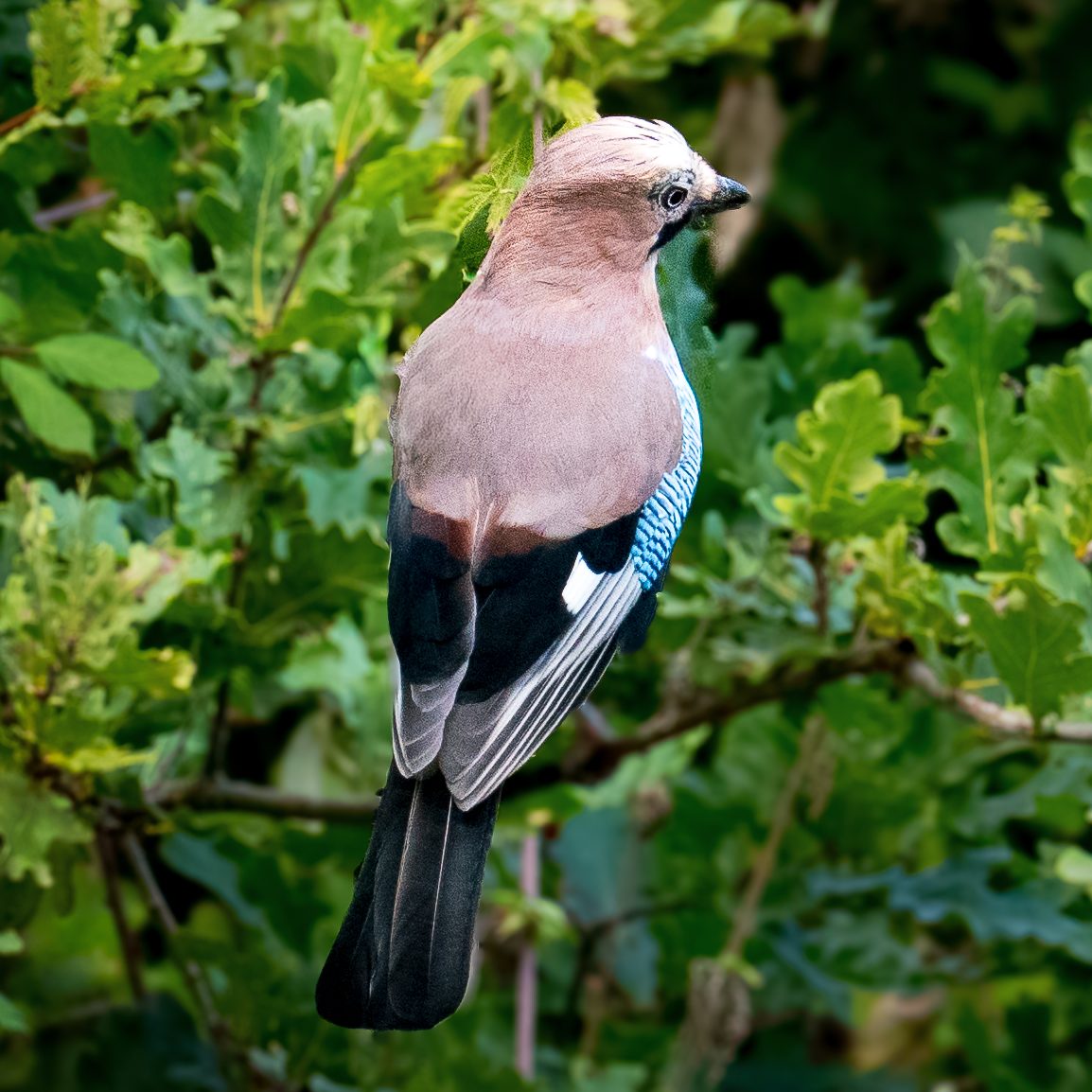
Jay
Garrulus glandarius
Tices meadow, Sept 2026
We have two separate orders by watery lifestyle. Anseriformes (ducks, geese, swans) are swimming birds with webbed feet and characteristically broad, flattened bills (Livezey, 1997). Their defining trick is filter-feeding: comb-like lamellae in the bill strain food from the water, and this apparatus is regarded as the key adaptation behind the order’s radiation (Olsen, 2017; Olson & Feduccia, 1980) — though its demands conflict with terrestrial grazing, which is why geese and ducks feed so differently (Leeuw et al., 2003).
Charadriiformes (waders, shorebirds, gulls and terns) is a monophyletic order of some 366 species whose classic “shorebird bauplan” — long legs and a pointed beak — has been reshaped by natural selection into everything from plovers to auks (Baker & Pereiraa, 2009; Székely, 2019). The order splits into three major clades, and notably the gulls and terns belong in here too (Baker & Pereiraa, 2009). Even the way they find food differs: plovers hunt by sight, while sandpipers probe with touch-sensitive bill tips (Martin & Piersma, 2008).
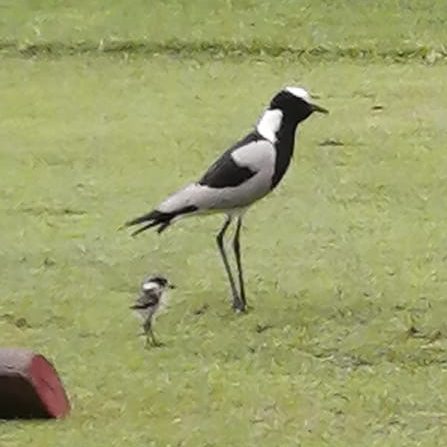
Blacksmith Lapwing
Vanellus armatus
Central Serengeti, Dec 2024
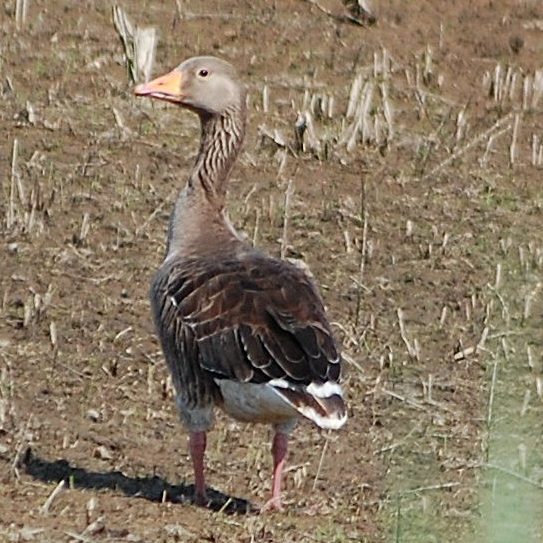
Greylag Goose
Anser anser
UK, Tices Meadow, July 2026
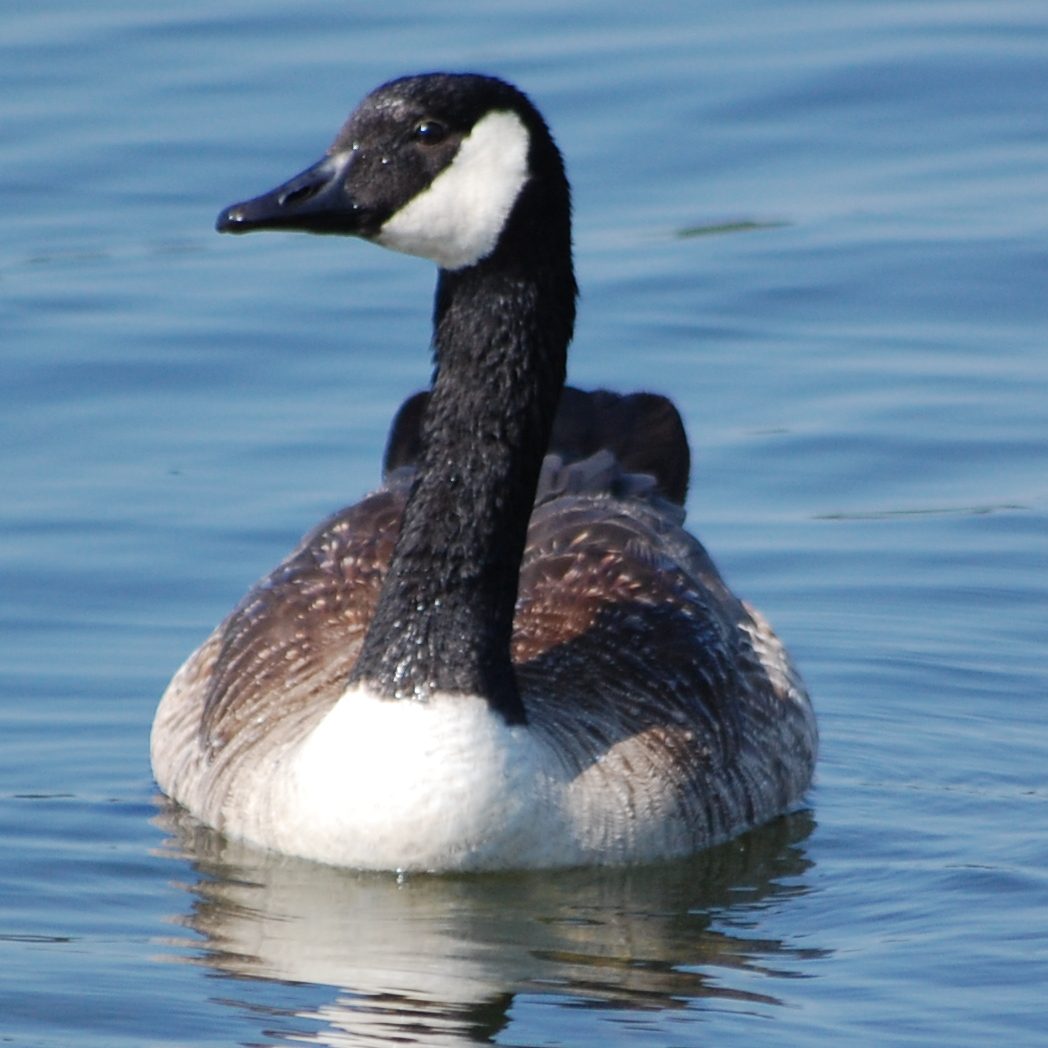
Canada Goose
Branta canadensis
UK, Tices Meadow, July 2026
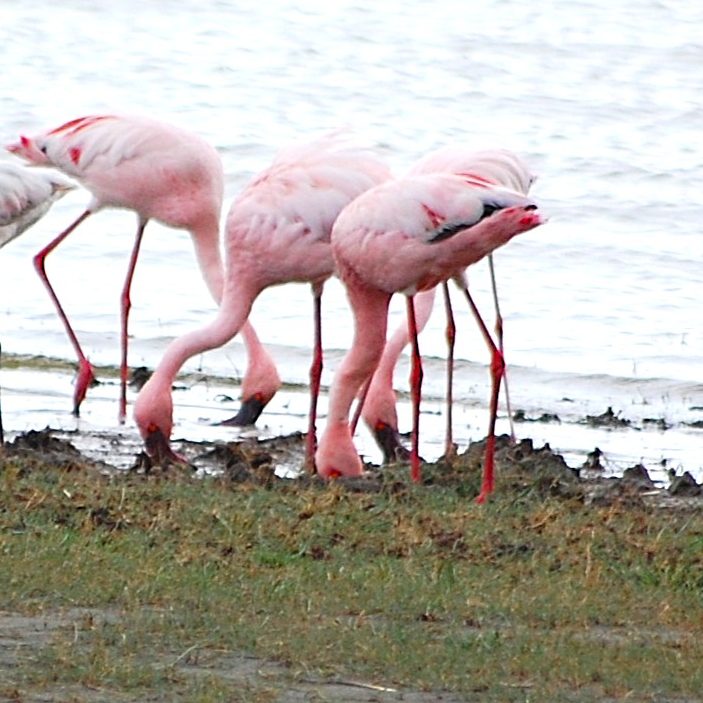
Lesser flamingo
Phoeniconaias minor
(near-threatened)
Ngorogoro crater, Dec 2024
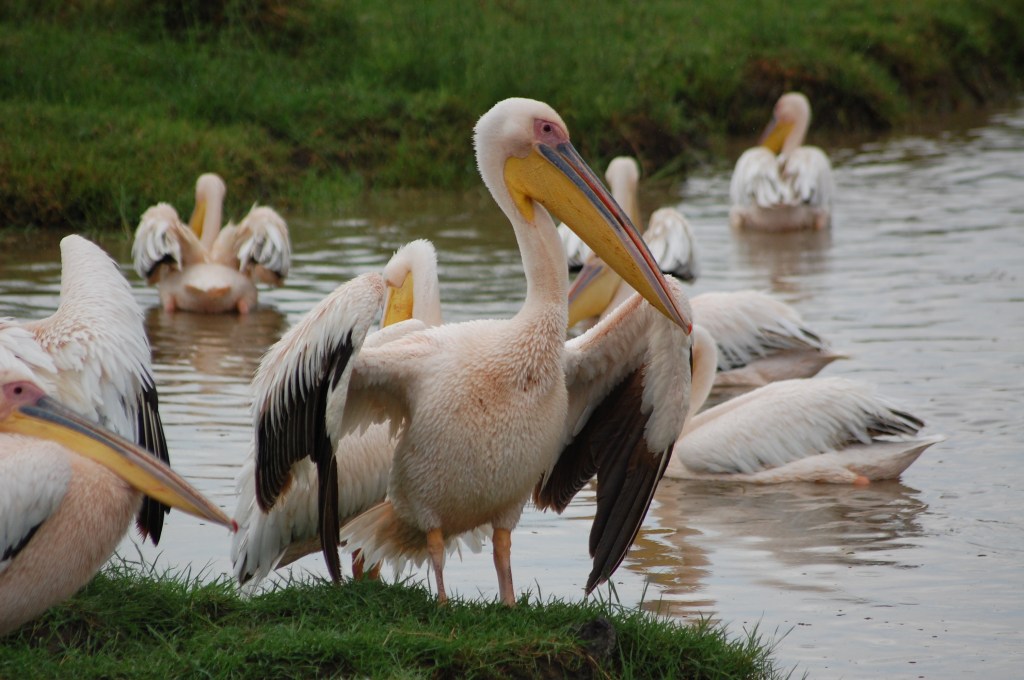
Great White Pelican
Pelecanus onocrotalus
Ngorogoro crater, Dec 2024
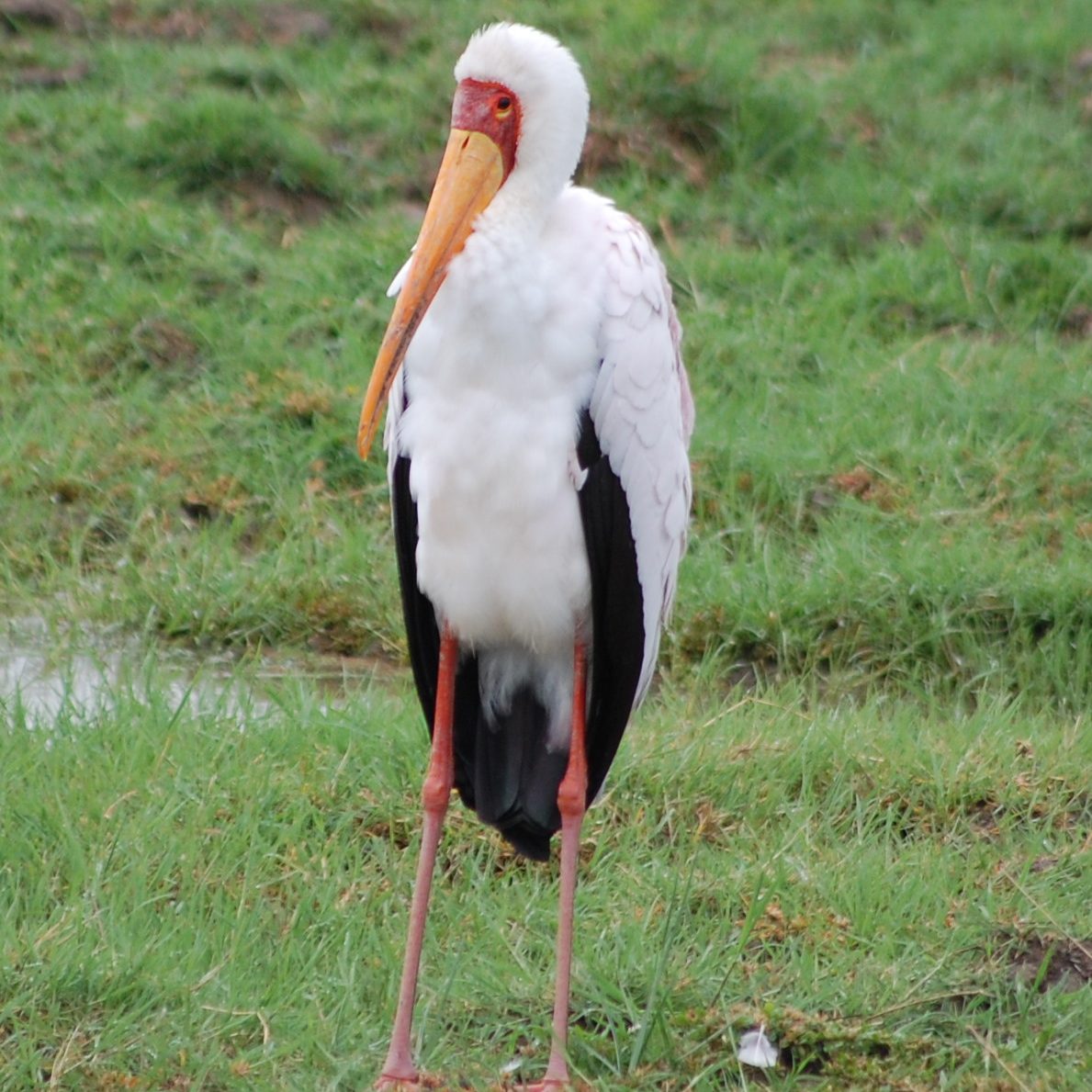
Yellow-billed Stork
Mycteria ibis
Ngorogoro crater, Dec 2024
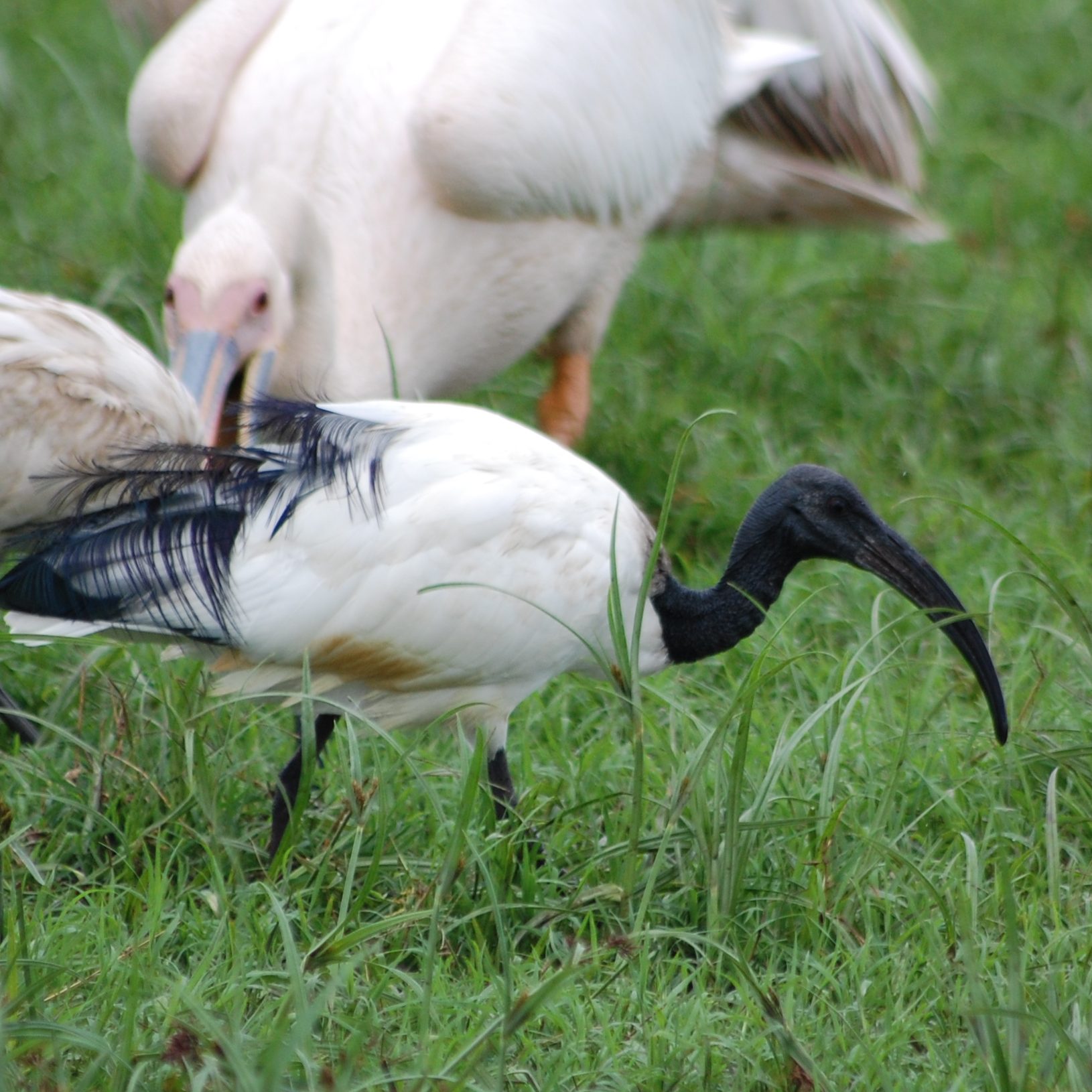
AfriAfrican sacred ibis
Threskiornis aethiopiccan
Ngorogoro crater, 2024
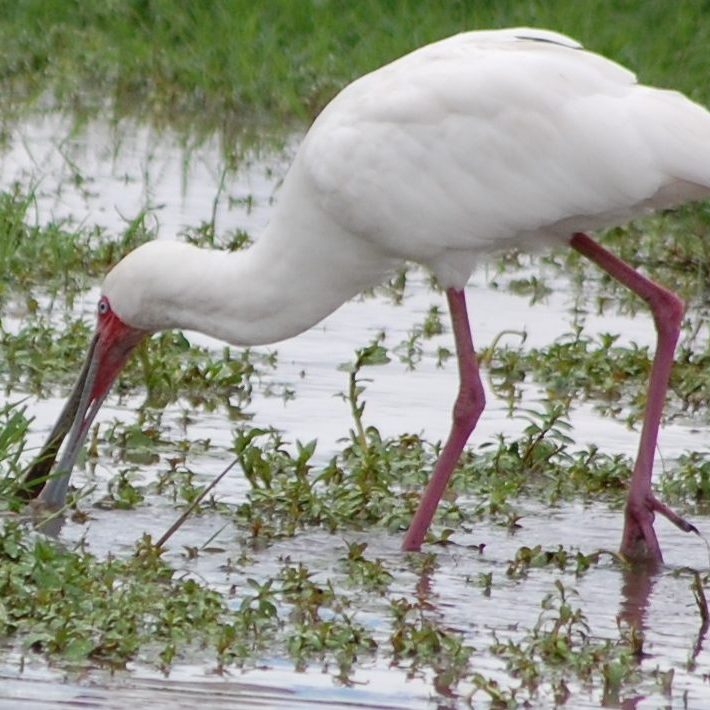
African Spoonbill
Platalea alba
Ngorogoro crater, Dec 2024
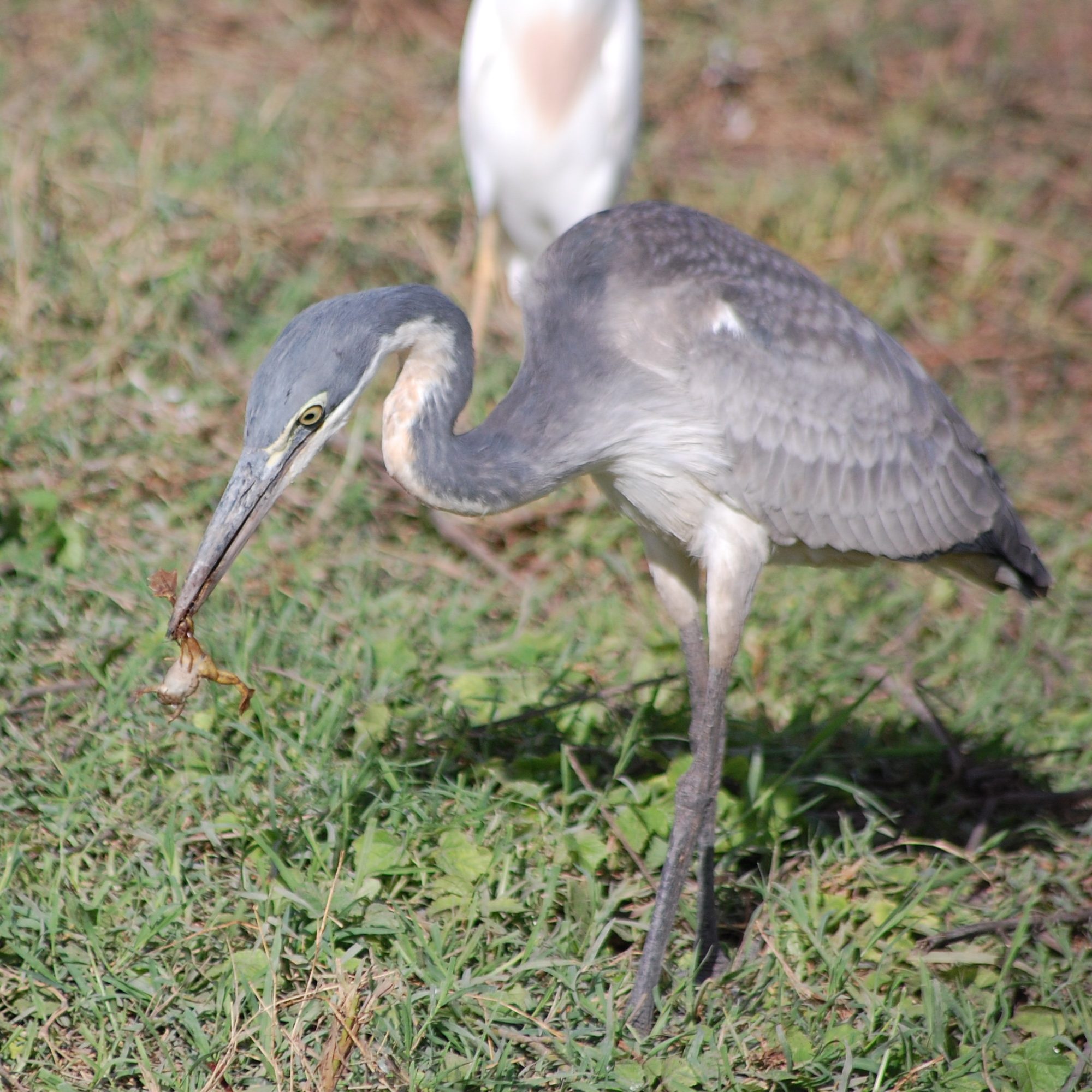
Black-headed heron
Ardea melanocephala
Ngorogoro crater, Dec 2024
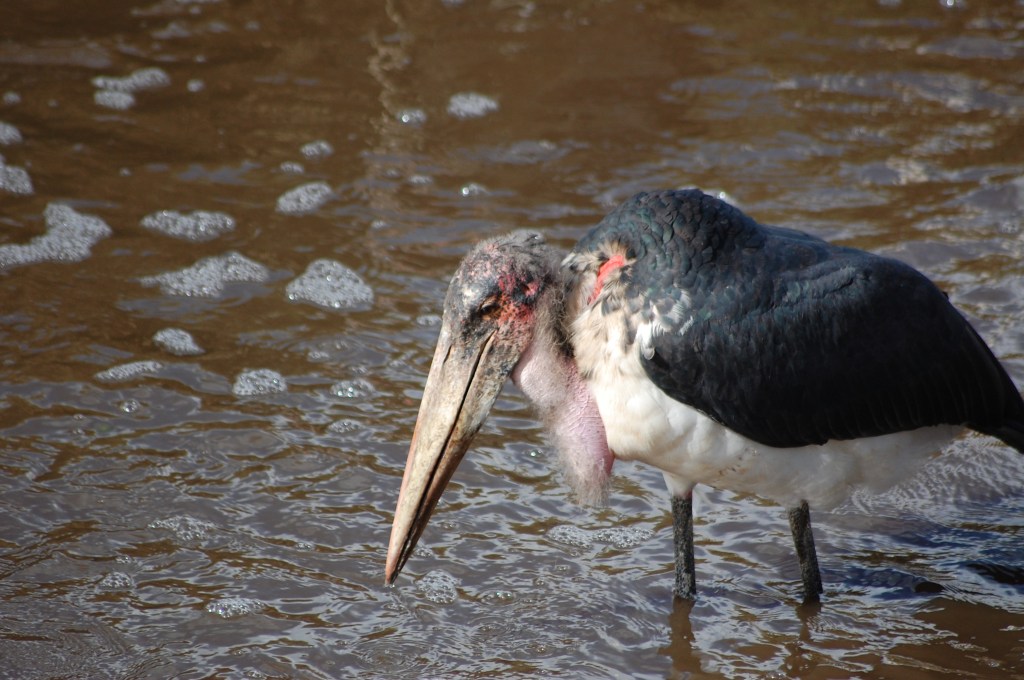
Marabou Stork
Leptoptilos crumenifer
Ngorogoro crater, Dec 2024
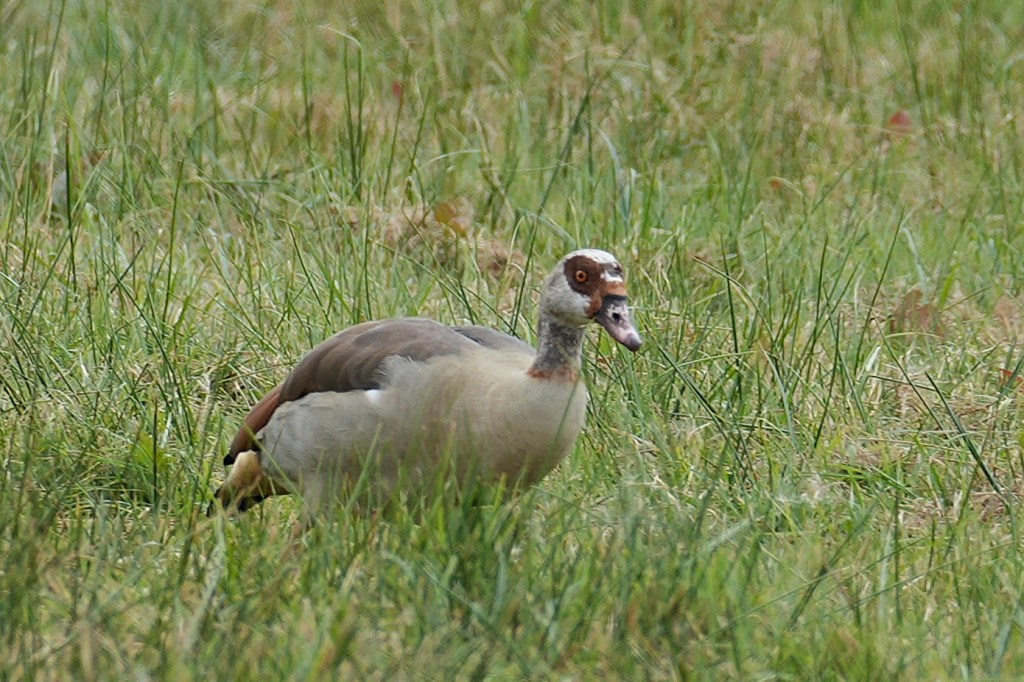
Egyptian Goose (J)
Alopochen aegyptiaca
Thundery Meadows, Jul 2026
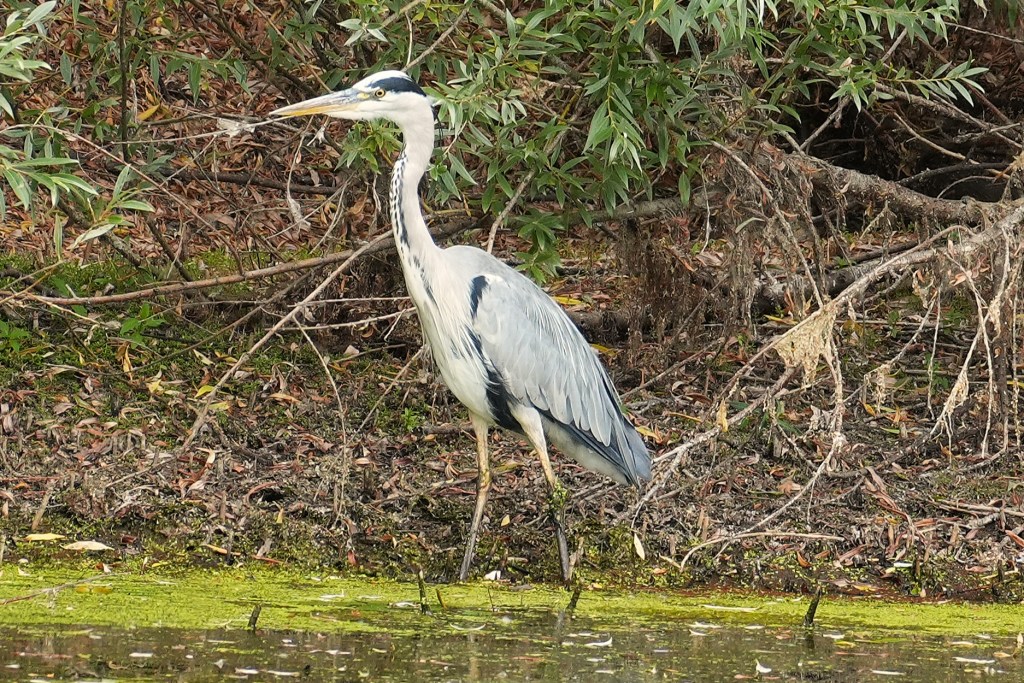
Grey Heron
Ardea cinerea
UK, Tices Meadow, Aug 2026
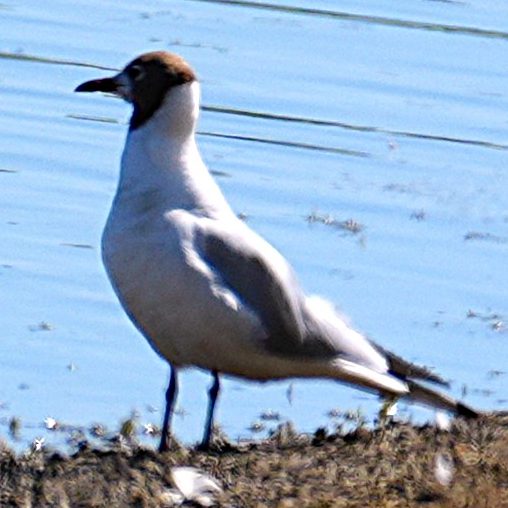
Black-headed Gull
Chroicocephalus ridibundus
UK, Tices Meadow, Aug 2026
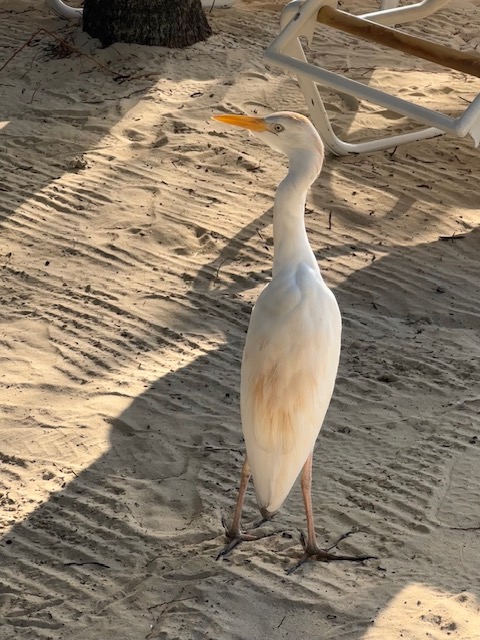
Western Cattle-Egret
Ardea ibis
Negril, Dec 2023
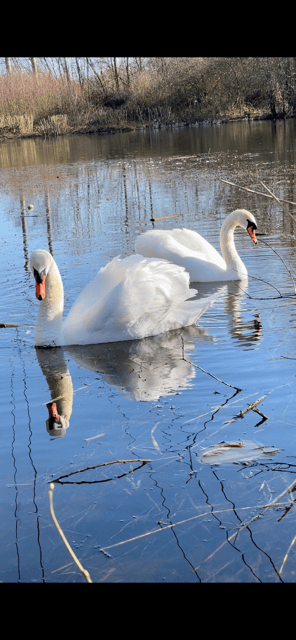
Mute Swan
Cygnus olor
Fleet Pond, 2018
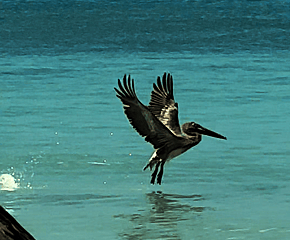
Brown Pelican
Pelecanus occidentalis
Negril, Dec2023
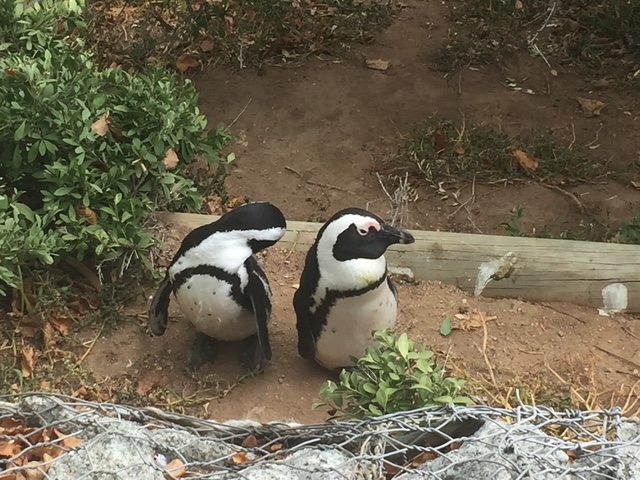
African Penguin
Spheniscus demersus
Boulders Beach,2017
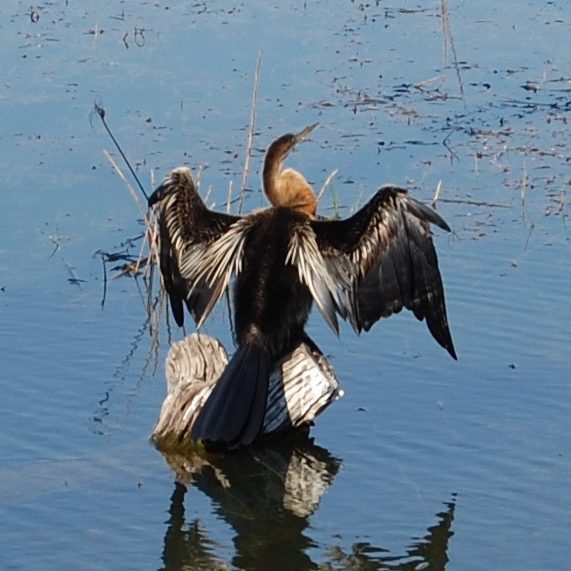
African Darter (Anhinga rufa)
Pilanesberg, 2008
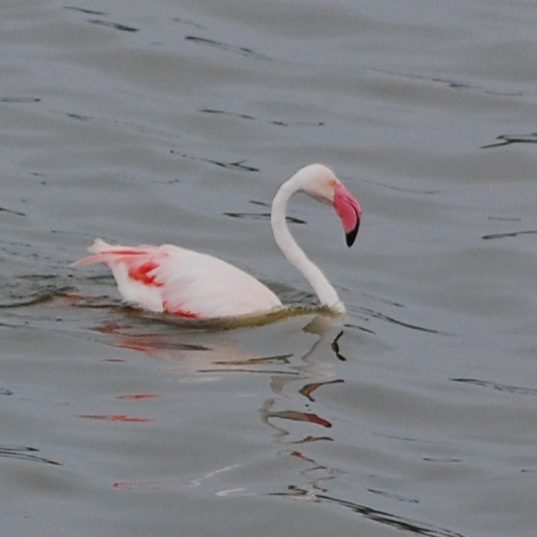
Greater Flamingo Phoenicopterus roseus
Tanzania, Dec 2024
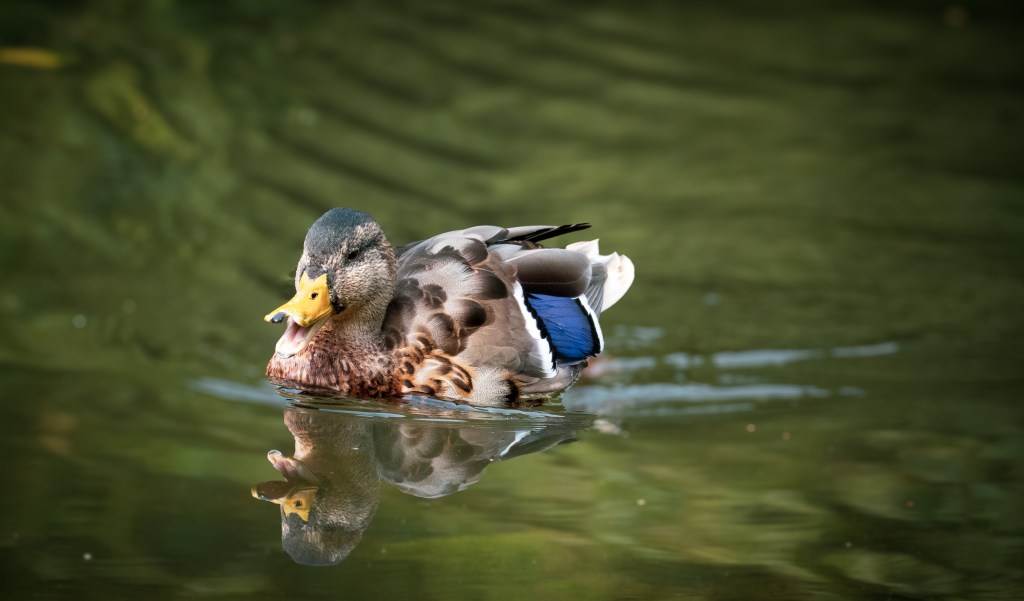
Mallard
Anas platyrhynchos
Basingstoke Canal, Sept 2026
Accipitriformes & Falconiformes — The day-hunting raptors, defined ecologically rather than genealogically: hooked beaks, powerful talons and a predatory lifestyle (McClure et al., 2019). The science has shown that “raptor” is not a single family — eagles, hawks, buzzards and kites form the order Accipitriformes, while falcons sit in their own order, Falconiformes, being genetically closer to parrots and songbirds than to hawks (McCormack et al., 2013). Owls are excluded from this section by our site rule: they are the nocturnal raptors, under Nocturnal birds.
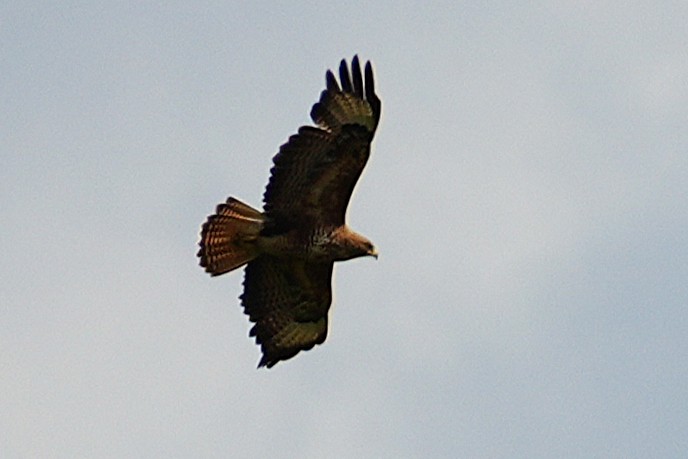
Common Buzzard
Buteo buteo
Thundery Meadows, Jul 2026
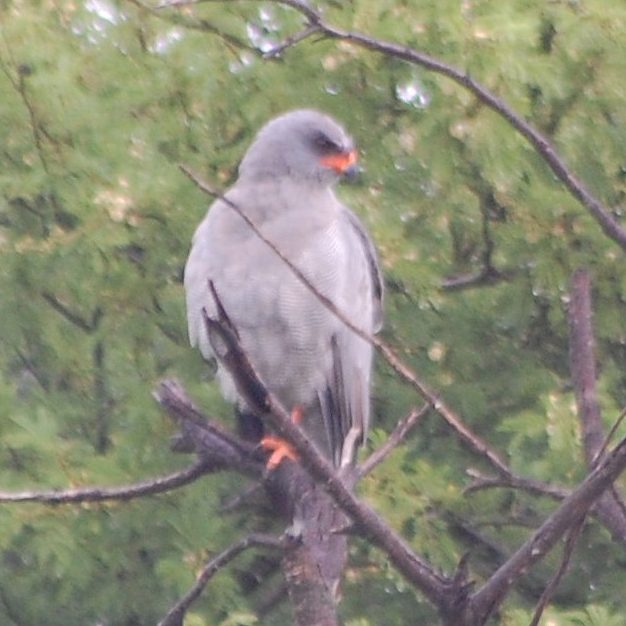
Goshawk
Central Serengeti, Dec 2024
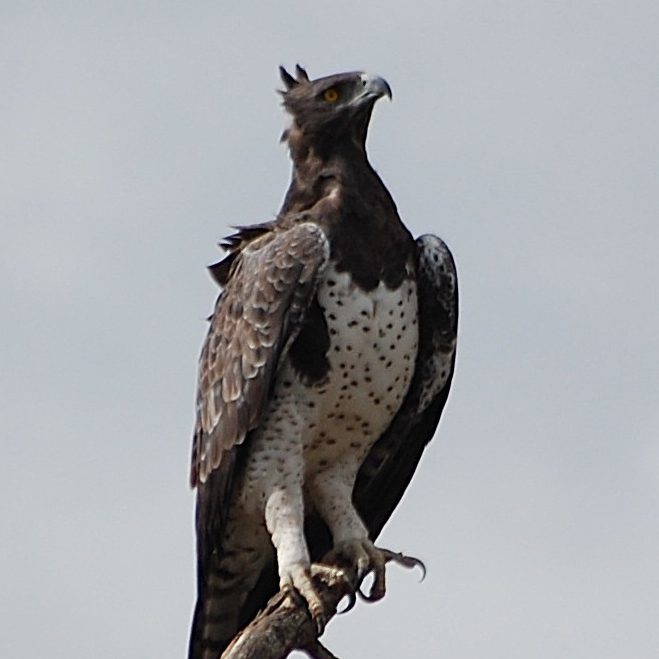
Martial Eagle
Polemaetus bellicosus
Central Serengeti, Dec 2024
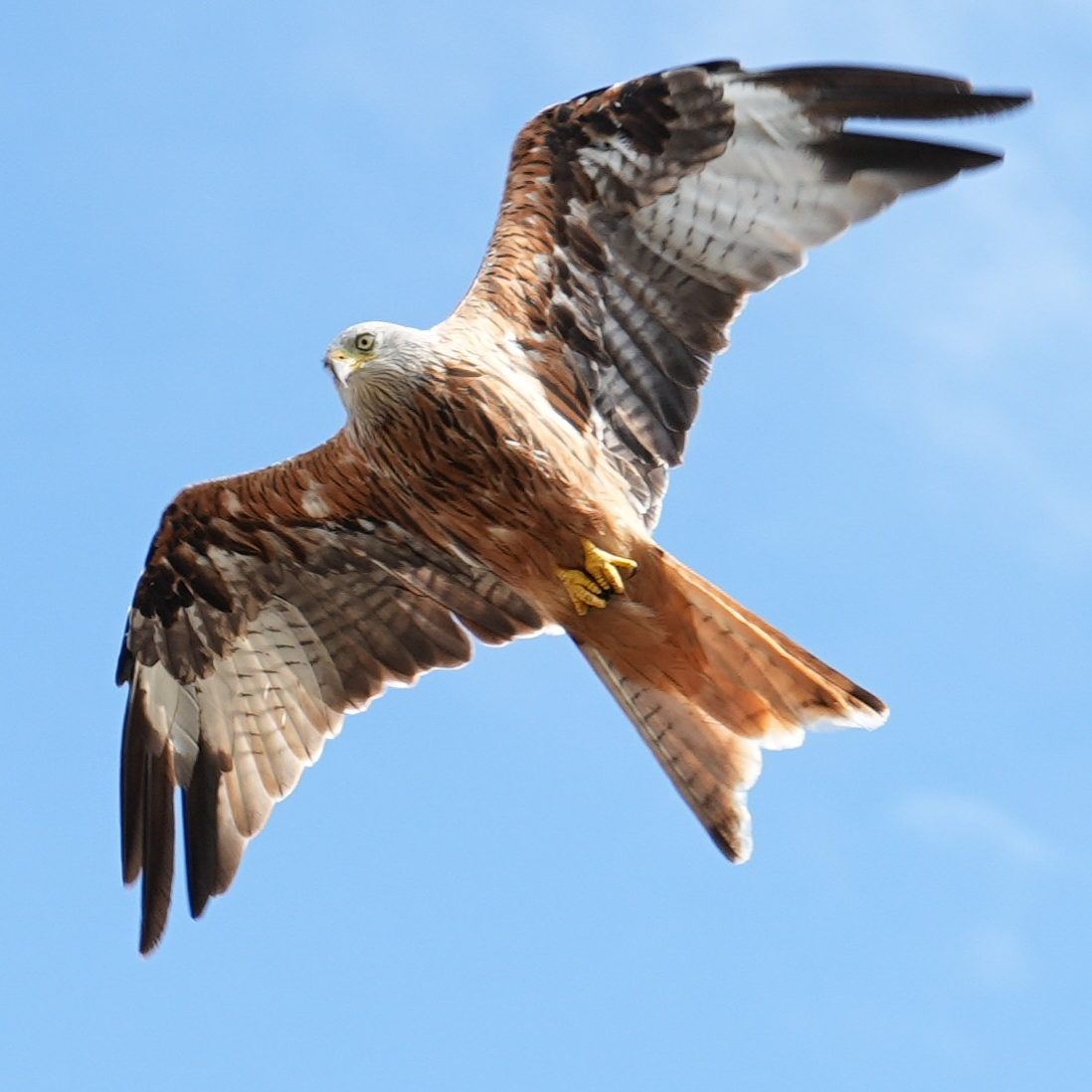
Red kite (J)
Milvus milvus
Gillian Avenue, Aldershot, Jul 2026
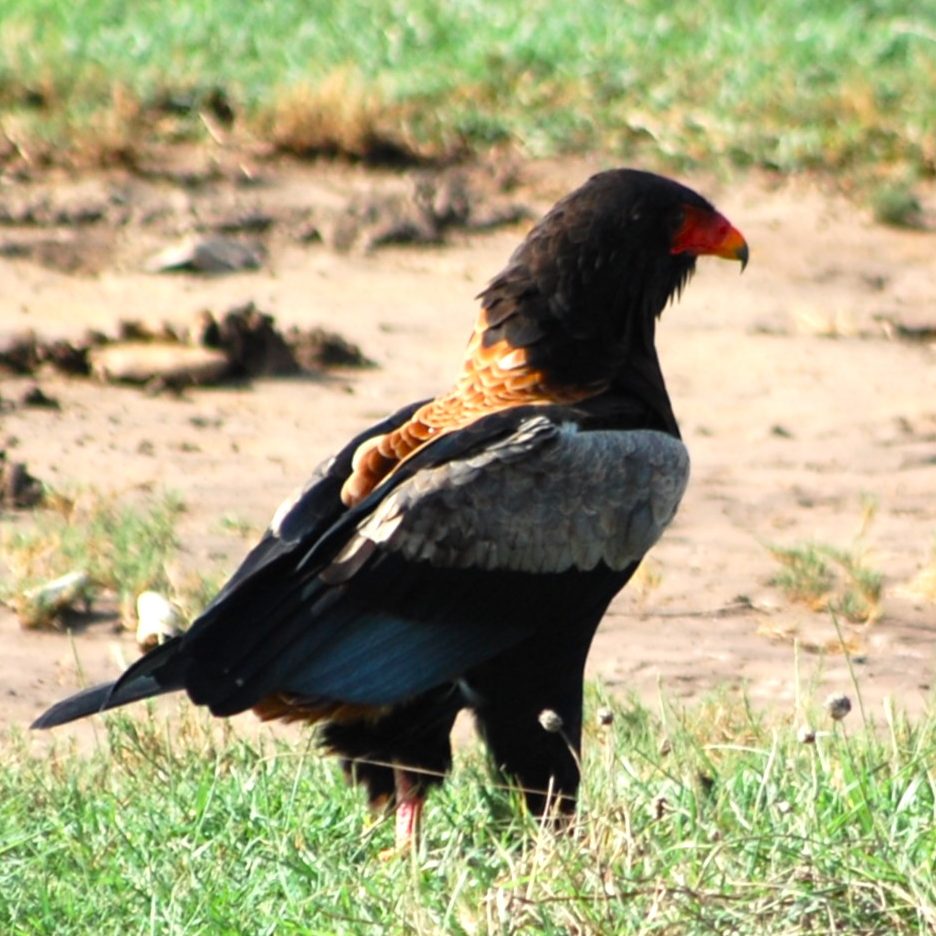
Bateleur
Terathopius ecaudatus
Central Serengeti, Dec 2024
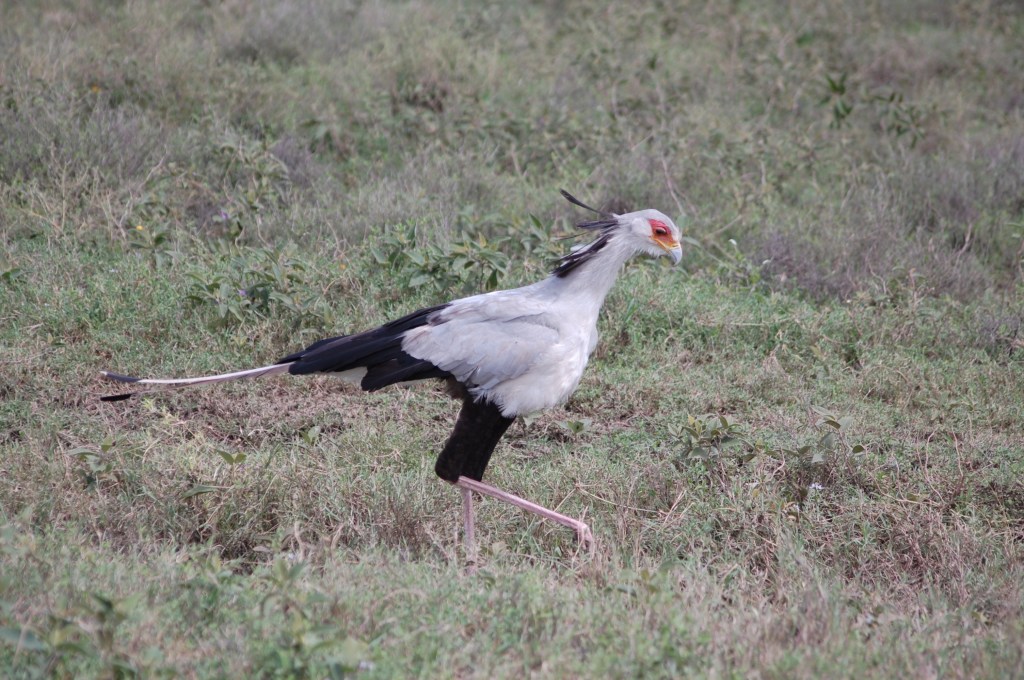
Secretary Bird
Sagittarius serpentarius
Central Serengeti, Dec 2024
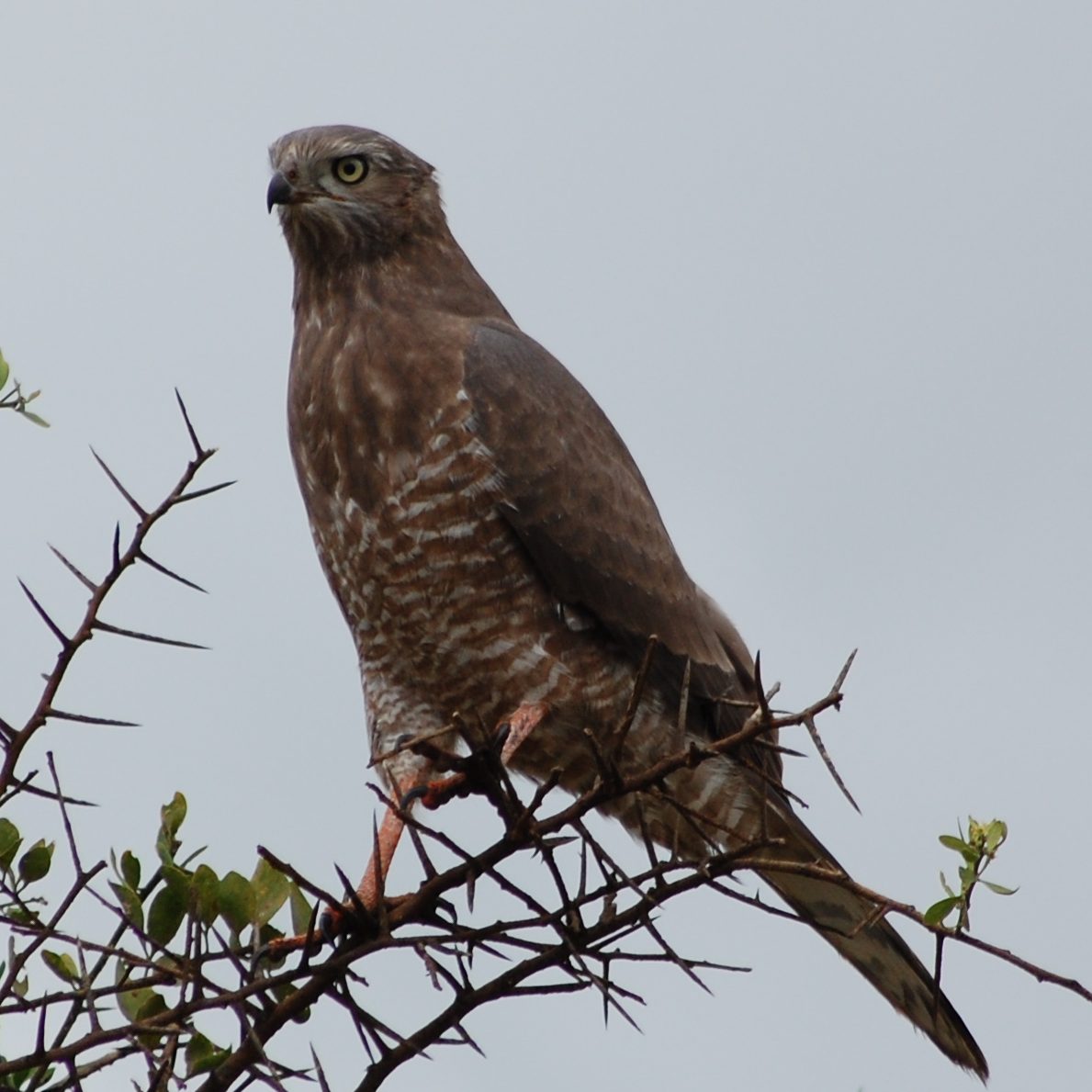
Chanting Goshawks
Genus Melierax
Central Serengeti, Dec 2024
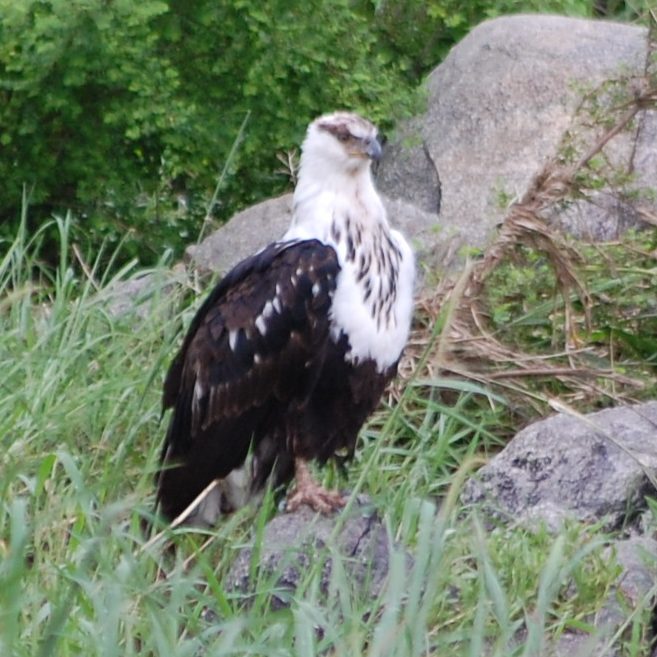
African Fish-Eagle (J)
Icthyophaga vocifer
Central Serengeti, Dec 2024
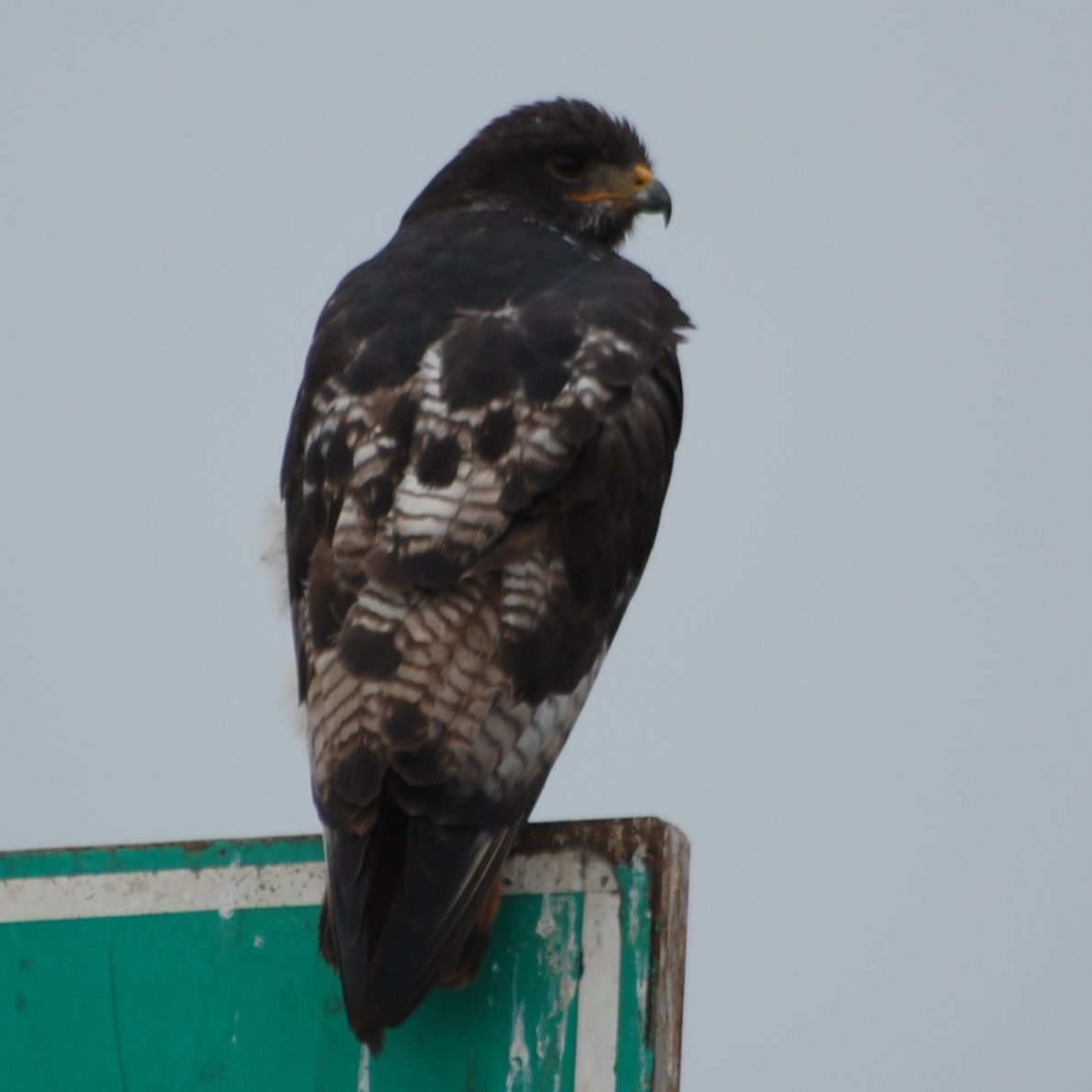
Buteos
Genus Buteo
Central Serengeti, Dec 2024
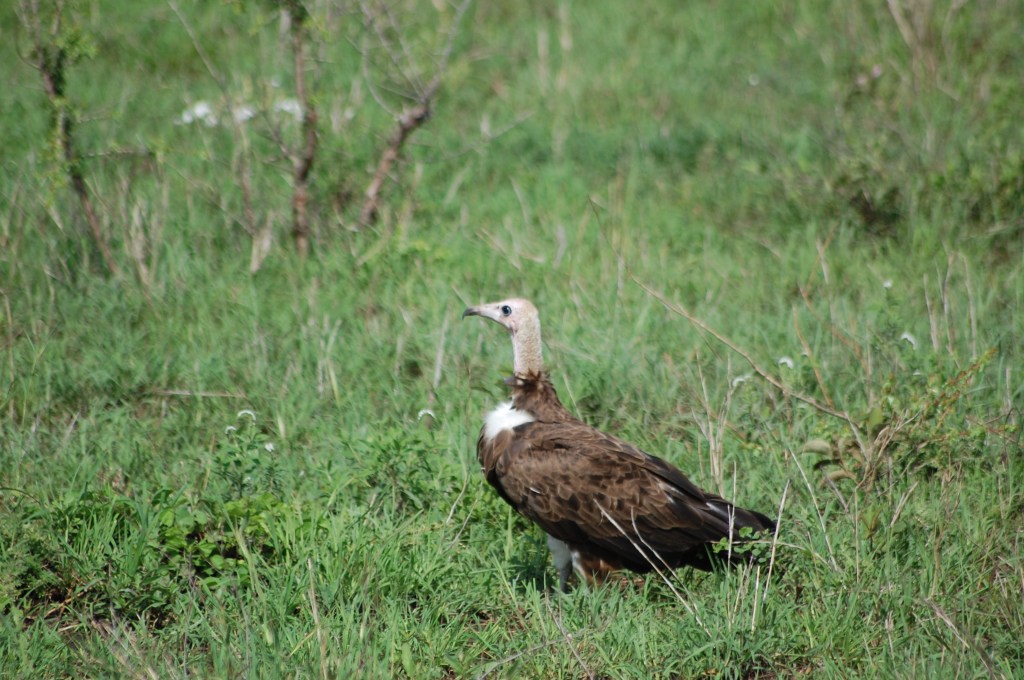
Hooded Vulture
Necrosyrtes monachus
Central Serengeti, Dec 2024
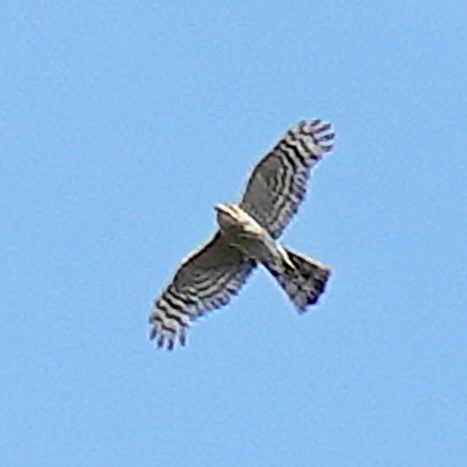
Eurasian Sparrowhawk
Accipiter nisus
Tice’s Meadow, Jul 2026
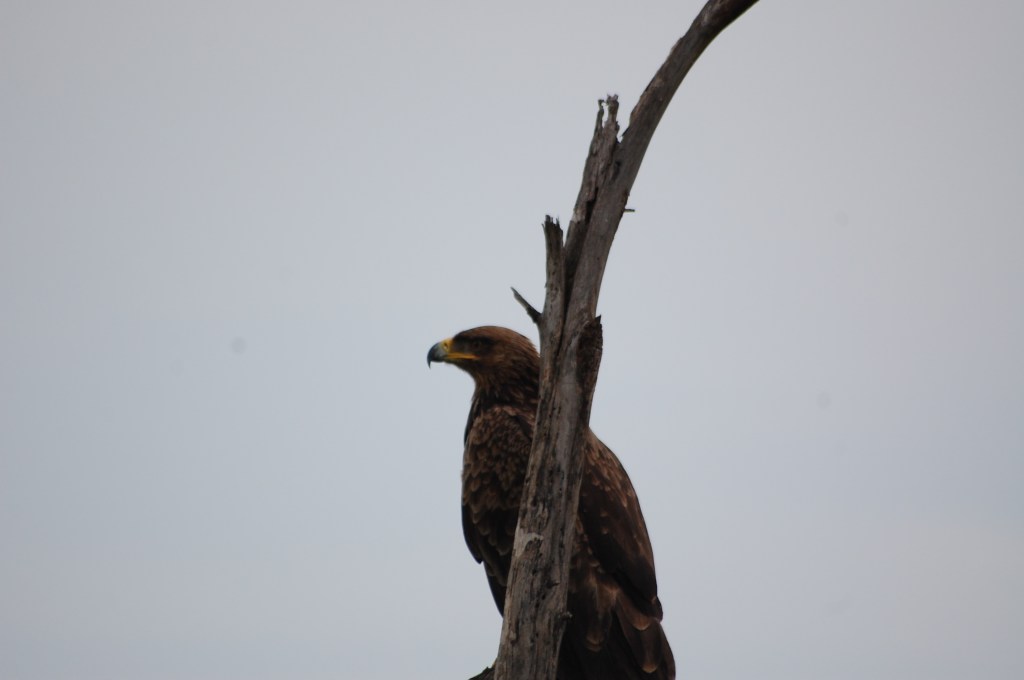
Red-and-yellow barbet
Trachyphonus erythrocephalus
Central Serengeti, Dec 2024
Strigiformes (owls) — Owls are the only truly nocturnal avian raptors, and their whole anatomy is built for it (Sieradzki, 2022). Their large, tubular, light-sensitive eyes give near-total-darkness vision but cannot move, which is why owls compensate with extraordinary head rotation (Madan et al., 2017). The facial disc of specialised feathers acts as a parabolic reflector, and asymmetrical ear openings let them construct an auditory map of space — effectively hearing in 3D (Sieradzki, 2022). Add the soft-fringed flight feathers and the leading-edge comb on the wing, and you have near-silent flight that is unique among birds (Browna & Mindell, 2009; Jaworski & Peake, 2019; Piane & Clark, 2021). The nightjars share the nocturnal slot by lifestyle, though they form a separate order.
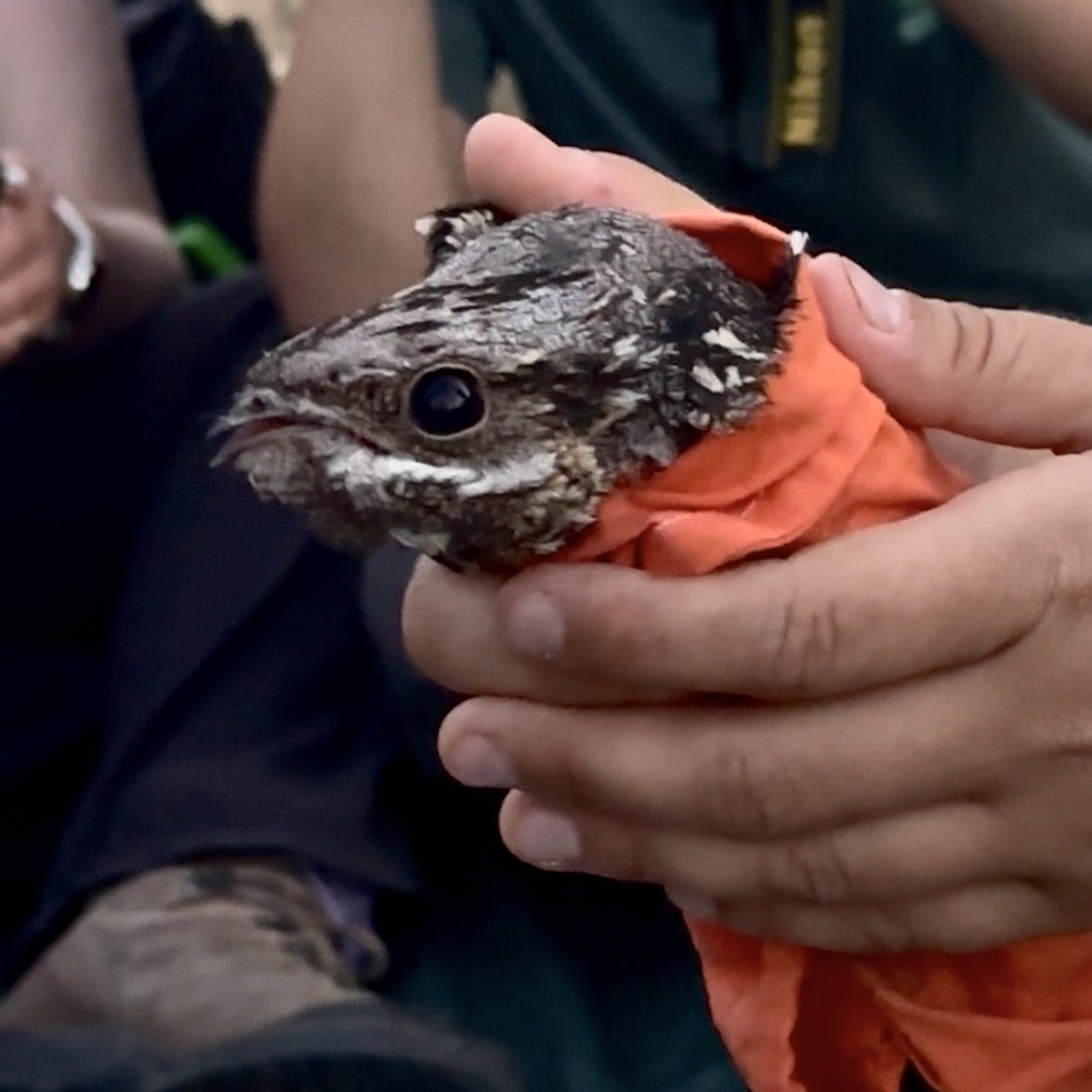
European Nightjar
Caprimulgus europaeus
Coratia, Krka valley, June 2026
This is an ecological grouping rather than a single order. It spans two sister orders: the Piciformes (woodpeckers, toucans, barbets, plus honeyguides, jacamars and puffbirds) and the Bucerotiformes (hornbills, with hoopoes and wood-hoopoes as their molecular relatives rather than the woodpeckers) (Johansson et al., 2001; Moorea & Migliab, 2009). What unites them is a lifestyle: stocky, often brightly coloured birds with disproportionately large bills and firmly arboreal habits — a body plan taken to its extreme in the toucans (Moorea & Migliab, 2009). Distribution is tropical across Asia, Africa and the Americas, with only the woodpeckers pushing into temperate regions (Moorea & Migliab, 2009).
The classic shared trait is the zygodactyl foot — two toes forward, two back — supported by a unique arrangement of the deep flexor tendons, ideal for gripping trunks and branches (Johansson & Ericson, 2003). Cavity nesting is pervasive throughout the order (Moorea & Migliab, 2009). The big bills are themselves a scientific showcase: the toco toucan, with the largest beak relative to body size of any bird, uses it as a controllable thermal radiator — one of the largest thermal windows in the animal kingdom, dissipating on average 60% of total heat loss through the bill (Tattersall et al., 2009; Ven et al., 2016). Hornbills do the same but to a lesser degree (~8% on average), and the effect matters chiefly at temperatures above the birds’ thermoneutral zone (Chaves et al., 2023; Ven et al., 2016). Barbets and toucans are so close that New World barbets turn out to be more closely related to the toucans than to Old World barbets, and the toucan-barbets are sister to the toucans (Johansson et al., 2001; Ostrow et al., 2023).
Worth a sentence for the most famous piece of hornbill biology: the female seals herself into the nest cavity, leaving only a narrow slit through which the male feeds her for 40 days in the smallest species up to 130 days in the largest, moulting her flight feathers while walled in (Finnie, 2018). The classic “mud” seal varies by species — the Black-and-white Casqued Hornbill does use mud, but chemical analysis of Great Hornbill plaster shows it to be pure faecal material (James & Kannan, 2007; Kalina, 1989). Hornbills cannot excavate their own cavities, so their breeding depends on large trees of primary forest, and nest-cavity availability may be their most important population-limiting factor — while their long seed-retention times make them superb seed dispersers for tropical trees (Pasuwan et al., 2022).
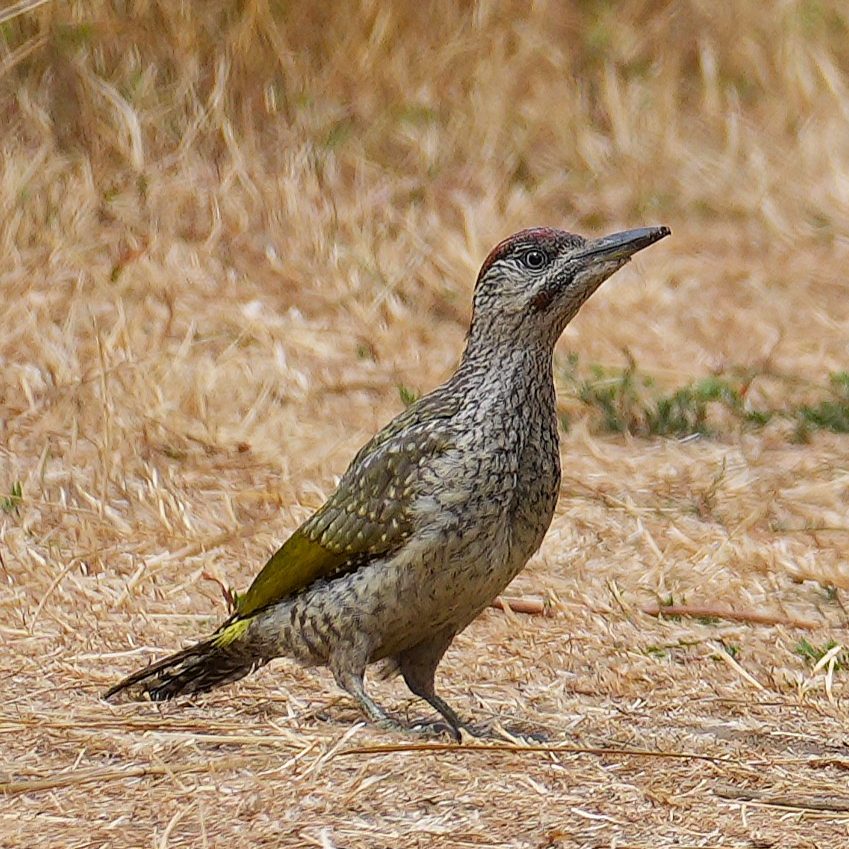
Green Woodpecker
Picus viridis
Tice’s Meadow, Aug 2026
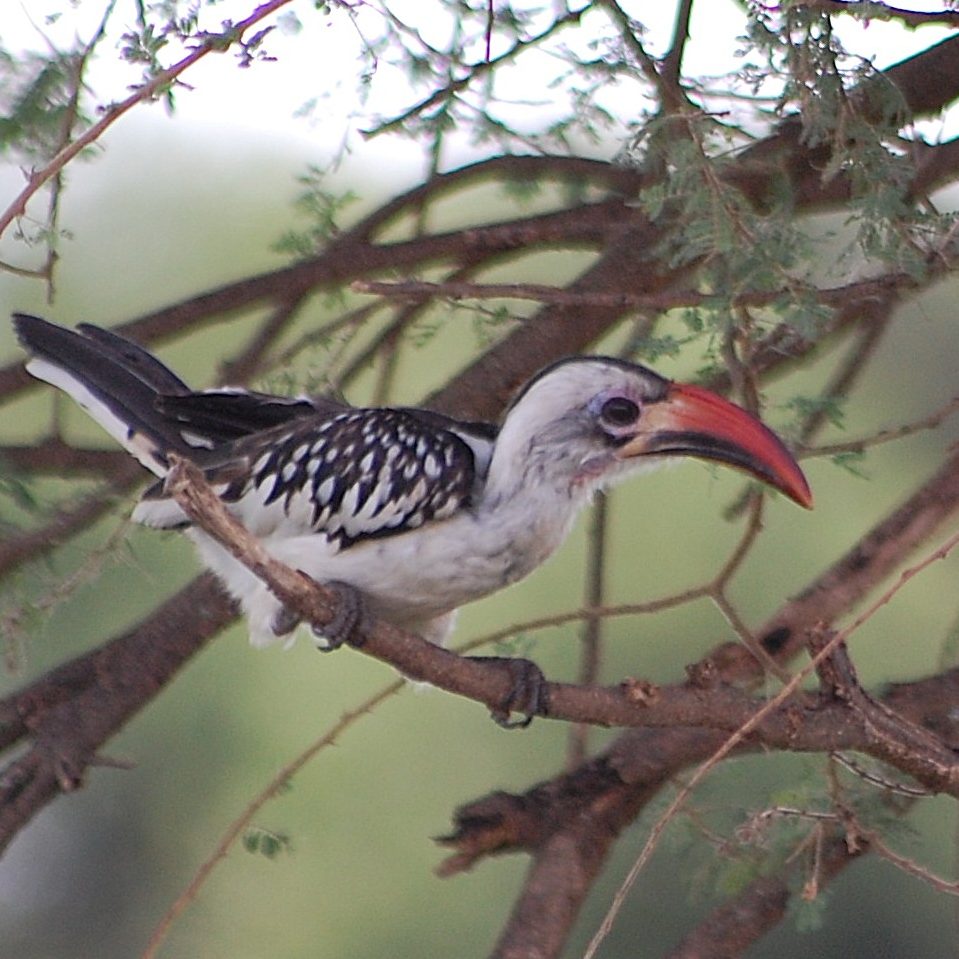
Northern Red-billed Hornbill
Tockus erythrorhynchus
Ngorogoro crater, 2024
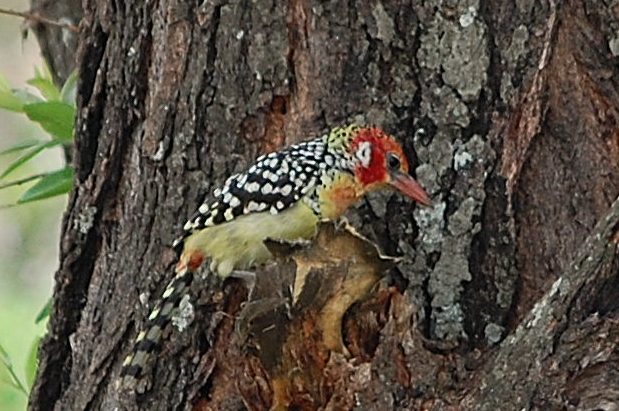
Red-and-yellow barbet
Trachyphonus erythrocephalus
Central Serengeti, Dec 2024
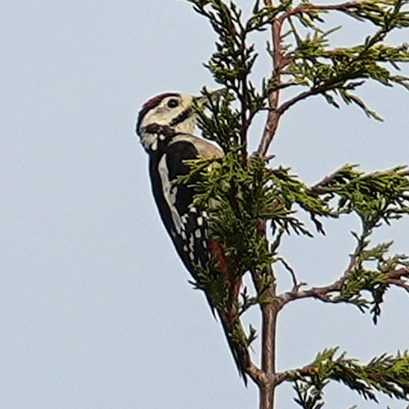
Great Spotted Woodpecker Dendrocopos major
Aldershot, 21 Aug 2026
Northern Red-billed Hornbill
Tockus erythrorhynchus
Ngorogoro crater, 2024
Red-and-yellow barbet
Trachyphonus erythrocephalus
Central Serengeti, Dec 2024
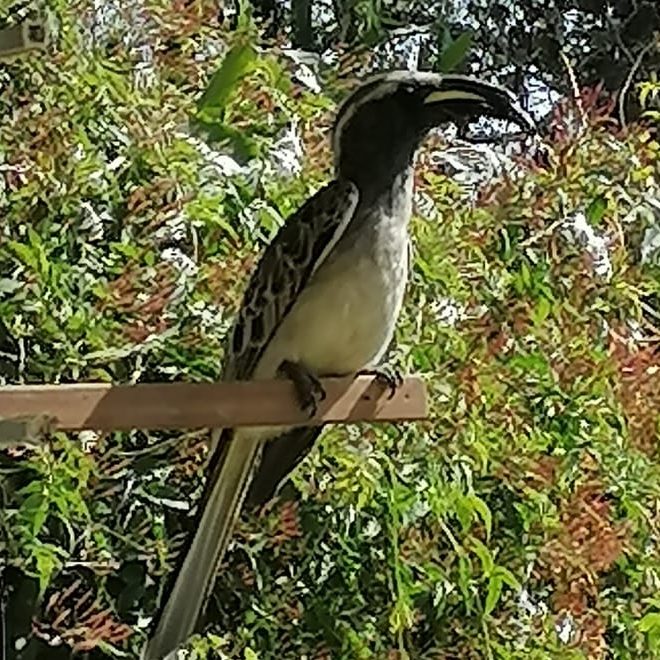
Grey-billed Hornbill
Lophoceros nasutus
Rustenburg, South Africa, Jan 2022
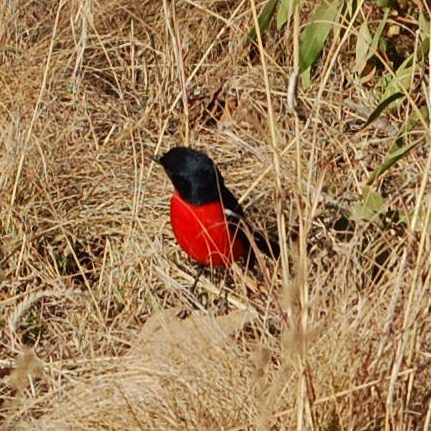
Crimson-breasted Shrike Laniarius atrococcineus
Pilanesberg, 2008
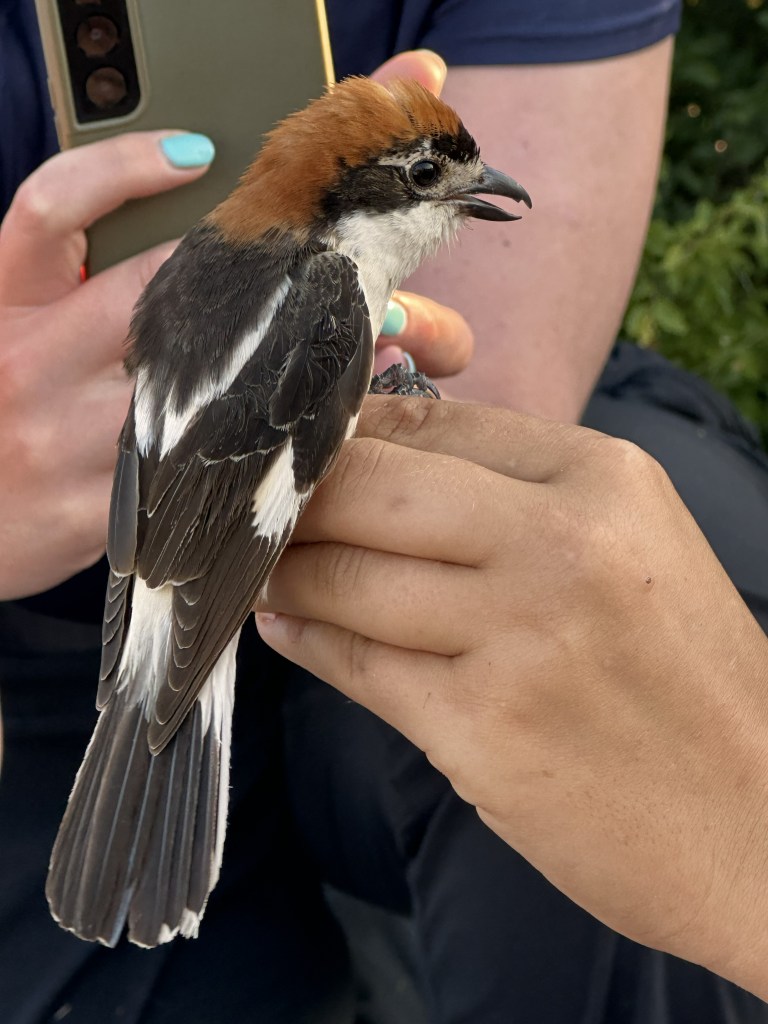
Woodchat Shrike Lanius senator
Krka Valley, Jun 2026
Columbiformes Plump-bodied, small-headed, with small, soft bills — what truly defines a columbid is a bizarre piece of biology: the crop, normally just a food pouch, becomes a milk-making organ. Both parents produce pigeon milk, a curd-like secretion (around 60% protein and 32–36% fat on a dry-matter basis) released by the same hormone, prolactin, that drives lactation in mammals, and regurgitated to the chicks (Ding et al., 2020; Gillespie et al., 2011; Sales & Janssens, 2003). Among all birds, only doves and flamingos feed their young this way (Fain & Houde, 2004). “Pigeon” and “dove” are everyday names, not scientific groups — both are Columbiformes.
Galliformes Pheasants, partridges, grouse, quail, guineafowl, turkeys and peafowl all belong to the order Galliformes, the landfowl — one of the most species-rich of the deeper-branching bird orders (Johnsgard, 2017). They are ground birds through and through: stout scratching feet, nests scraped in soil or vegetation, and chicks that hatch down-covered and largely able to feed themselves. Nearly all familiar gamebirds sit within the single family Phasianidae, the order’s great catch-all (Crowe et al., 2006; Wang et al., 2013). True bustards belong to their own order, Otidiformes, but they share the ground-dwelling lifestyle.
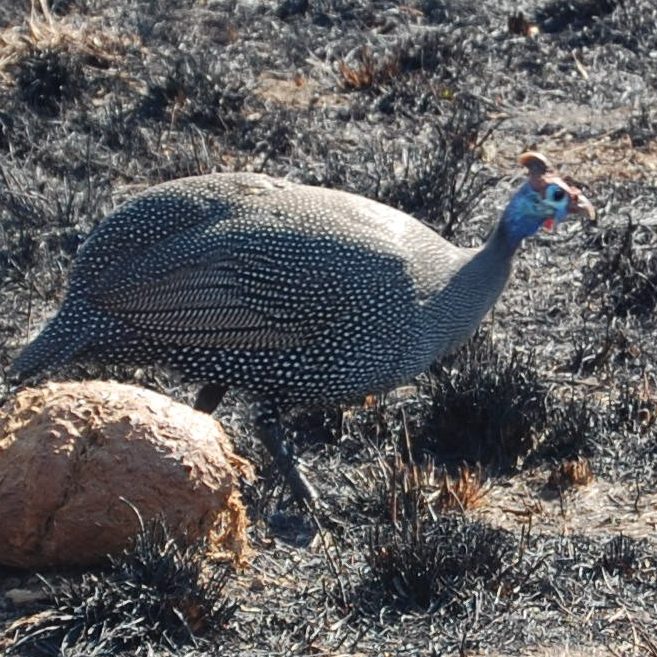
Helmeted Guineafowl
Numida meleagris
Central Serengeti, December 2024
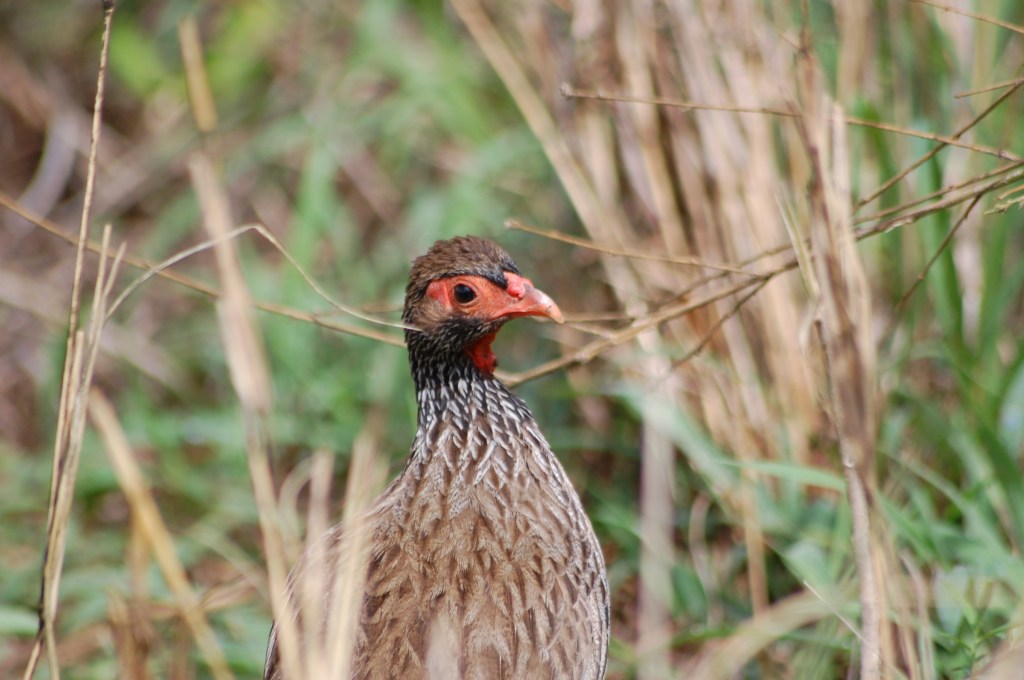
Scaly Francolin
Pternistis squamatus
Central Serengeti, December 2024
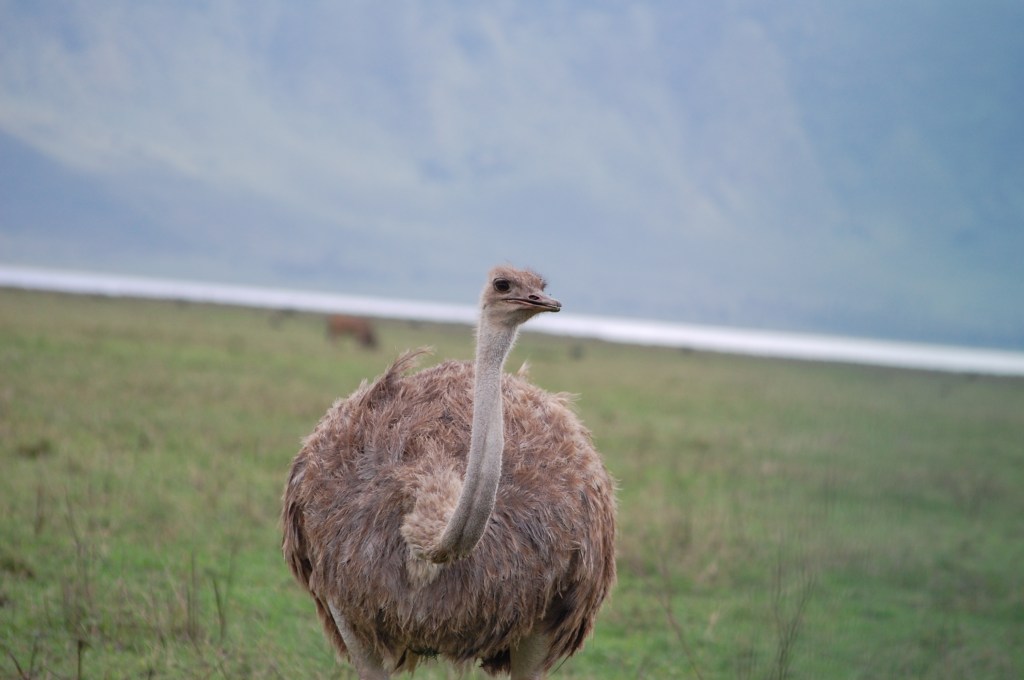
Common Ostrich (F)
Struthio camelus
Ngorogoro crater, 2024
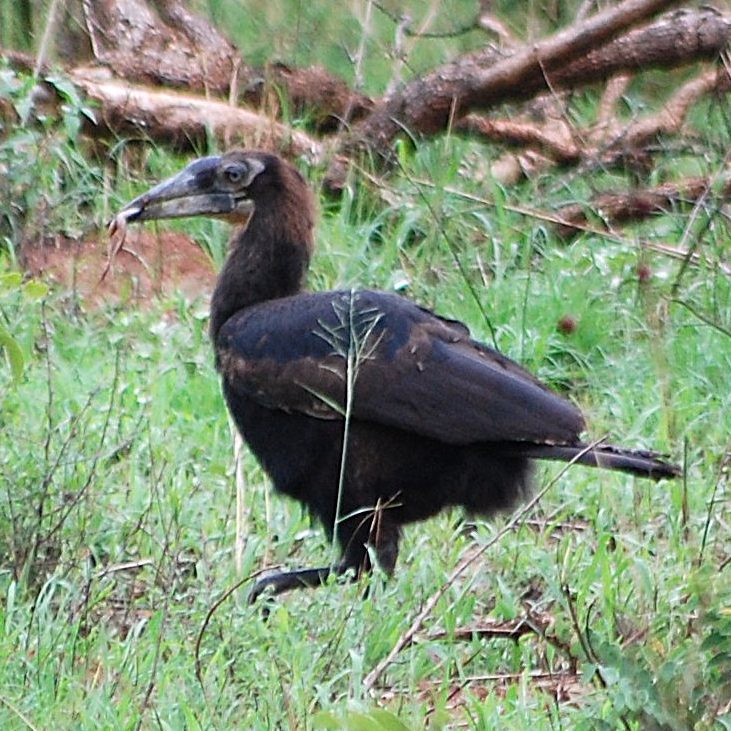
Southern ground hornbill (J)
Bucorvus leadbeateri
Tarengire, Dec 2024
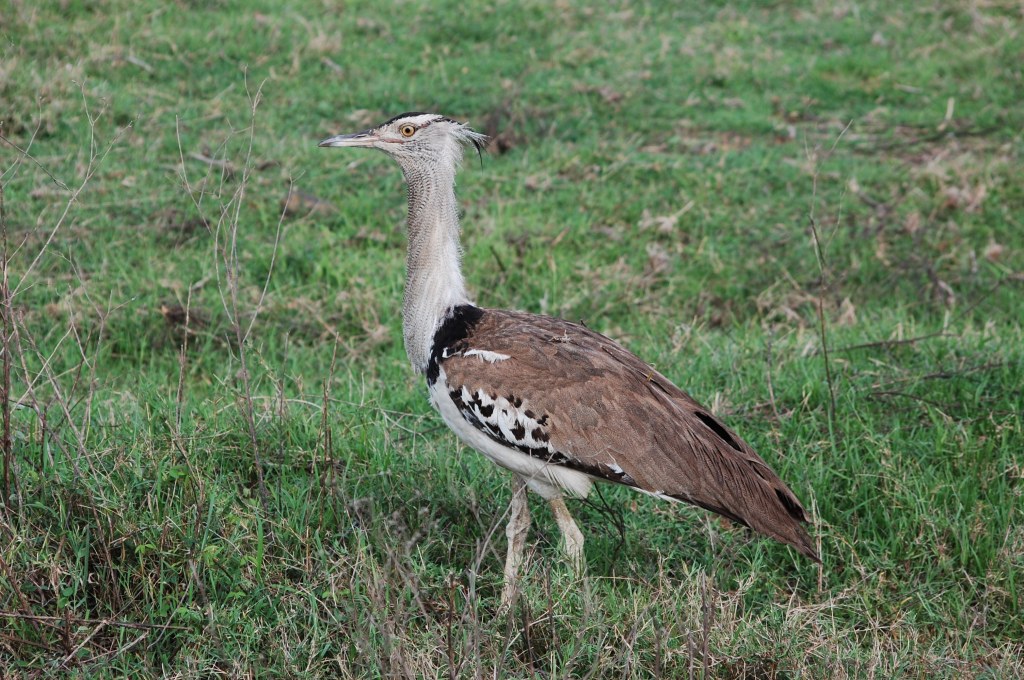
Kori Bustard
Ardeotis kori
Ngorogoro crater, 2024
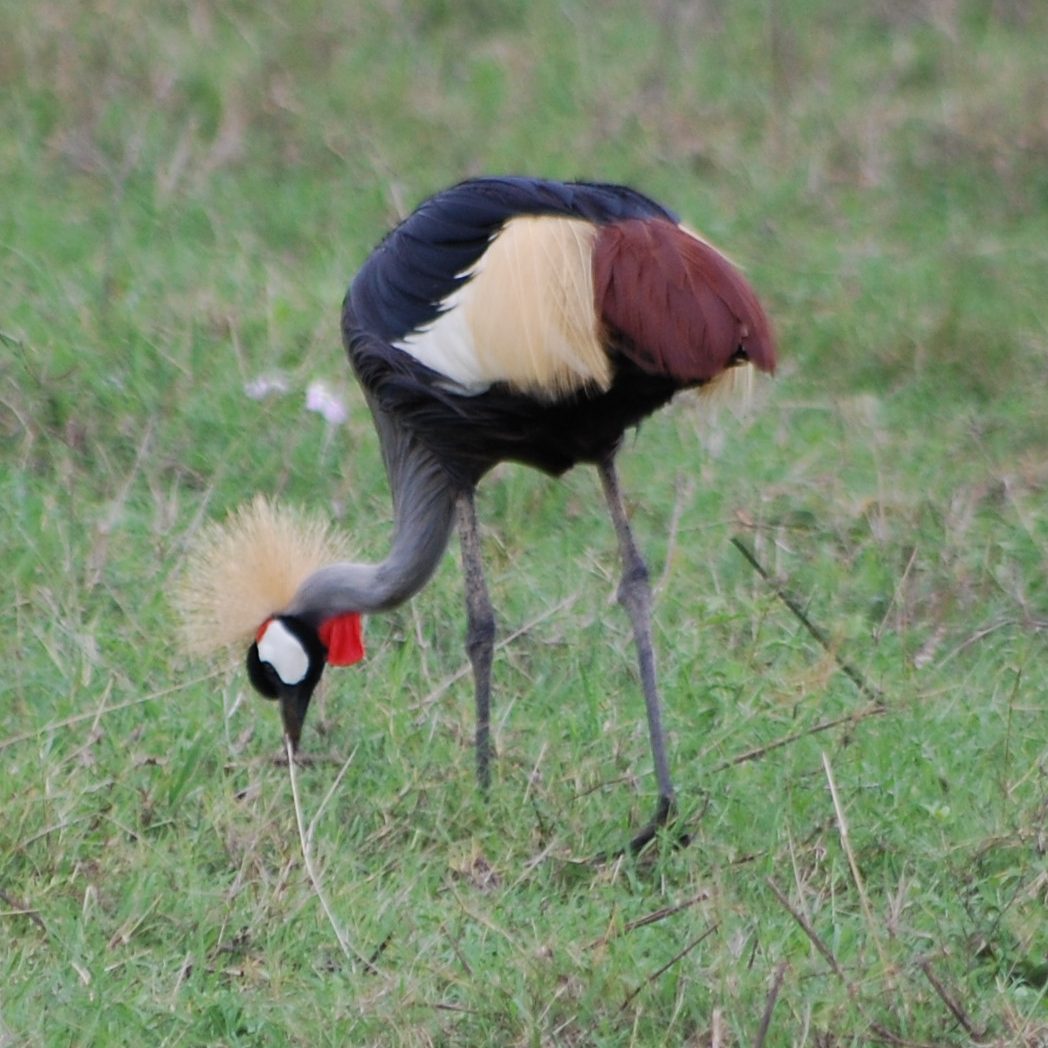
Grey crowned crane
Balearica regulorum
Ngorogoro crater, 2024
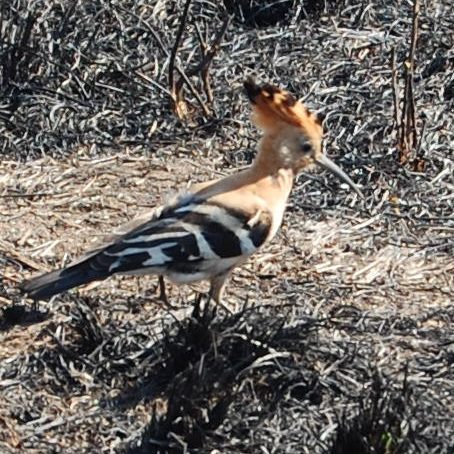
African Hoopoe Upupa africana
Pilanesberg, 2008
Apodiformes — Swifts, treeswifts and hummingbirds form the order Apodiformes — from the Greek for “without feet”, reflecting their tiny, barely functional legs, an adaptation to a life spent almost entirely on the wing (Browna & Mindella,B, 2009). A swift is not a swallow: the resemblance is convergent, since swallows are songbirds (passerines), while swifts’ true relatives are the nightjars and their allies (Browna & Mindella,B, 2009; Ericson et al., 2006). Their aerial mastery is extreme — Alpine swifts make non-stop flights of some 200 days (Liechti et al., 2013), common swifts stay airborne through a ten-month non-breeding period (Bäckman et al., 2017), and black swifts are in the air over 99% of the time, even ascending above 4,000 m on moonlit nights to feed (Hedenström et al., 2022).
Cuculiformes — Cuckoos are slender, long-tailed birds with two toes forward and two back, but their fame rests on brood parasitism: the female lays her egg in another bird’s nest and leaves the host to rear her chick (Aragoâ, 1999). This has produced one of the textbook arms races in evolution. The cuckoo females come in host-specific races whose eggs mimic their victim’s, while hosts evolve ever-sharper rejection of foreign eggs (Stoddard et al., 2014; Stoddard & Stevens, 2010). Across Europe alone there are at least 17 cuckoo egg “morphs”, each tuned to a different host (Fossøy et al., 2010), and females specialise on particular host species (Marchetti et al., 1998). Not all cuckoos cheat, though — many, including the New World ground-cuckoos, build nests and raise their own young (Aragoâ, 1999; Hughes, 1996).
 Badger Ecology