
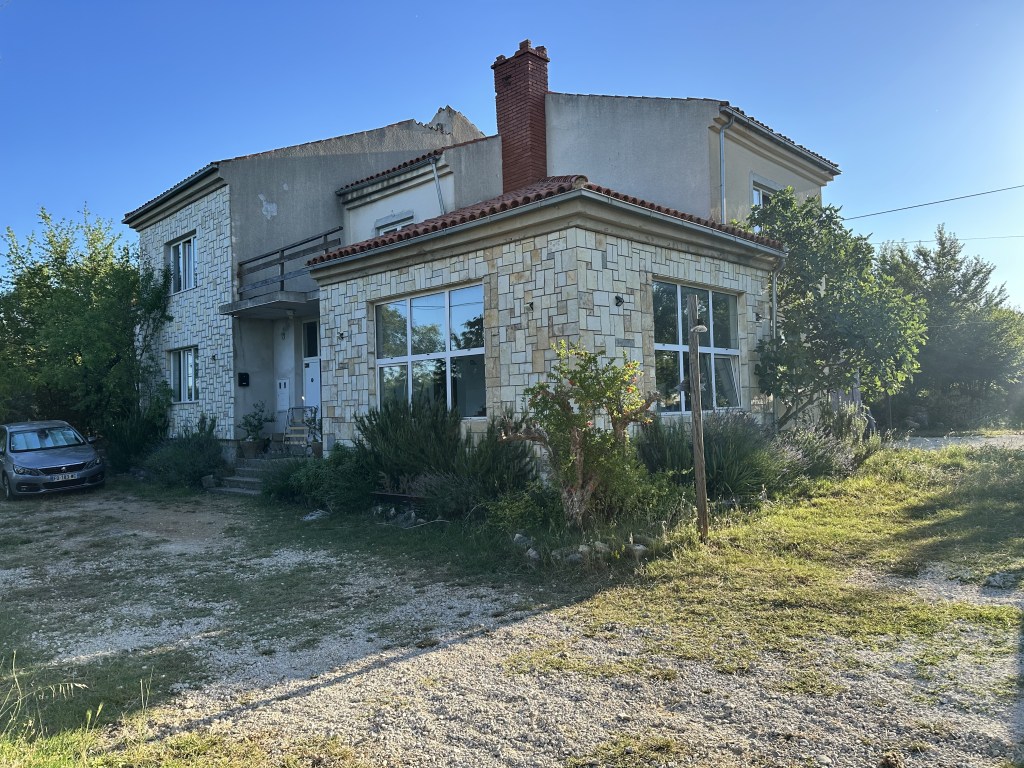
Location: Krka National Park, Croatia
Duration: 10 hours
Survey types: Butterfly transect and cave cricket survey
Habitats: Mediterranean woodland, grassland, river corridor and cave habitat
Field Notes
My first full day of field surveying in Croatia involved two contrasting invertebrate surveys and provided an excellent introduction to both the ecological diversity of Krka National Park and the practical demands of fieldwork in a Mediterranean environment.
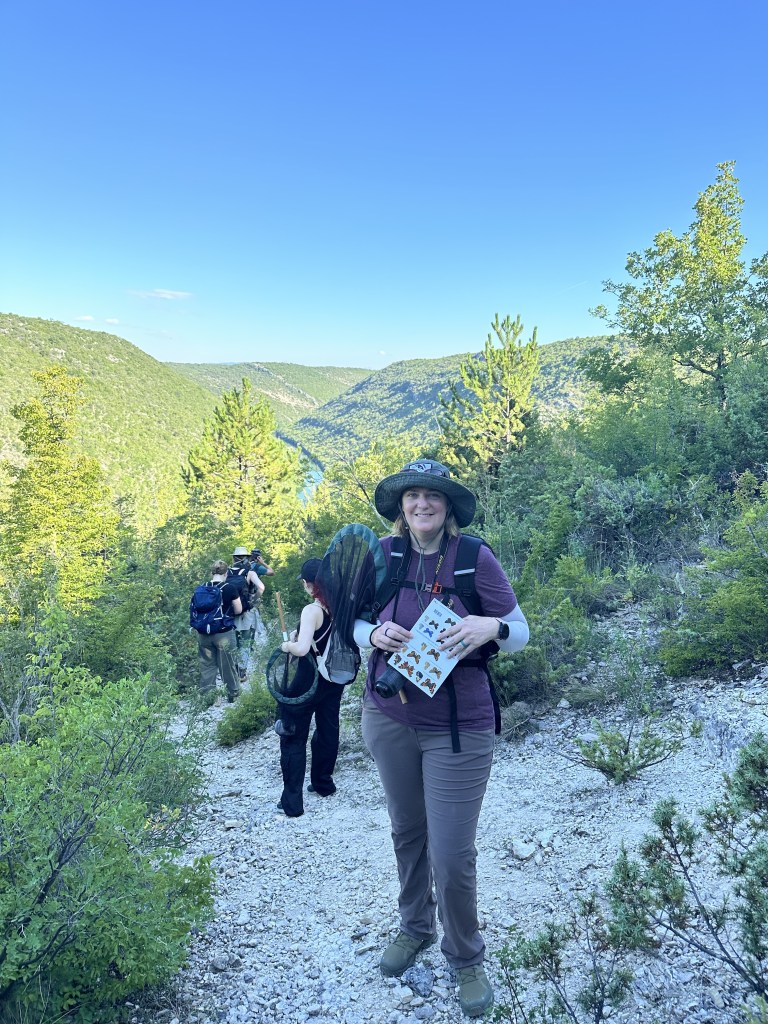
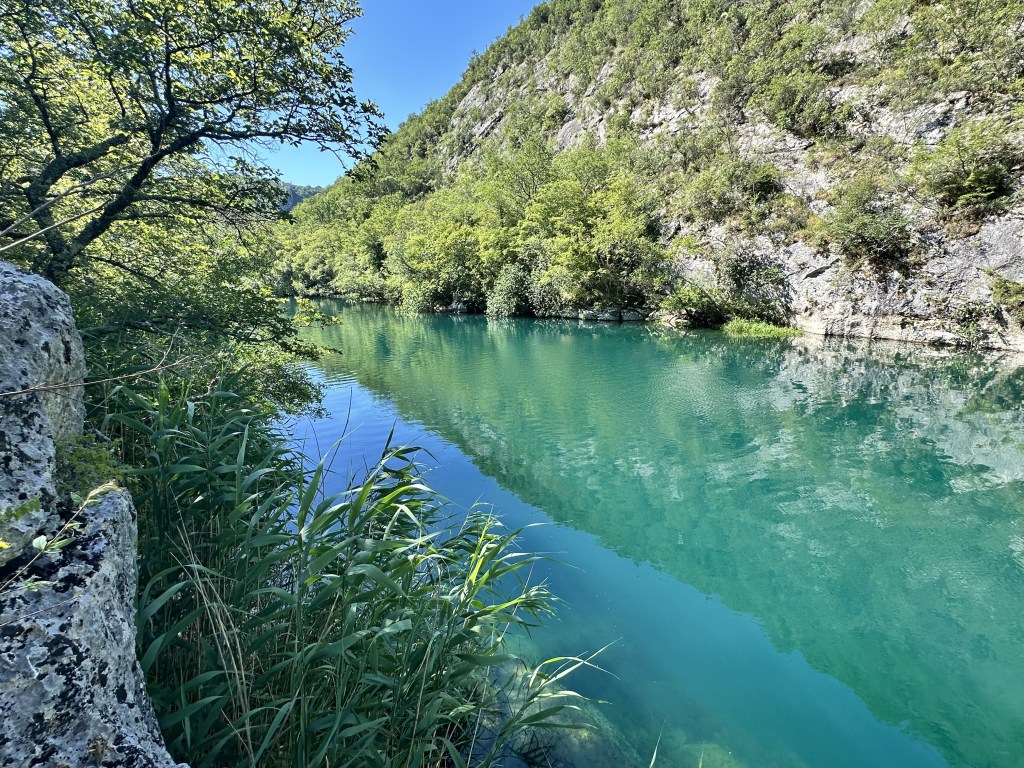
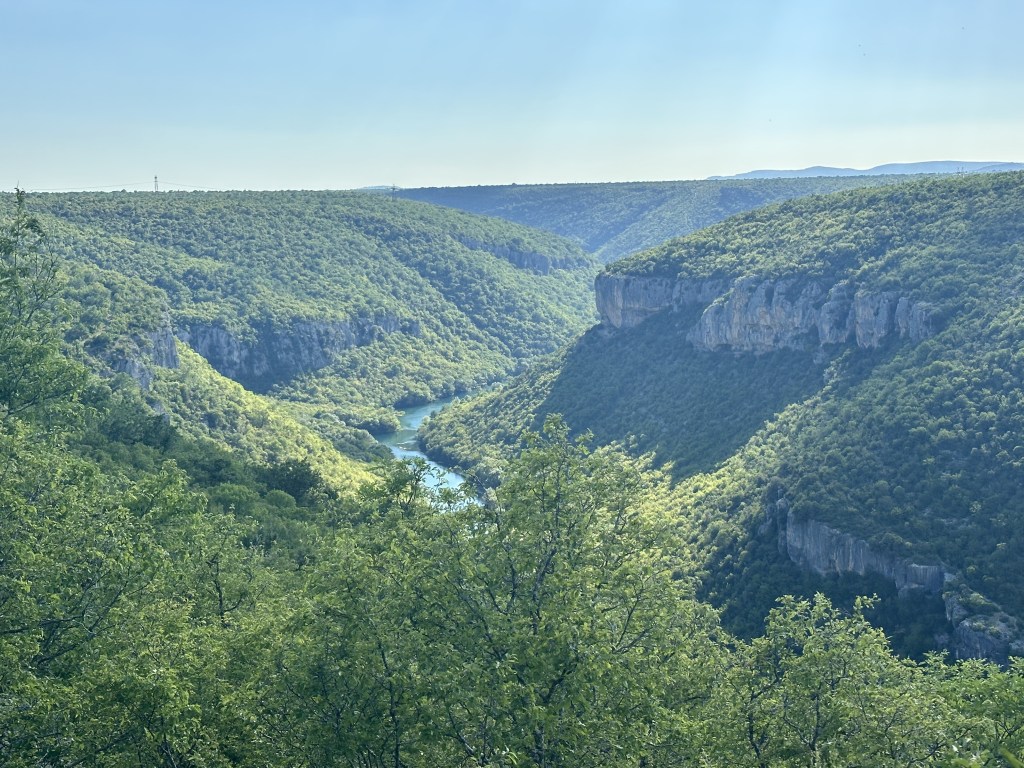
The daytime survey consisted of approximately five hours of butterfly monitoring along Transect 5, a route of around 1.8 km passing through a varied mosaic of Mediterranean woodland, open grassland and riparian habitat beside the Krka River. The route descended steeply into the river valley before climbing back out, making the survey physically demanding in temperatures approaching 35°C.
The diversity of habitats along the transect made it particularly interesting from an ecological perspective. More open, sun-exposed sections supported active butterfly assemblages, while woodland edges and more sheltered sections provided contrasting conditions and vegetation structure. Moving through these different habitats gave me an opportunity to consider not only which species were present, but also how their distribution appeared to relate to factors such as vegetation, shade, exposure and proximity to water.
The river corridor itself was exceptionally rich in wildlife. Pool Frogs (Pelophylax lessonae) could be heard calling regularly from the margins of the Krka, while dragonflies and damselflies were frequently seen patrolling above the water and surrounding vegetation. The combination of freshwater, riparian vegetation, grassland and woodland created a highly varied ecological corridor and highlighted the importance of habitat connectivity in supporting a broad range of species.
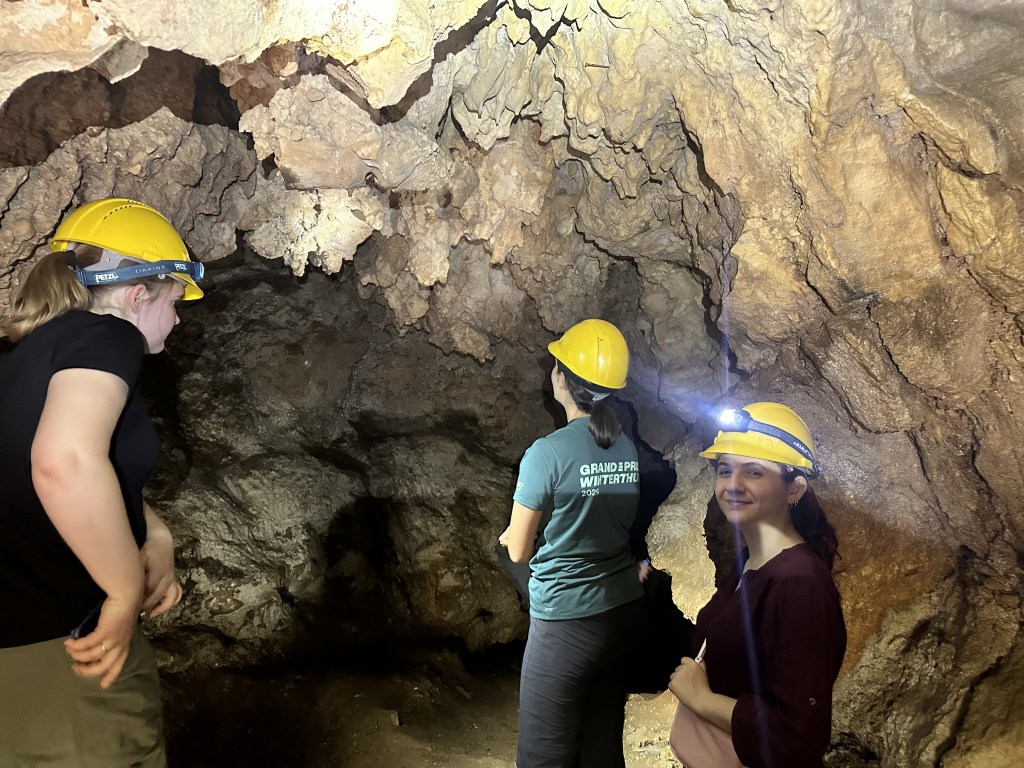
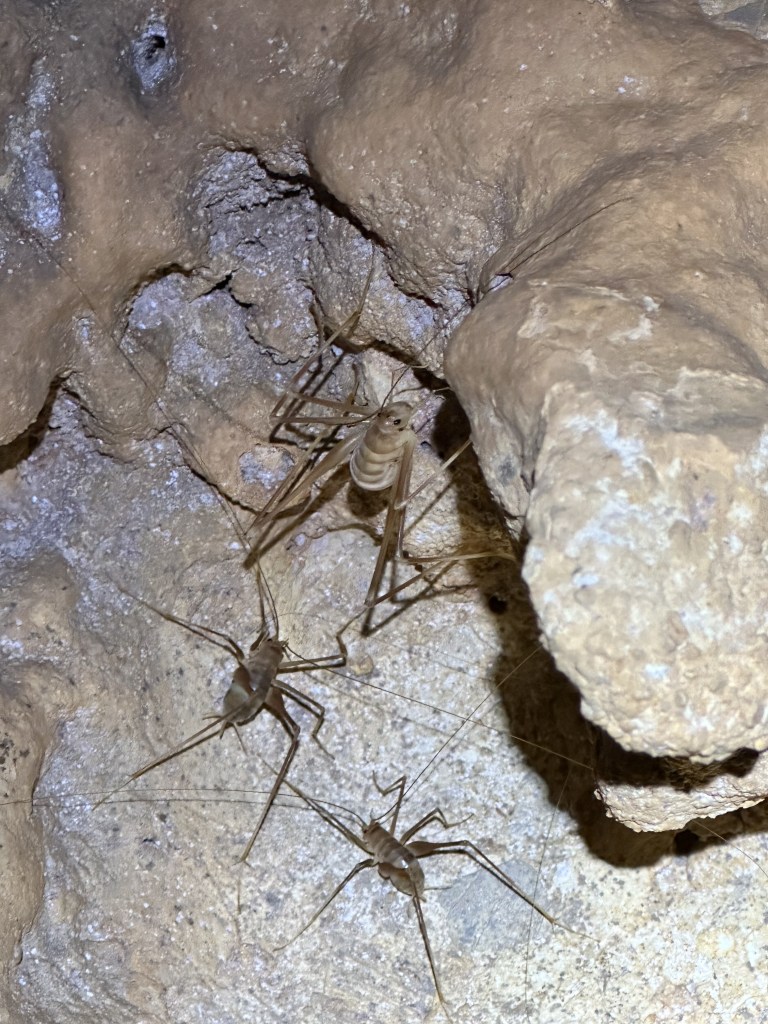
Later that evening, I took part in a cave cricket survey within Jazinka Cave. The change in environment was striking: after several hours surveying in intense heat and bright sunlight, the cave provided a cool, dark and relatively stable subterranean habitat. This was my first experience of conducting an ecological survey underground and introduced me to a very different group of organisms and set of environmental conditions.
Survey Method
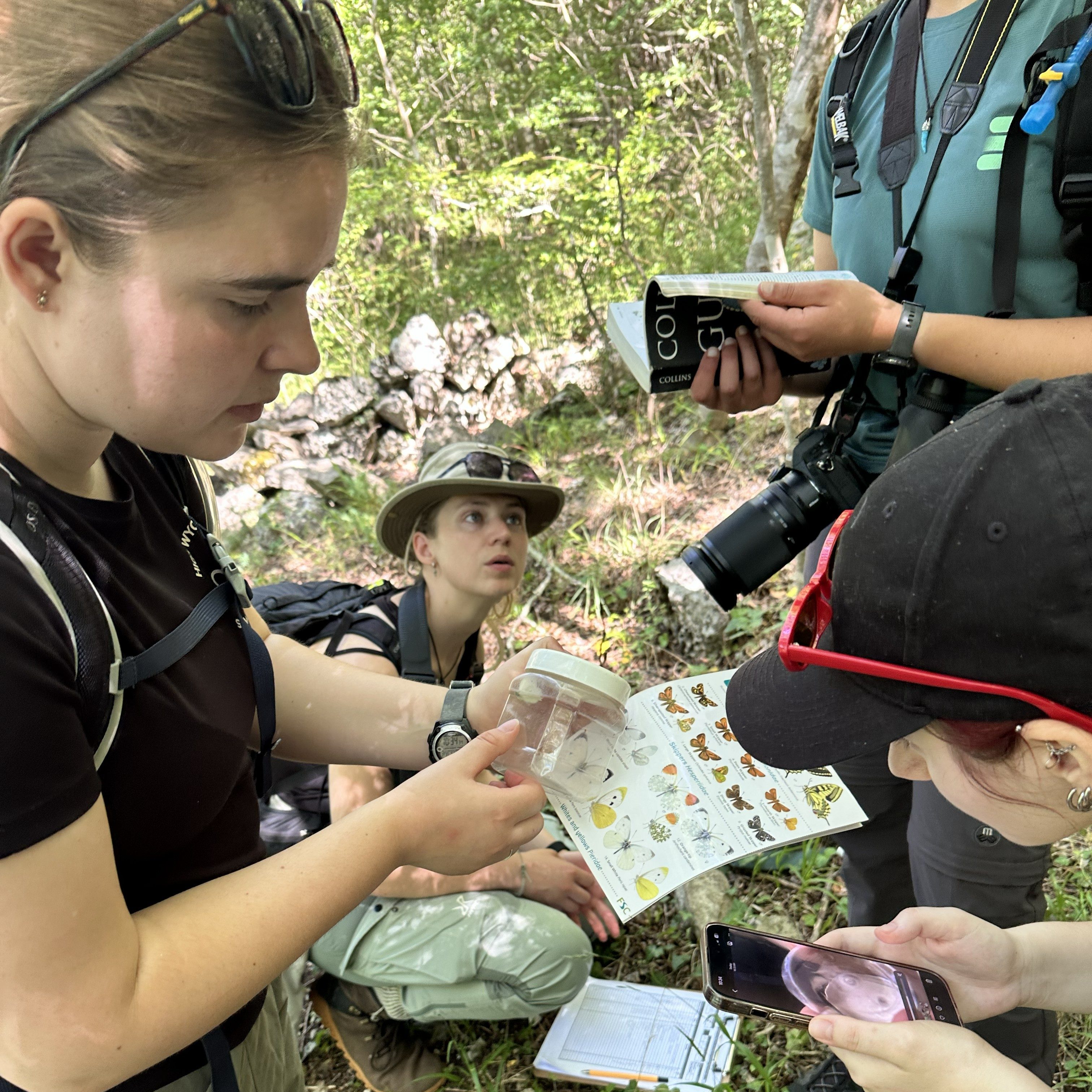
During the butterfly survey, Transect 5 was walked systematically at a steady pace while recording butterflies encountered along the route. Individuals were identified where possible using visible field characteristics including wing shape, colouration, markings, flight pattern and behaviour, together with the habitat in which they were observed.
Particular attention was paid to changes in habitat along the transect, as these could influence butterfly abundance and species composition. The survey therefore provided useful experience in linking species observations with habitat characteristics rather than considering records in isolation.
The high temperatures also required careful management of field conditions, including maintaining an appropriate survey pace, remaining hydrated and continuing to observe accurately despite the physical demands of the route.
The evening cave cricket survey required a different approach. Surveying took place under low-light conditions within the cave, where careful movement and close observation were necessary. The experience introduced me to the practical considerations associated with subterranean survey work, including restricted visibility, uneven terrain and the need to minimise disturbance to species occupying the cave environment.
Key Species Encountered
- Silver-washed Fritillary (Argynnis paphia)
- Meadow Brown (Maniola jurtina)
- Small White (Pieris rapae)
- Pool Frog (Pelophylax lessonae)
- Cave crickets
Dragonflies and damselflies were also regularly observed along the Krka River corridor, particularly around the water margins and associated vegetation.
Skills Developed
- Butterfly identification under field conditions
- Application of butterfly transect survey methodology
- Recognition of butterfly behaviour and flight characteristics
- Recording ecological observations systematically
- Relating species occurrence to habitat structure and environmental conditions
- Identification of broad habitat transitions along a survey route
- Introduction to subterranean invertebrate surveying
- Working safely and effectively in low-light cave conditions
- Maintaining survey accuracy during physically demanding fieldwork
- Working collaboratively as part of an ecological survey team
Reflection
This was one of the most memorable days of the expedition because it combined two very different ecological environments within a single day. The butterfly transect was particularly rewarding, both because of the landscape through which it passed and because it encouraged me to look beyond simply identifying individual species. I began to consider more closely why butterflies were occurring in particular sections of the transect and how factors such as vegetation structure, woodland edge, sunlight and proximity to the river could influence their distribution.
The survey also demonstrated how valuable transitional habitats can be. Moving between woodland, open grassland and the river corridor produced noticeable changes in wildlife activity and reinforced the importance of habitat mosaics in creating a range of ecological niches within a relatively small area.
The evening survey at Jazinka Cave provided an almost complete ecological contrast. Entering a subterranean environment after a long day in temperatures of around 35°C emphasised how dramatically conditions can change over a short distance. Light, temperature, vegetation and available habitat were entirely different, yet the cave supported its own specialised invertebrate community.
Completing approximately ten hours of survey work across these contrasting habitats was physically challenging but extremely rewarding. It strengthened my confidence in working under unfamiliar field conditions, improved my ability to observe species in relation to their habitat and reinforced the importance of adaptability in ecological surveying. It also provided an early indication of the range of survey techniques and ecological systems I would encounter throughout the Croatia expedition.
Photographs
 Badger Ecology