
Location: Krka National Park, Croatia
Fieldwork: Herpetofauna surveying, biodiversity discussions, mammal data analysis and bat mist-netting
Habitats: Mediterranean woodland, scrub, rocky ground and freshwater habitat
| Time | Activity |
|---|---|
| 6:00 AM | Herpetofauna survey on Transects 2 and 3 |
| 1:00 PM | Biodiversity discussions |
| 2:00 PM | Invertebrate lecture |
| 3:30 PM | Mammal data analysis |
| 6:30 PM | Bat mist-netting survey at the waterfall |
Field Notes
Activity Overview
Day five began at 6:00 am with a herpetofauna survey along Transects 2 and 3. The afternoon focused on biodiversity, invertebrates and the analysis of mammal survey data before we travelled to the waterfall site for an evening bat mist-netting survey.
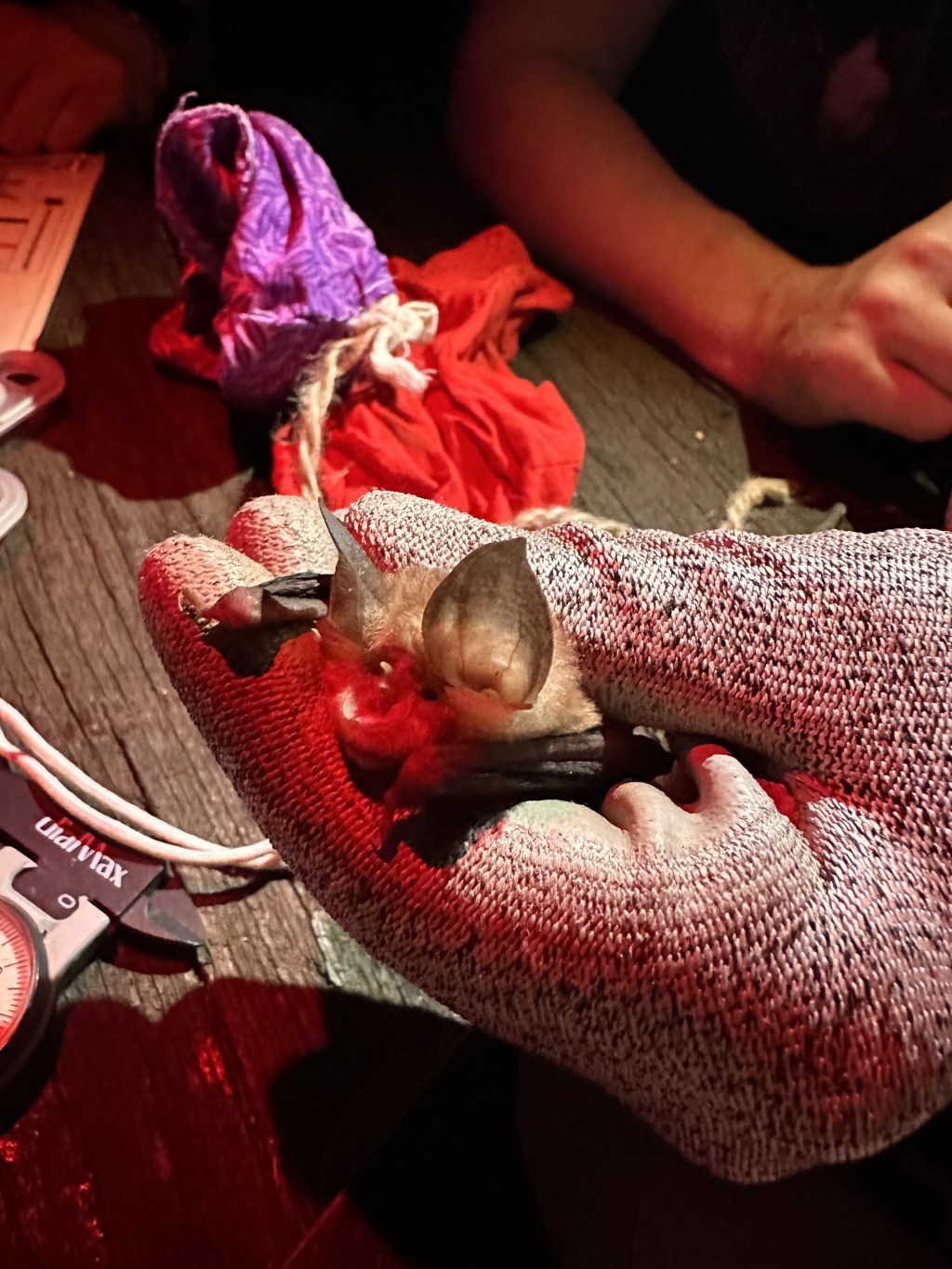
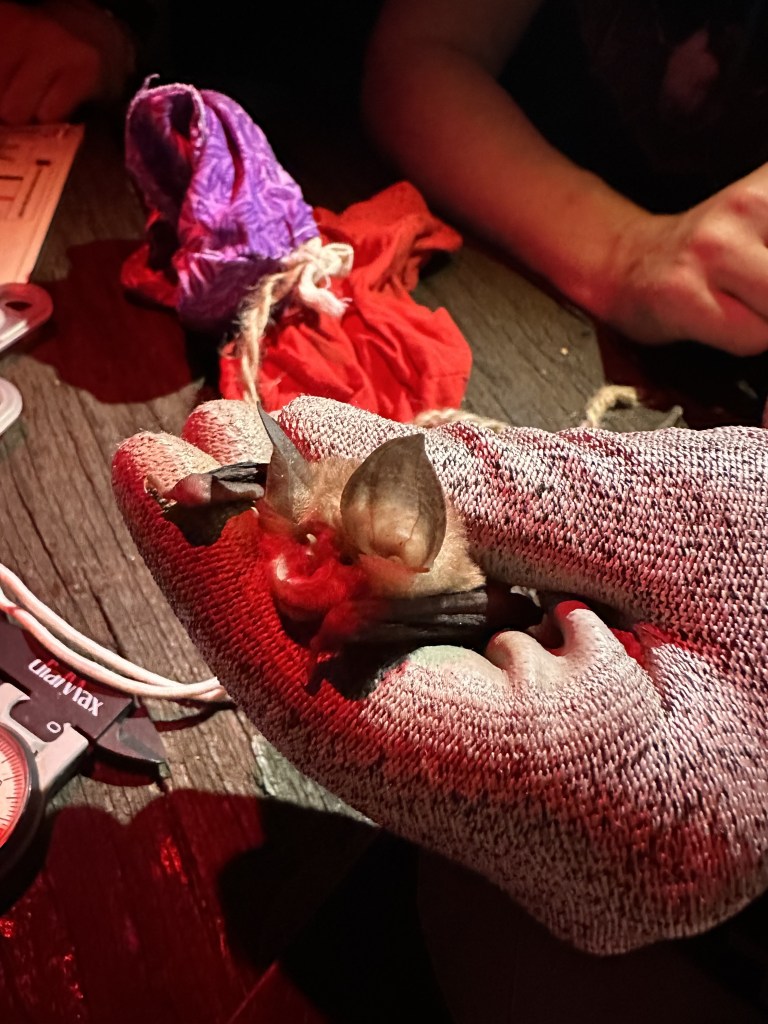
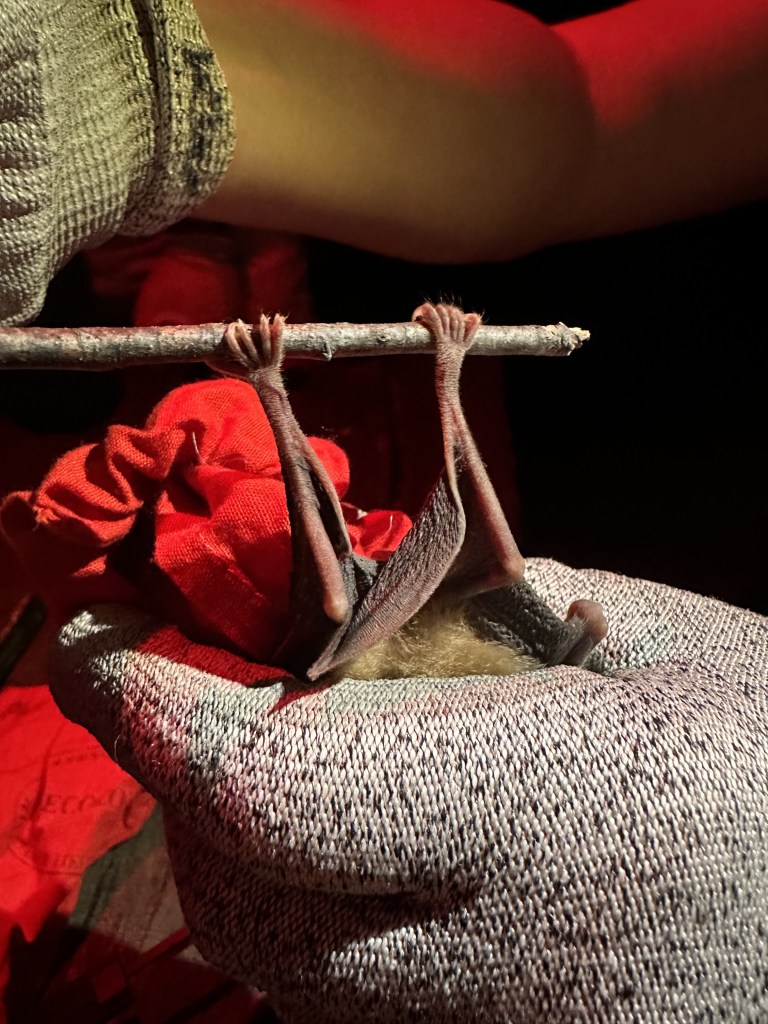
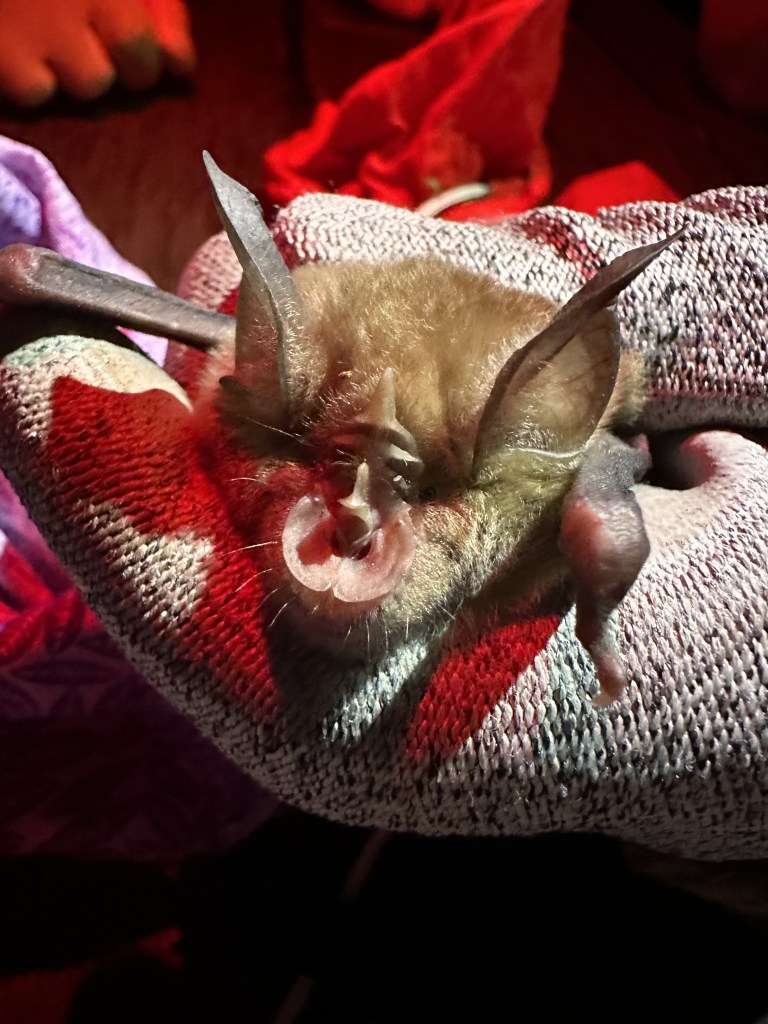
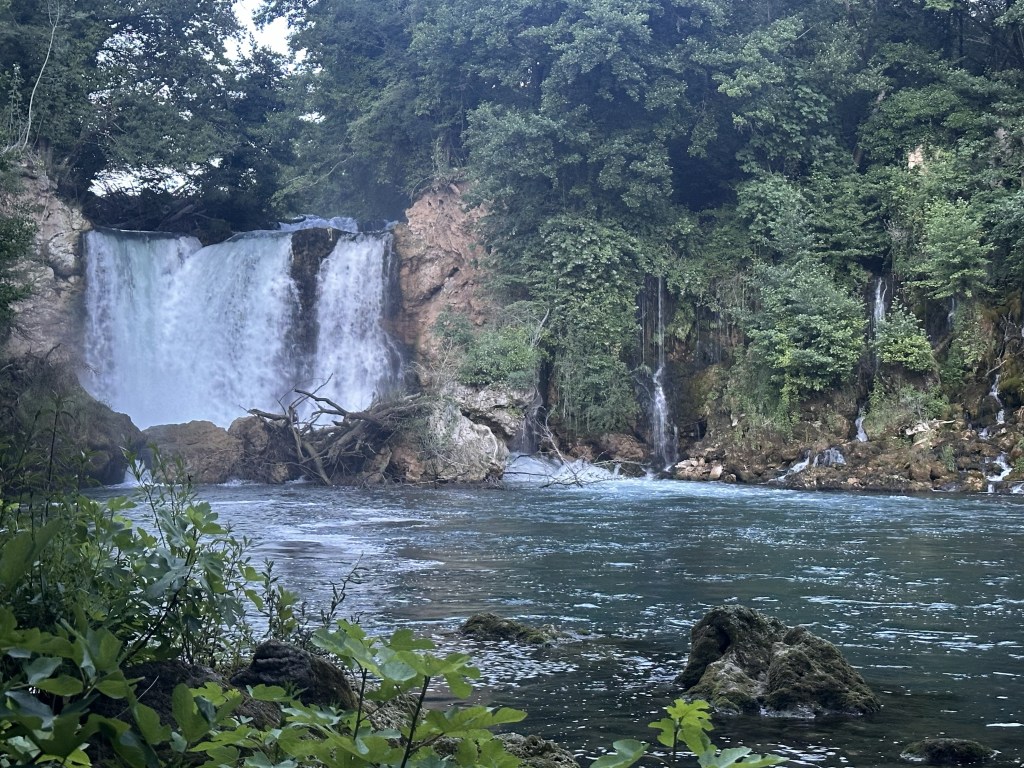
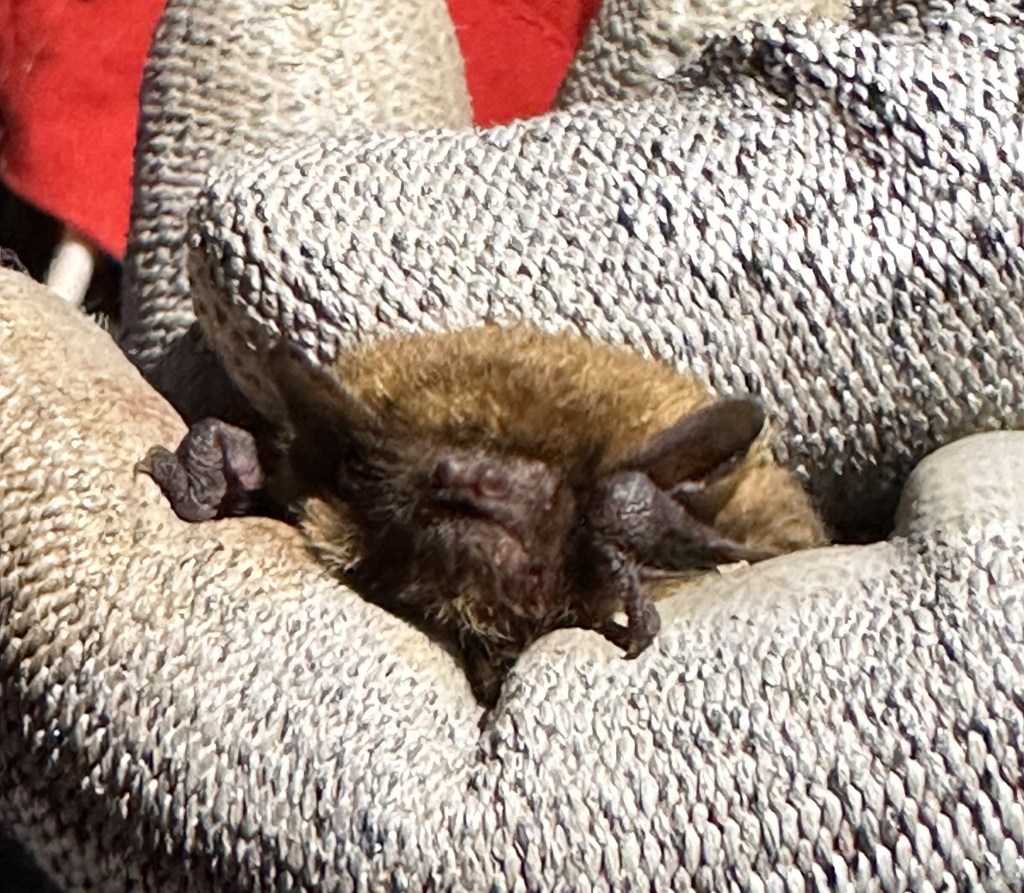
The waterfall survey was particularly memorable. As darkness fell, we monitored the mist nets and assisted with processing bats that had been safely removed by licensed handlers. Seeing protected bat species at such close range for the first time was an experience I will never forget.
Herpetofauna Survey
The morning survey focused on searching for reptiles and amphibians within the habitats surrounding Transects 2 and 3. We moved carefully through the survey area, looking for animals and signs of their presence while considering how temperature, vegetation and habitat structure influenced where different species might be found.
The survey developed my understanding of the importance of approaching suitable features slowly and remaining alert to brief movements. Reptiles can disappear into vegetation or shelter very quickly, so patience and careful observation were essential.
Biodiversity Discussion and Invertebrate Lecture
At 1:00 pm, we took part in discussions about biodiversity and the importance of studying different groups of organisms when assessing an ecosystem. This was followed by an invertebrate lecture at 2:00 pm.
The lecture provided additional context for the invertebrate surveys undertaken during the expedition. It also highlighted the ecological importance of groups that are sometimes overlooked, particularly their roles in pollination, decomposition, nutrient cycling and food webs.
Mammal Data Analysis
During the afternoon, we worked with information collected through the mammal surveys. This helped connect the evidence gathered in the field—including tracks, scat and camera-trap records—with the process of organising, interpreting and comparing ecological data.
The session showed me that fieldwork represents only one part of an ecological survey. The information collected must also be entered accurately and analysed carefully before meaningful conclusions can be drawn about species presence and activity.
Bat Mist-Netting at the Waterfall
At approximately 6:30 pm, we travelled to the waterfall site to prepare for the evening bat survey. Mist nets were positioned before sunset in places where bats were expected to fly as they emerged to forage.
Once darkness fell, the nets were checked regularly to minimise the amount of time any bat spent within them. Bats were removed safely by experienced, licensed researchers before being taken to the processing area.
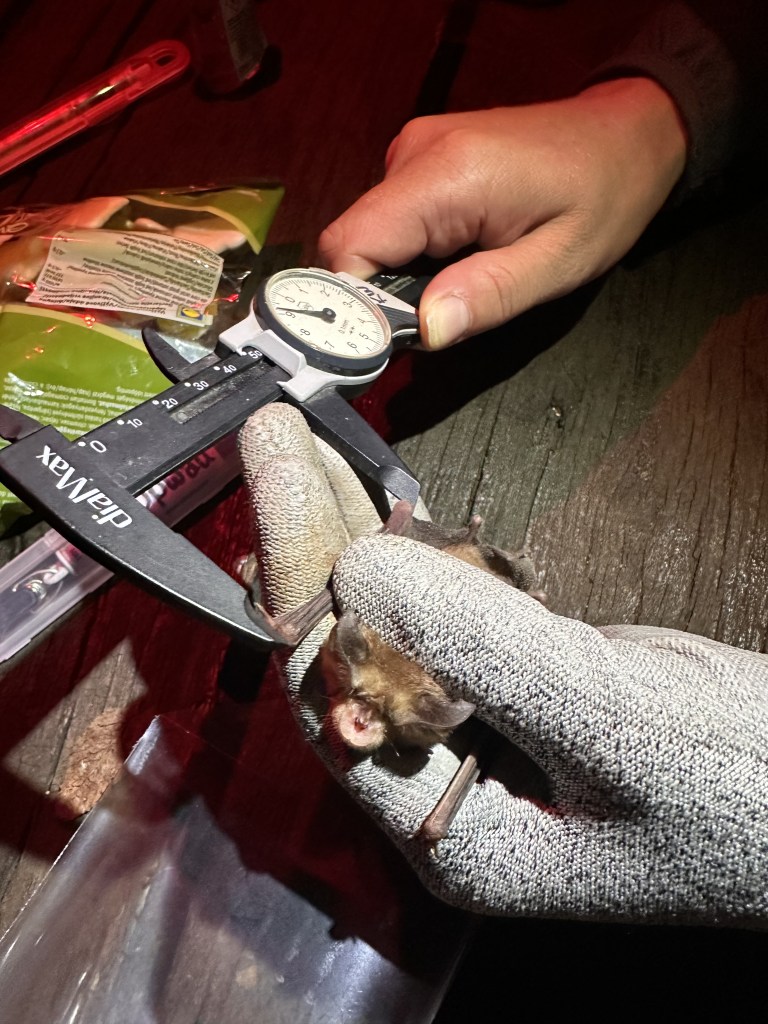
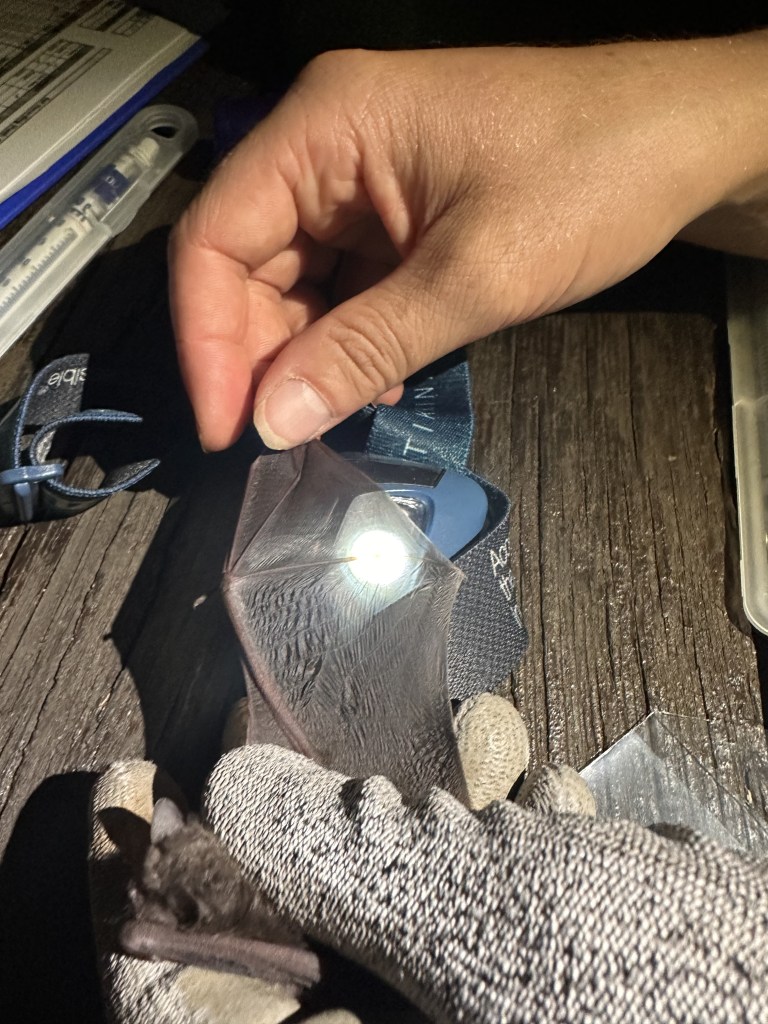
During processing, I assisted with:
- Weighing bats
- Recording forearm length and other biometric measurements
- Checking for visible parasites
- Recording species and sex
- Accurately documenting survey information
- Supporting the safe and efficient release of each bat
Species recorded across the three bat surveys undertaken during the expedition included:
- Greater Horseshoe Bat (Rhinolophus ferrumequinum)
- Lesser Horseshoe Bat (Rhinolophus hipposideros)
- Mediterranean Horseshoe Bat (Rhinolophus euryale)
- Long-fingered Bat, also known as Capaccini’s Bat (Myotis capaccinii)
- Common Pipistrelle (Pipistrellus pipistrellus)
What I Learned
Before travelling to Croatia, I had never observed bats being processed at close range. Watching experienced researchers and assisting with the collection of biometric information gave me a much clearer understanding of how bat surveys are conducted.
The survey reinforced the need for careful handling, accurate measurements and efficient teamwork. Because bats are protected and can become stressed during capture, every stage of the process had to be completed calmly and with the animal’s welfare as the priority.
The mammal data-analysis session also helped me understand how field observations are converted into usable ecological evidence. Accurate recording is essential because even small errors can affect the interpretation of survey results.
Skills Developed
- Herpetofauna survey techniques
- Careful observation and habitat searching
- Recognising suitable reptile and amphibian habitat
- Understanding the ecological importance of invertebrates
- Organising and interpreting mammal survey data
- Bat mist-netting awareness
- Recording bat biometric measurements
- Weighing bats accurately
- Bat identification
- Recording ecological survey data
- Working safely around protected species
- Teamwork during nocturnal surveys
Reflection
Standing beside a waterfall as bats began emerging at dusk was an unforgettable experience. Being trusted to assist with processing and recording biometric data made me appreciate the care and attention required when working with protected species.
The day also demonstrated how field surveys, lectures and data analysis complement one another. Surveying wildlife is not simply about finding species; it also requires an understanding of their habitat, accurate data collection and careful interpretation of the results.
This was one of the evenings that reminded me why I decided to change careers and reinforced my enthusiasm for developing a future in ecological fieldwork.
Photographs
 Badger Ecology