
Date: 9 August 2026
Location: Brookwood Cemetery, Surrey
Duration: 1 hour
Habitat: Cemetery grounds, mature trees, shrubs and grassland
Species encountered: Great Spotted Woodpecker (Dendrocopos major), leafhoppers, Milky Conecap (Conocybe apala)
Field Notes
I spent an hour walking around Brookwood Cemetery, taking the opportunity to assess the general condition of the site and see what I could find. The most noticeable feature of the visit was just how dry everything had become.
As I walked past a rhododendron bush, I could hear an unusual amount of clicking coming from the foliage. When I stopped to look more closely, I found hundreds of small leafhoppers clustered across the plant. They were bright green and red, and there were far more gathered on a single shrub than I had seen before. Interestingly, it was the sound that made me stop and investigate before I had even noticed them.
I also found a small number of Milky Conecaps (Conocybe apala) beginning to appear. These were only growing on the American side of the cemetery, where the grounds are regularly watered. Across the rest of the cemetery I could find very little fungal activity at all. The difference between the watered and unwatered areas was quite striking and showed how important even small differences in available moisture can be for fungi.
The effects of the prolonged dry weather were also particularly noticeable in the vegetation. Brown and dry grass has become a familiar sight this summer, but some of the established shrubs were now so dry that their leaves crumbled when touched. I had not previously noticed shrubs showing this level of drought stress.
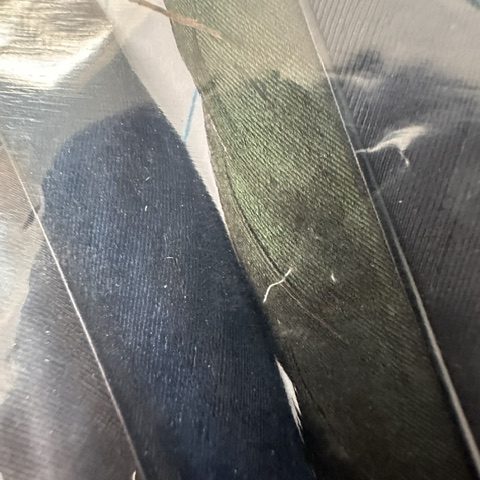
There was still plenty of bird activity despite the conditions. I heard a Great Spotted Woodpecker (Dendrocopos major) and was later able to see it. I also spent some time looking for feathers and found two black feathers that I have not yet been able to identify. One had a noticeable green sheen and the other a blue sheen, so these are ones I would like to investigate further.
Although this was only a short visit, the contrast between the watered and unwatered areas was particularly noticeable. Fungi were beginning to appear where additional water was available, while elsewhere the vegetation was showing obvious signs of stress. It will be interesting to see how quickly the site changes once more substantial rainfall returns.
Photographs
 Badger Ecology