
Date: 16 September 2026
Location: Bourley Woods, Hampshire
Activity: Fungi photography and woodland exploration
Species Encountered: Dyer’s Mazegill (Phaeolus schweinitzii), probable Chicken of the Woods (Laetiporus sulphureus), Cauliflower Fungus (Sparassis crispa), Turkeytail (Trametes versicolor) and Bonnet fungi (Mycena sp.)
Today I visited Bourley Woods specifically to look for and photograph fungi. With autumn beginning to show in the woodland, there was plenty to explore amongst the leaf litter, fallen wood and around the bases of the trees. I really enjoyed slowing down and looking closely at the woodland floor, as fungi can be so easy to walk straight past.
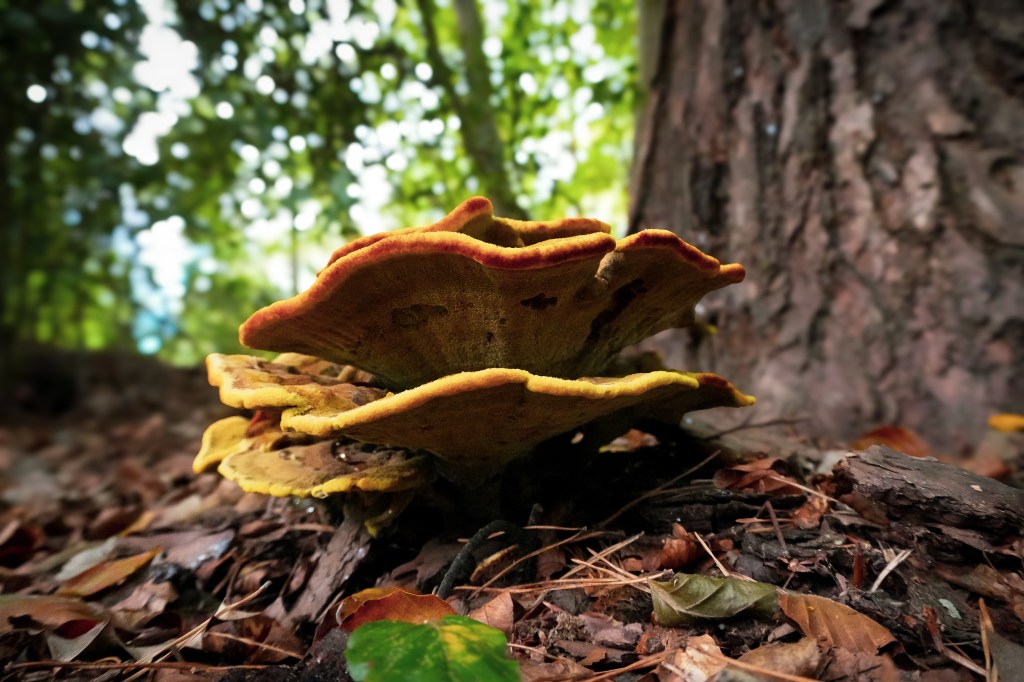
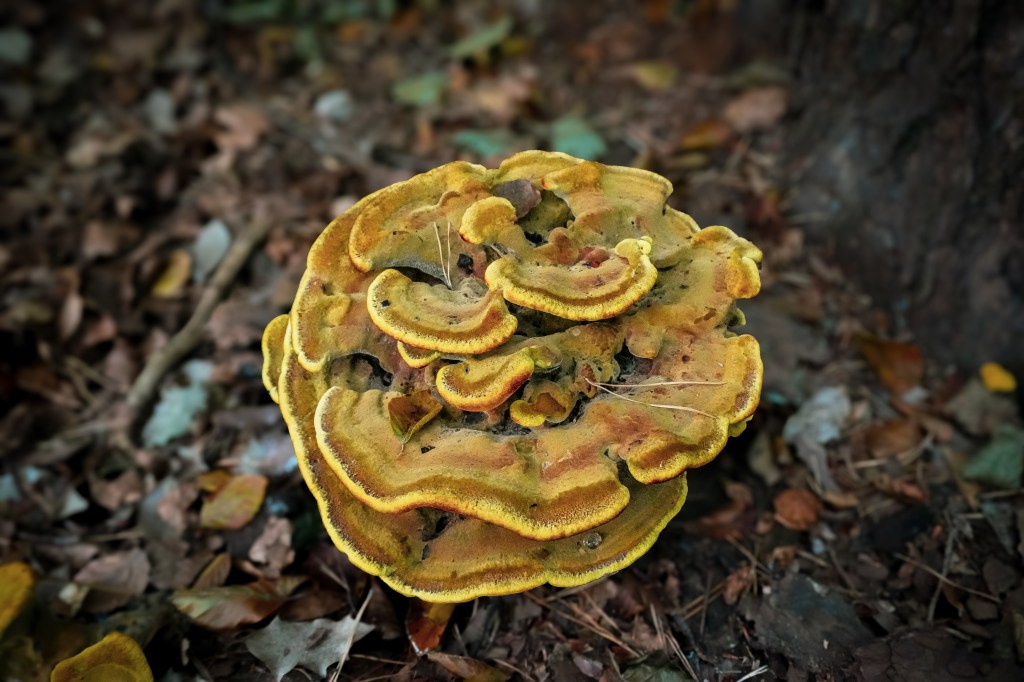
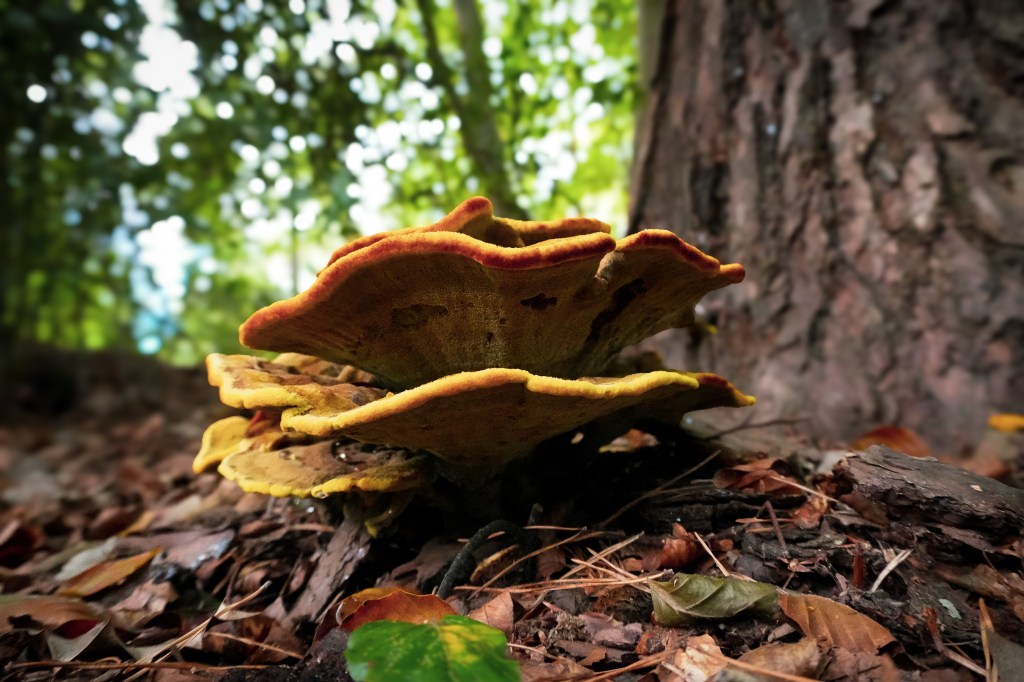
The highlight for me was finding Dyer’s Mazegill (Phaeolus schweinitzii). It was a striking fungus, forming a large rosette of overlapping brackets with yellow-orange margins and darker brown and olive tones towards the centre. I loved the shape and texture of it, and seeing it from different angles made it particularly interesting to photograph. Finding it close to the base of a tree was also a good reminder that fungi seen growing from the ground can actually be associated with buried roots.
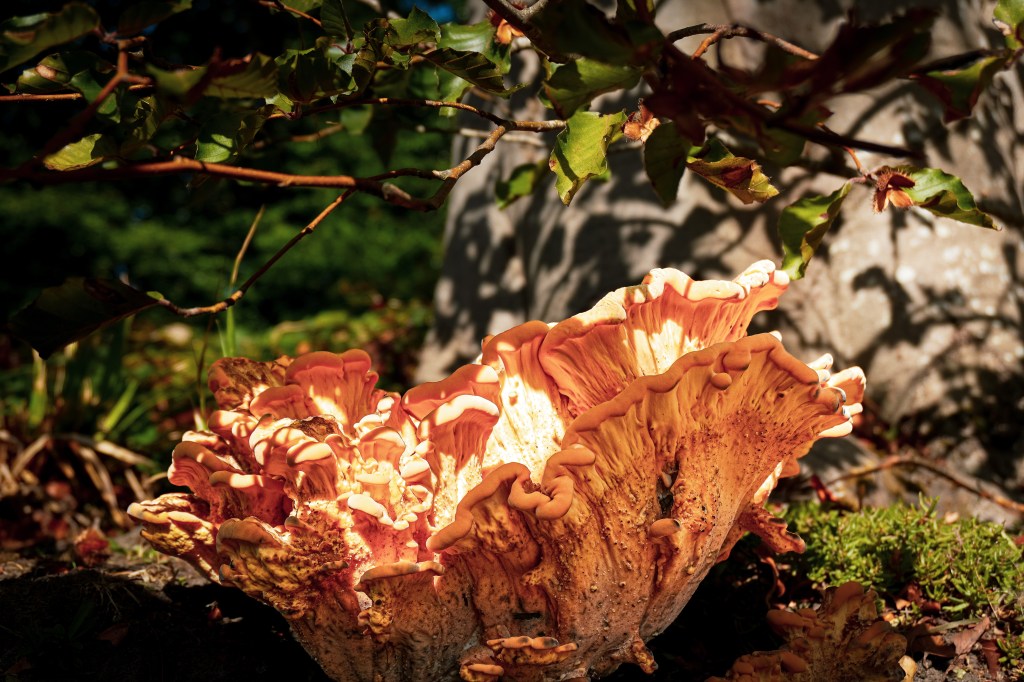
Another favourite was the Chicken of the Woods (Laetiporus sulphureus). Its large, fleshy, overlapping brackets and warm orange colouring really stood out against the woodland surroundings. It was fascinating to see such a substantial fruiting body growing naturally in the woods and to notice how different its form was from the other fungi I found.
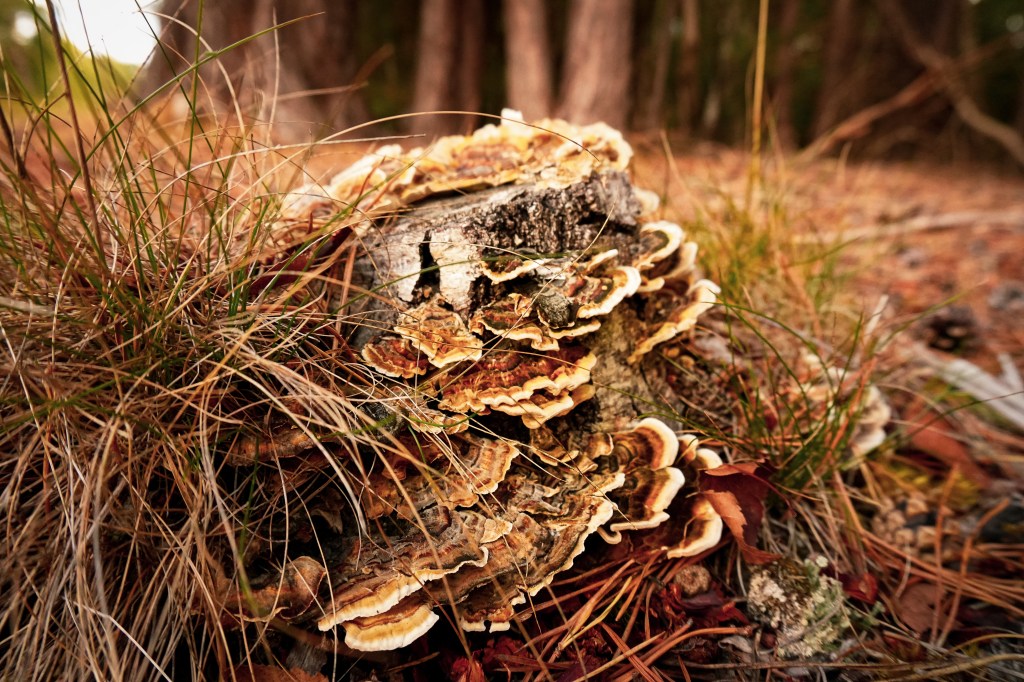
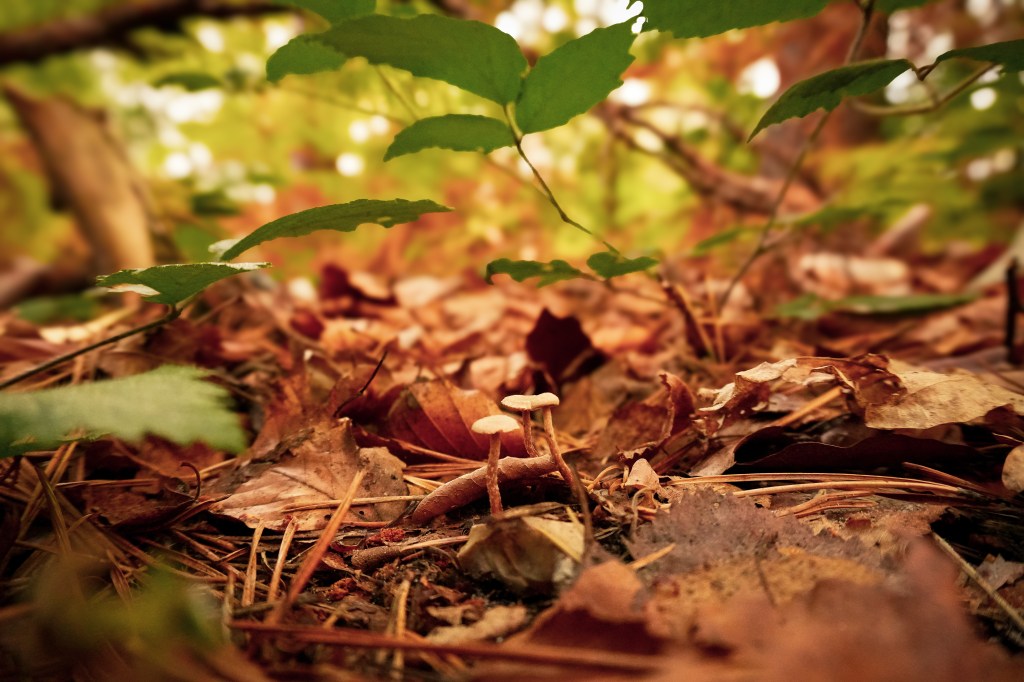
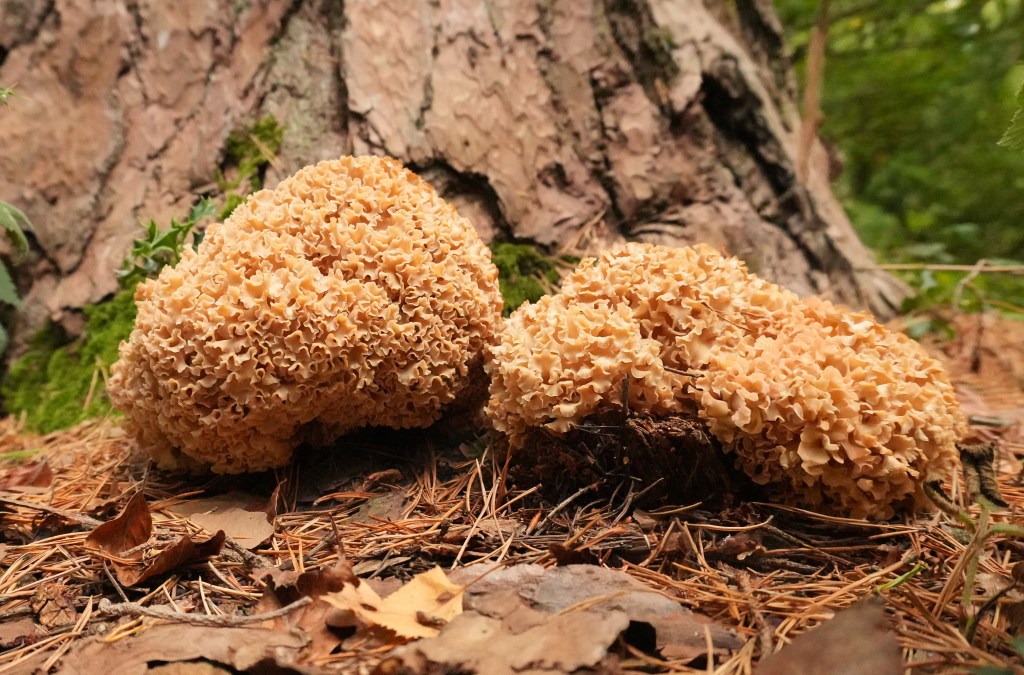
I also photographed the beautifully distinctive Cauliflower Fungus (Sparassis crispa), with its mass of tightly curled, cream-coloured folds. Alongside the larger fungi were bracket fungi including Turkeytail (Trametes versicolor), as well as tiny Bonnet fungi (Mycena sp.) emerging amongst the leaves and pine needles.
I really enjoyed today’s visit because it showed just how varied fungi can be, from enormous bracket fungi to tiny delicate mushrooms almost hidden in the leaf litter. Photographing them encouraged me to look more carefully at their colour, texture, shape, growing substrate and relationship with the surrounding trees. The Dyer’s Mazegill and Chicken of the Woods were particularly memorable and have definitely made me want to learn more about fungi identification and their ecological roles within woodland habitats.
Photographs
 Badger Ecology